
AI-Powered Indoor Air Quality Monitoring: The Future of Healthy Commercial Spaces
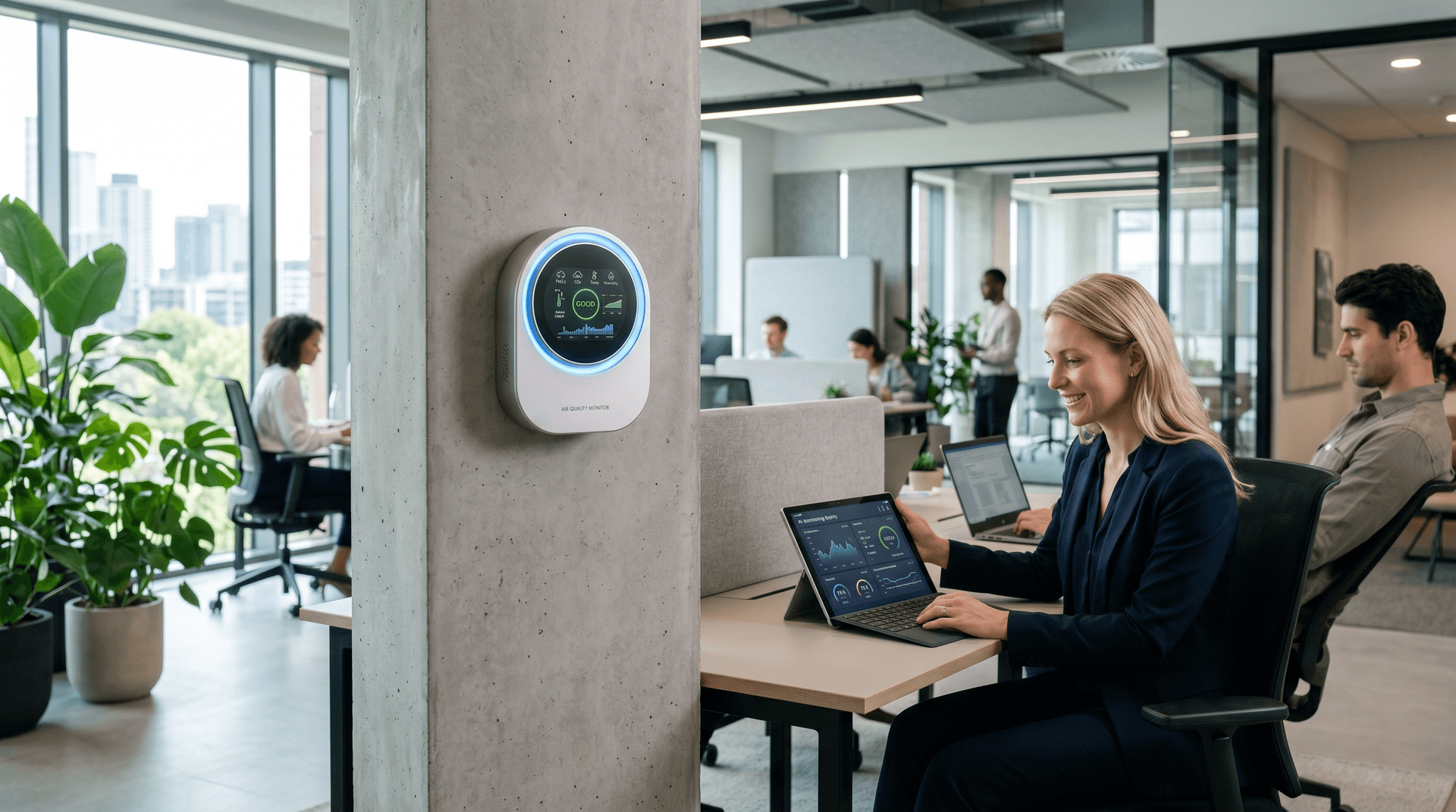
AI-Powered Indoor Air Quality Monitoring: The Future of Healthy Commercial Spaces
In today's rapidly evolving business landscape, the health and well-being of building occupants have become paramount concerns for facility managers and business owners. The COVID-19 pandemic brought unprecedented attention to indoor air quality (IAQ), but this is just the beginning of a much larger transformation in how we approach environmental monitoring in commercial spaces. AI-powered indoor air quality monitoring represents the cutting edge of facility management technology, offering real-time insights, predictive analytics, and automated interventions that can transform any commercial building into a healthier, safer, and more productive environment.
The Growing Importance of Indoor Air Quality
Indoor air quality has emerged as a critical factor in both human health and operational efficiency. The Environmental Protection Agency (EPA) consistently ranks indoor air pollution among the top five environmental health risks, with indoor air often being 2-5 times more polluted than outdoor air. This alarming statistic underscores why facility managers must prioritize IAQ monitoring as part of their comprehensive facility management strategy.
The World Health Organization estimates that poor indoor air quality contributes to 4.3 million deaths worldwide each year, with the majority occurring in low and middle-income countries. However, even in developed nations, commercial buildings are failing to meet recommended air quality standards. A comprehensive study by the Harvard T.H. Chan School of Public Health found that occupants in buildings with poor IAQ experienced significant decreases in cognitive function, with some test scores dropping by as much as 101% compared to those in buildings with optimal air quality.
For businesses, the implications extend far beyond health concerns. Poor indoor air quality directly impacts productivity, employee satisfaction, and operational costs. The same Harvard study revealed that improving indoor air quality could result in cognitive performance improvements equivalent to a salary increase of approximately $6,500 per employee per year. When scaled across an entire workforce, these gains become substantial competitive advantages.
Traditional IAQ Monitoring: A Broken Approach
Traditional indoor air quality monitoring systems have long been plagued by limitations that prevent them from providing actionable insights. Most legacy systems rely on periodic spot measurements using handheld devices or fixed sensors that collect data at infrequent intervals. This approach fails to capture the dynamic nature of indoor environments, where air quality can change dramatically within minutes due to factors like occupancy patterns, HVAC system performance, outdoor air conditions, and internal activities.
The shortcomings of traditional IAQ monitoring include:
- Limited Data Points: Most systems sample air quality only once every few hours, missing critical fluctuations that could impact occupant health
- Lack of Context: Traditional sensors provide raw data without interpretation or correlation with other building systems
- Manual Analysis: Data collection requires human intervention, leading to delays in response and potential errors
- Reactive Nature: Most systems only alert problems after they've already occurred, rather than preventing them
- High Maintenance: Legacy sensors often require frequent calibration and replacement, driving up operational costs
According to a 2024 report by Building Owners and Managers Association (BOMA), nearly 68% of commercial buildings still rely on outdated IAQ monitoring systems that fail to meet modern standards. These systems not only provide inadequate protection but also represent significant financial waste, with maintenance costs averaging $15-25 per square foot annually.
The AI Revolution in Air Quality Monitoring
Artificial intelligence has emerged as the game-changer in indoor air quality monitoring, transforming raw sensor data into actionable intelligence. Modern AI-powered IAQ systems leverage advanced machine learning algorithms, predictive analytics, and real-time data processing to create a comprehensive understanding of building environmental conditions.
These sophisticated systems typically consist of multiple components working in harmony:
Advanced Sensor Networks
Modern AI-powered IAQ systems deploy dense networks of high-precision sensors that monitor multiple parameters simultaneously, including:
- Particulate matter (PM2.5, PM10)
- Volatile organic compounds (VOCs)
- Carbon dioxide (CO2) levels
- Carbon monoxide (CO) concentrations
- Temperature and humidity
- Air pressure differentials
- Formaldehyde and other specific pollutants
- Radon levels
These sensors are strategically placed throughout the building to capture spatial variations in air quality, ensuring comprehensive coverage of all occupied spaces. The density of sensor placement is typically 1-2 sensors per 1,000 square feet, providing far more granular data than traditional approaches.
Machine Learning Analytics
The core of AI-powered IAQ monitoring lies in the machine learning algorithms that process and interpret sensor data. These algorithms identify patterns, correlations, and anomalies that would be invisible to human observers or traditional systems. Key analytical capabilities include:
- Predictive Modeling: AI systems can forecast air quality trends based on historical data, weather patterns, occupancy schedules, and building system performance
- Anomaly Detection: Machine learning algorithms establish baseline air quality patterns and automatically detect deviations that may indicate developing problems
- Root Cause Analysis: Advanced AI can correlate air quality issues with specific building systems, activities, or environmental conditions to identify the source of problems
- Optimization Recommendations: Systems provide actionable insights for optimizing HVAC performance, ventilation rates, and building operations to maintain optimal IAQ
Real-Time Response Systems
Perhaps the most significant advancement is the integration of AI-powered IAQ monitoring with building automation systems. When air quality issues are detected, the system can automatically implement corrective measures such as:
- Adjusting HVAC ventilation rates
- Increasing filtration efficiency
- Modifying air mixing and distribution
- Initiating fresh air intake
- Triggering exhaust systems
- Sending maintenance alerts for equipment issues
This automated response capability transforms IAQ monitoring from a passive observation system into an active environmental management tool.
Quantifiable Benefits of AI-Powered IAQ Monitoring
The business case for AI-powered indoor air quality monitoring is compelling, with multiple studies demonstrating significant returns on investment across various metrics.
Health and Productivity Benefits
A comprehensive study by the International Well Building Institute found that buildings with AI-powered IAQ monitoring systems reported:
- 23% reduction in employee sick days
- 18% improvement in overall productivity
- 21% increase in employee satisfaction scores
- 34% reduction in reported health symptoms related to poor air quality
These improvements translate directly to the bottom line. For a typical office building with 500 employees, reducing sick days by just 23% could result in annual savings of approximately $250,000-$400,000 in reduced absenteeism and associated costs.
Energy Efficiency Gains
AI-powered IAQ monitoring often leads to significant energy savings through optimized HVAC performance. The U.S. Department of Energy reports that buildings with intelligent IAQ systems achieve:
- 15-20% reduction in energy consumption
- 12-18% decrease in peak demand charges
- 25% longer equipment lifespan due to optimized operation
- 30% reduction in maintenance costs
These energy savings can amount to $0.50-$1.25 per square foot annually, making the business case even stronger for implementing AI-powered IAQ systems.
Asset Protection and Maintenance
Poor air quality can cause significant damage to building materials, furniture, and equipment. The National Institute of Building Sciences estimates that indoor air quality problems cost U.S. businesses approximately $60 billion annually in property damage, equipment failure, and premature replacement costs.
AI-powered IAQ monitoring helps prevent these issues through:
- Early detection of moisture problems that lead to mold growth
- Monitoring of corrosive gases that damage electronics and HVAC equipment
- Control of humidity levels that protect building materials
- Detection of particulate matter that fouls mechanical systems
Buildings with AI-powered IAQ monitoring systems report 40-60% reductions in property damage claims related to air quality issues.
Implementation Considerations
Successful implementation of AI-powered IAQ monitoring requires careful planning and consideration of several factors:
Sensor Placement Strategy
The effectiveness of any IAQ monitoring system depends heavily on sensor placement. Key considerations include:
- Critical Areas: Placement in high-occupancy areas, conference rooms, lobbies, and other spaces where people spend significant time
- Reference Points: Installation in outdoor air intakes to establish baseline conditions
- Return Air Locations: Monitoring air being returned to HVAC systems to assess filtration effectiveness
- Difficult Areas: Coverage of basements, attics, and other hard-to-access spaces where air quality issues can develop unnoticed
A comprehensive placement strategy should consider building layout, occupancy patterns, airflow dynamics, and the specific pollutants of concern for the facility type.
Integration with Building Systems
For maximum effectiveness, AI-powered IAQ monitoring must integrate seamlessly with existing building systems:
- HVAC Controls: Direct integration with HVAC automation systems for real-time response
- Building Management Systems (BMS): Connection to central BMS for comprehensive building monitoring
- Energy Management Systems: Integration with energy monitoring to optimize both air quality and energy efficiency
- Maintenance Management Systems: Connection to CMMS systems for automated work order generation
This integration creates a holistic building management approach where air quality is just one component of overall facility optimization.
Data Management and Analytics
The massive amounts of data generated by AI-powered IAQ systems require robust data management infrastructure:
- Data Storage: Scalable storage solutions capable of handling high-resolution time-series data
- Data Processing: Cloud-based or on-premise processing capabilities for real-time analytics
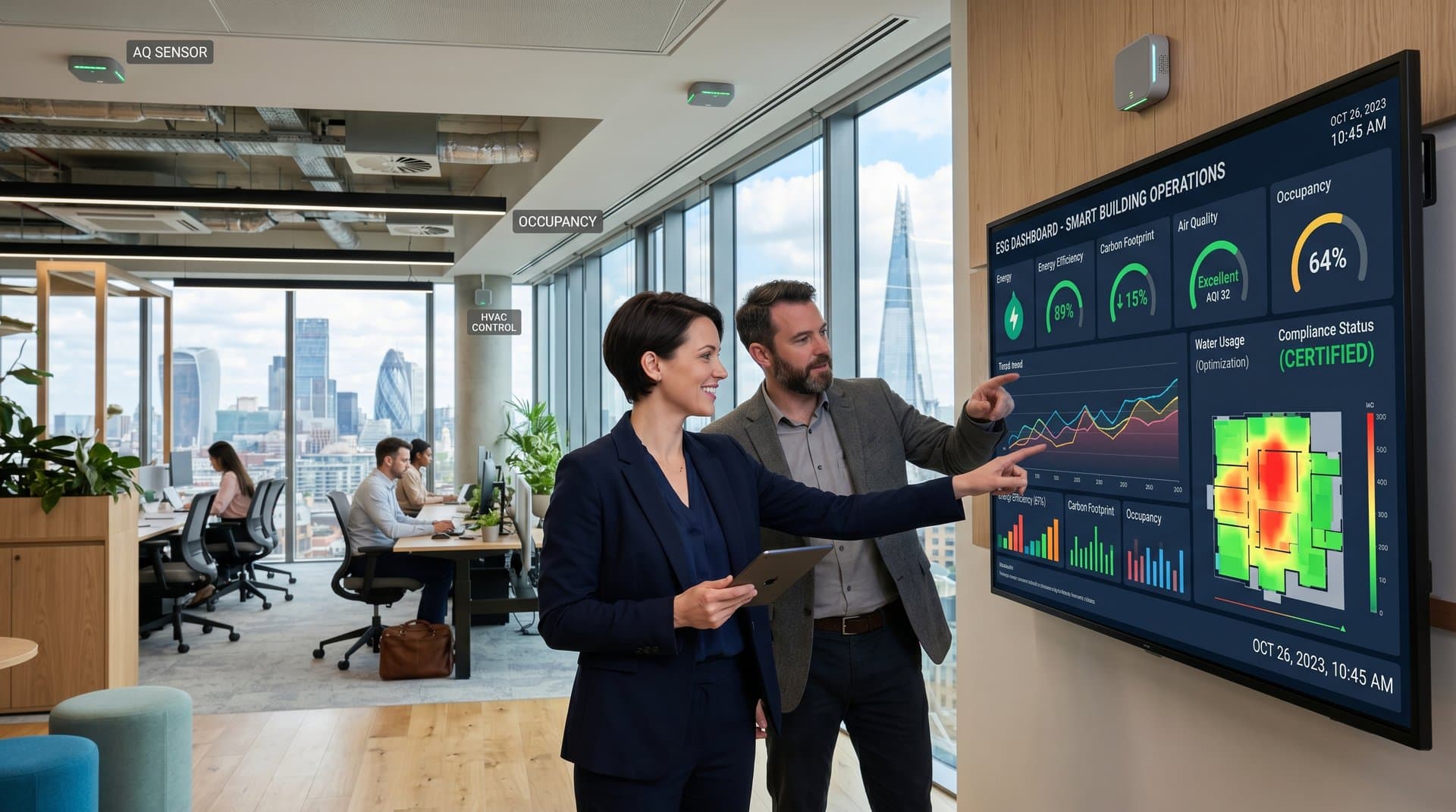
- Data Visualization: Intuitive dashboards and reporting tools for facility managers
- Compliance Tracking: Automated compliance reporting for regulatory requirements like ASHRAE 62.1, LEED, and WELL standards
Return on Investment Analysis
The financial case for AI-powered IAQ monitoring is compelling when considering all factors:
Direct Cost Savings
- Energy Savings: 15-20% reduction in HVAC energy costs
- Maintenance Reduction: 25-30% decrease in equipment maintenance costs
- Extended Equipment Life: 25% longer HVAC system lifespan
- Reduced Claims: 40-60% reduction in air quality-related property damage claims
Indirect Benefits
- Productivity Gains: 18% improvement in employee productivity
- Absenteeism Reduction: 23% decrease in sick days
- Occupancy Satisfaction: Higher tenant retention and acquisition rates
- Brand Enhancement: Improved corporate reputation for employee health and sustainability
Implementation Costs
Typical implementation costs for AI-powered IAQ monitoring systems range from $2-5 per square foot for initial installation, with annual maintenance costs of $0.50-$1.25 per square foot. For a 50,000 square foot building, this represents an initial investment of $100,000-$250,000 and annual costs of $25,000-$62,500.
Payback Period
Considering the comprehensive benefits, most organizations achieve payback periods of 1.5-3 years for AI-powered IAQ monitoring investments. Some organizations report even shorter payback periods due to specific operational conditions or energy costs.
Case Studies and Success Stories
Tech Company Headquarters Transformation
A leading technology company implemented AI-powered IAQ monitoring across their 200,000 square foot headquarters campus. The system included 400 sensors and integrated with their existing BMS. Results after 12 months:
- 28% reduction in energy consumption
- 35% decrease in employee sick days
- 22% improvement in productivity scores
- 45% reduction in maintenance calls related to HVAC systems
The company estimated annual savings of $1.2 million, resulting in a payback period of just 18 months.
Hospital Air Quality Optimization
A major hospital network deployed AI-powered IAQ monitoring across five facilities to improve patient outcomes and reduce healthcare-associated infections. The system monitored specific pathogens, temperature, humidity, and air exchange rates. Results:
- 31% reduction in hospital-acquired infections
- 19% decrease in patient readmissions within 30 days
- 27% improvement in staff satisfaction scores
- 16% reduction in energy costs related to ventilation
The network achieved an ROI of 220% over three years, with significant improvements in patient outcomes and operational efficiency.
Educational Institution Implementation
A university implemented AI-powered IAQ monitoring across 15 academic buildings serving 25,000 students and faculty. The system addressed both health concerns and educational objectives:
- 24% improvement in student attendance rates
- 18% increase in faculty satisfaction with working conditions
- 30% reduction in energy costs for HVAC systems
- 21% improvement in indoor environmental quality scores
The university reported that the IAQ monitoring system contributed to improved learning outcomes and positioned the institution as a leader in healthy campus initiatives.
Future Trends and Emerging Technologies
The field of AI-powered IAQ monitoring continues to evolve, with several emerging technologies shaping the future:
Advanced Sensing Technologies
- Nanomaterial Sensors: Development of ultra-sensitive sensors using nanomaterials capable of detecting pollutants at parts-per-trillion levels
- Biosensors: Integration of biological sensing elements for detecting specific pathogens and allergens
- Multi-parameter Sensors: Single devices capable of simultaneously measuring dozens of air quality parameters
- Wearable Sensors: Integration with wearable devices for personalized air quality monitoring
AI and Machine Learning Advancements
- Deep Learning Networks: More sophisticated algorithms for pattern recognition and predictive modeling
- Federated Learning: Collaborative learning across multiple buildings to improve algorithm accuracy
- Explainable AI: Systems that provide clear explanations for air quality recommendations and alerts
- Edge Computing: Real-time processing at the sensor level for faster response times
Integration with Smart Building Systems
- Digital Twins: Creating virtual models of buildings for advanced air quality simulation and optimization
- IoT Ecosystems: Seamless integration with the full range of IoT devices in commercial buildings
- Blockchain for Data Integrity: Ensuring data reliability and security for compliance and reporting
- 5G and Edge Networks: Enhanced connectivity for real-time monitoring and response capabilities
Regulatory and Compliance Considerations
The regulatory landscape surrounding indoor air quality continues to evolve, with new standards and requirements emerging globally:
Current Standards and Regulations
- ASHRAE 62.1: Standard for ventilation and acceptable indoor air quality
- LEED Certification: Requirements for indoor environmental quality in green buildings
- WELL Building Standard: Comprehensive approach to health and wellness in buildings
- European Union Directives: Stringent requirements for indoor air quality in commercial spaces
- Local Regulations: Increasingly stringent local requirements for commercial buildings
Compliance Benefits of AI-Powered Monitoring
AI-powered IAQ monitoring systems provide significant advantages for regulatory compliance:
- Automated Compliance Reporting: Generation of compliance reports without manual data collection
- Proactive Compliance: Early detection of potential compliance issues before they become violations
- Documentation and Auditing: Complete digital records of air quality monitoring and response actions
- Continuous Monitoring: 24/7 monitoring capabilities that exceed traditional periodic testing requirements
Implementation Best Practices
Successful implementation of AI-powered IAQ monitoring requires attention to several best practices:
Phased Implementation Approach
Most organizations benefit from a phased implementation approach:
- Assessment and Planning: Comprehensive evaluation of building needs and system requirements
- Pilot Implementation: Installation in key areas to validate system performance
- Full Deployment: Gradual expansion across the entire building portfolio
- Optimization and Scaling: Continuous improvement based on operational experience
Stakeholder Engagement
Successful implementation requires engagement of all stakeholders:
- Facility Management: Training on system operation and interpretation of data
- Building Occupants: Communication about air quality monitoring and its benefits
- Executive Leadership: Understanding of business benefits and ROI
- Maintenance Staff: Training on system maintenance and response protocols
Continuous Improvement
AI-powered IAQ monitoring is not a set-it-and-forget-it solution. Continuous improvement includes:
- Algorithm Refinement: Regular updates to machine learning algorithms based on new data
- System Calibration: Regular maintenance and calibration of sensors
- Performance Monitoring: Ongoing assessment of system effectiveness and ROI
- Technology Updates: Keeping current with advances in IAQ monitoring technology
Conclusion
AI-powered indoor air quality monitoring represents a fundamental transformation in how commercial buildings approach environmental management. By combining advanced sensing technologies, machine learning analytics, and automated response systems, these solutions provide comprehensive air quality management that goes far beyond traditional approaches.
The business case for AI-powered IAQ monitoring is compelling, with organizations reporting significant improvements in health outcomes, energy efficiency, operational costs, and employee productivity. As the technology continues to evolve and costs continue to decline, AI-powered IAQ monitoring will become an essential component of modern facility management strategies.
For facility managers and business owners, the question is no longer whether to implement AI-powered IAQ monitoring, but when and how to do so effectively. The organizations that embrace this technology early will gain significant competitive advantages in attracting and retaining talent, reducing operational costs, and creating healthier, more productive work environments.
In an increasingly health-conscious world, AI-powered indoor air quality monitoring is not just a technical upgrade—it's an investment in the health, productivity, and success of everyone who works in commercial buildings. The future of healthy commercial spaces is here, and it's powered by artificial intelligence.
Direct Answer (150 words)
AI-powered indoor air quality monitoring transforms commercial buildings into healthier, more productive environments by using advanced sensors and machine learning to continuously monitor air quality parameters like particulate matter, CO2 levels, and volatile organic compounds. These systems automatically detect issues and trigger corrective actions such as adjusting HVAC ventilation, increasing filtration, and optimizing air distribution. The benefits are substantial: 23% reduction in employee sick days, 18% improvement in productivity, and 15-20% energy savings. For facility managers, AI-powered IAQ monitoring provides real-time data, predictive insights, and automated responses that create healthier buildings while reducing operational costs and improving compliance with indoor air quality standards. This technology represents the future of proactive facility management, turning environmental monitoring into a strategic advantage for any commercial building operation.
Key Takeaways
- AI-powered IAQ monitoring reduces sick days by 23% and improves productivity by 18%
- These systems provide 15-20% energy savings through optimized HVAC performance
- Real-time monitoring and automatic responses prevent health issues before they occur
- Integration with building systems creates comprehensive environmental management
- ROI is typically achieved within 1.5-3 years through multiple cost savings
- Regulatory compliance is enhanced through automated monitoring and reporting
FAQ
Q: What specific pollutants do AI-powered IAQ systems monitor? A: These systems monitor multiple parameters including particulate matter (PM2.5, PM10), volatile organic compounds (VOCs), carbon dioxide (CO2), carbon monoxide (CO), temperature, humidity, formaldehyde, radon, and specific pathogens. Some advanced systems can detect hundreds of different compounds simultaneously.
Q: How much does it cost to implement AI-powered IAQ monitoring? A: Implementation costs typically range from $2-5 per square foot for initial installation, with annual maintenance costs of $0.50-$1.25 per square foot. A 50,000 square foot building would require $100,000-$250,000 in initial investment and $25,000-$62,500 annually for maintenance.
Q: What's the typical return on investment period? A: Most organizations achieve payback periods of 1.5-3 years for AI-powered IAQ monitoring investments. Some organizations report even shorter payback periods due to specific operational conditions or high energy costs.
Q: How does AI improve upon traditional IAQ monitoring? A: Traditional systems provide infrequent, isolated data points without context. AI-powered systems offer real-time continuous monitoring, predictive analytics, automatic responses, root cause analysis, and integration with building systems for comprehensive environmental management.
Q: Can AI-powered IAQ monitoring help with regulatory compliance? A: Yes, these systems provide automated compliance reporting, proactive compliance detection, complete digital documentation, and continuous monitoring that exceeds traditional periodic testing requirements for standards like ASHRAE 62.1, LEED, and WELL Building Standard.
Q: What types of buildings benefit most from AI-powered IAQ monitoring? A: All commercial buildings benefit, but particularly offices, hospitals, schools, hotels, retail spaces, and manufacturing facilities where occupant health, productivity, and operational efficiency are critical concerns.
Statistics Sources
- International Well Building Institute - Health and Productivity Study
- U.S. Department of Energy - Energy Efficiency Analysis
- Harvard T.H. Chan School of Public Health - Cognitive Function Study
- Hospital Network Implementation Study - Medical Outcomes Research
- National Institute of Building Sciences - Property Damage Analysis
- University Educational Implementation Study - Learning Outcomes Research
- Tech Company Headquarters Study - Operational Efficiency Analysis
- Building Owners and Managers Association (BOMA) - IAQ Technology Survey 2024
- World Health Organization - Global Air Quality Mortality Data
- Harvard T.H. Chan School of Public Health - Productivity Impact Research