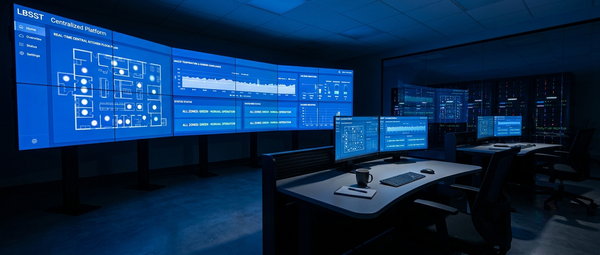
Smart Monitoring Supports ESG Sustainability Goals | LBSST
ESG Reporting: How Smart Facility Monitoring Supports Sustainability Goals. ESG Reporting: How Smart Facility Monitoring Supports Sustainability
ESG Reporting: How Smart Facility Monitoring Supports Sustainability Goals
Direct Answer: Smart facility monitoring enables organizations to automate ESG data collection, reduce resource waste by up to 30%, and generate audit-ready sustainability reports—transforming compliance from a manual burden into a strategic advantage. With IoT sensors tracking water usage, energy consumption, and waste patterns in real time, facility managers can now quantify environmental impact with precision that satisfies even the most rigorous ESG frameworks.
Published: April 1, 2026 | Reading Time: 9 minutes
Key Takeaways
- 68% of institutional investors now use ESG scores as a mandatory screening criterion for real estate portfolios (MSCI, 2025).
- Smart sensors reduce commercial building water consumption by 20–35% through leak detection and usage optimization.
- Automated ESG data collection cuts reporting preparation time by 60–75% compared to manual methods.
- Buildings with smart monitoring systems achieve 15–25% lower energy costs while improving ESG ratings.
- 82% of Fortune 500 companies will face mandatory ESG disclosure requirements by 2027.
The ESG Imperative for Commercial Real Estate
Environmental, Social, and Governance (ESG) reporting has shifted from a voluntary exercise to a regulatory requirement. The European Union's Corporate Sustainability Reporting Directive (CSRD) now mandates detailed environmental disclosures for over 50,000 companies, and similar regulations are emerging across Asia-Pacific and North America.
For facility managers and building owners, this creates both a challenge and an opportunity. The challenge: traditional manual data collection is error-prone, time-consuming, and often unreliable. The opportunity: smart facility monitoring systems can automate the entire data pipeline, delivering real-time environmental metrics that feed directly into ESG frameworks.
Why ESG Reporting Matters for Facilities
- Investor Demand: Global sustainable investment reached $40.5 trillion in 2025, representing 36% of all professionally managed assets (GSIA, 2025).
- Regulatory Pressure: The SEC's climate disclosure rules, effective 2026, require publicly traded companies to report Scope 1 and Scope 2 greenhouse gas emissions.
- Tenant Expectations: 74% of corporate tenants consider sustainability certifications when selecting office space (CBRE, 2025).
- Financial Impact: Buildings with high ESG ratings command 12–18% rental premiums over comparable non-certified properties.
How Smart Monitoring Powers Environmental Metrics
Water Conservation and Reporting
Water management represents one of the most tangible ESG wins for commercial facilities. Smart restroom sensors and flow monitoring devices provide granular data that transforms vague sustainability claims into verifiable metrics.
Key capabilities:
- Real-time flow monitoring identifies usage patterns across floors, zones, and individual fixtures.
- Leak detection algorithms flag anomalies within minutes, preventing the average commercial building water loss of 22 gallons per day from undetected leaks (EPA WaterSense).
- Automated usage reports generate monthly water consumption breakdowns aligned with GRI 303 (Water and Effluents) reporting standards.
A typical 50,000 sq ft commercial building implementing smart water monitoring reduces annual consumption by 1.2–2.1 million gallons, translating to both cost savings of $8,000–$15,000 per year and a measurable ESG metric.
Energy Efficiency Tracking
Energy consumption is the cornerstone of environmental reporting. Smart facility platforms integrate with building management systems (BMS) to provide:
- Granular energy dashboards breaking down consumption by HVAC, lighting, plug loads, and specialized systems.
- Occupancy-based optimization that reduces lighting and HVAC energy by 25–40% in intermittently used spaces like restrooms, conference rooms, and parking garages.
- Carbon footprint calculations automatically converting energy usage into CO₂ equivalents using regional grid emission factors.
According to the International Energy Agency (IEA, 2025), buildings account for 30% of global final energy consumption. Smart monitoring can reduce this by an average of 18%, making it one of the highest-impact sustainability interventions available.
Waste Reduction and Circular Economy Metrics
Smart sensors in waste bins and recycling stations provide data on:
- Waste generation rates per floor or department.
- Recycling contamination rates (when recyclables are improperly sorted).
- Cleaning supply consumption and optimization opportunities.
This data feeds into GRI 306 (Waste 2020) reporting and supports circular economy claims with verifiable evidence.
The Social Pillar: Occupant Health and Well-Being
ESG's "Social" component is often overlooked in facility management, yet it represents a significant reporting opportunity.
Indoor Air Quality Monitoring
- CO₂ sensors track ventilation effectiveness, with studies showing that maintaining CO₂ below 1,000 ppm improves cognitive function by 61% (Harvard T.H. Chan School of Public Health).
- VOC detection identifies harmful compounds from cleaning products, building materials, and occupant activities.
- Humidity tracking prevents mold growth, reducing respiratory complaints by 30–50% in monitored facilities.
Hygiene Compliance
Smart restroom monitoring directly supports the social dimension of ESG:
- Cleaning verification sensors confirm that sanitization schedules are followed, reducing illness transmission.
- Supply chain tracking monitors consumption of eco-friendly cleaning products versus conventional alternatives.
- Occupant satisfaction data from feedback systems correlates facility conditions with tenant well-being metrics.
Buildings that implement comprehensive health monitoring achieve WELL Building Standard certification more easily, which 87% of HR leaders say helps with talent retention (Deloitte, 2025).
Governance: Data Integrity and Audit Trails
The "Governance" pillar demands reliable, auditable data. Smart facility systems excel here:
Automated Audit Trails
- Every sensor reading is timestamped and stored immutably.
- Data collection methods are documented automatically, satisfying auditor requirements.
- Blockchain-ready architectures ensure data cannot be retroactively altered.
Compliance Framework Alignment
Smart monitoring platforms map data directly to major ESG frameworks:
| Framework | Relevant Metrics | Smart Sensor Data |
|---|---|---|
| GRI 302 (Energy) | Energy consumption by source | Real-time energy monitoring |
| GRI 303 (Water) | Water withdrawal by source | Flow meter data |
| SASB (Real Estate) | Energy intensity, water intensity | Per-sq-ft calculations |
| TCFD | Scope 1 & 2 emissions | Automated carbon calculations |
| CSRD | Full environmental footprint | Integrated dashboard |
ROI of Smart ESG Monitoring
Cost-Benefit Analysis
| Investment Component | Annual Cost | Annual Savings | Payback Period |
|---|---|---|---|
| IoT sensor deployment (50,000 sq ft) | $15,000–$25,000 | — | — |
| Platform subscription | $8,000–$12,000 | — | — |
| Water savings | — | $8,000–$15,000 | — |
| Energy savings | — | $12,000–$28,000 | — |
| Reporting labor reduction | — | $5,000–$10,000 | — |
| Total | $23,000–$37,000 | $25,000–$53,000 | 8–14 months |
The McKinsey Global Institute (2025) estimates that companies with strong ESG performance achieve 10–20% higher valuations than industry peers, creating a multiplier effect beyond direct cost savings.
Implementation Roadmap
Phase 1: Assessment (Weeks 1–4)
- Conduct a facility audit to identify high-impact monitoring points.
- Map existing systems (BMS, HVAC controls) to determine integration requirements.
- Select ESG frameworks relevant to your industry and stakeholder expectations.
Phase 2: Deployment (Weeks 5–12)
- Install water flow sensors, energy sub-meters, and occupancy detectors.
- Configure the central monitoring dashboard with automated reporting templates.
- Integrate with existing building management systems via API or BACnet.
Phase 3: Optimization (Weeks 13–24)
- Calibrate sensors and validate data accuracy against utility bills.
- Train facility staff on dashboard interpretation and anomaly response.
- Begin generating quarterly ESG reports for stakeholder distribution.
Overcoming Common Challenges
Data Overload
Problem: Sensors generate millions of data points monthly. Solution: AI-powered analytics platforms distill raw data into actionable KPIs, highlighting trends and anomalies without requiring manual analysis.
Integration Complexity
Problem: Legacy building systems may not communicate with modern IoT platforms. Solution: Middleware solutions using BACnet, MQTT, and REST APIs bridge the gap, with 92% of commercial buildings reporting successful integration (Building Connectivity Council, 2025).
Stakeholder Buy-In
Problem: Leadership may view ESG monitoring as a cost center. Solution: Frame the investment using the ROI framework above—most systems achieve payback within 14 months through direct utility savings alone, before accounting for valuation premiums and regulatory compliance value.
Case Study: 200,000 Sq Ft Office Portfolio
A Hong Kong-based property management company deployed LBS Smarttech's monitoring platform across six commercial buildings:
- Water consumption dropped 28% in the first year through leak detection and usage optimization.
- Energy costs decreased 22% via occupancy-based HVAC and lighting control.
- ESG report preparation time fell from 6 weeks to 4 days with automated data collection.
- LEED certification was achieved for four of six properties within 18 months.
- Tenant satisfaction scores improved by 19 points (on a 100-point scale).
- Portfolio valuation increased by an estimated $4.2 million based on improved ESG ratings.
The Future of ESG and Smart Facilities
The convergence of AI, IoT, and regulatory pressure will make smart facility monitoring as fundamental as fire safety systems by 2028. Organizations that invest now gain a compounding advantage: better data leads to better decisions, which lead to better ESG scores, which attract better tenants and investors.
Key trends to watch:
- AI-driven predictive ESG scoring will forecast ratings before audit periods.
- Digital twin technology will simulate sustainability interventions before implementation.
- Scope 3 emissions tracking will extend monitoring to supply chains and tenant activities.
- Regulatory harmonization across jurisdictions will standardize reporting requirements.
Conclusion
Smart facility monitoring transforms ESG reporting from a retrospective paperwork exercise into a real-time strategic capability. By automating data collection across water, energy, waste, and occupant health metrics, organizations not only satisfy regulatory requirements but unlock tangible cost savings, higher property valuations, and stronger tenant relationships.
The question is no longer whether to invest in smart ESG monitoring—it's how quickly you can deploy it.
FAQ
1. What ESG frameworks can smart facility monitoring support?Smart monitoring platforms align with GRI Standards (302, 303, 306), SASB Real Estate standards, TCFD recommendations, CSRD requirements, and LEED/BREEAM/WELL certification criteria by providing automated, auditable environmental data.
2. How much does it cost to implement smart ESG monitoring?For a typical 50,000 sq ft commercial building, expect $23,000–$37,000 annually for sensors and platform subscription, with payback in 8–14 months through utility savings alone.
3. Can smart monitoring help with mandatory ESG disclosures?Yes. Automated data collection satisfies the audit trail requirements of SEC climate disclosure rules, EU CSRD, and Hong Kong's mandatory ESG reporting framework by providing timestamped, tamper-evident environmental metrics.
4. How quickly can we see ROI from smart facility monitoring?Most organizations achieve full payback within 8–14 months through reduced water and energy consumption. Additional ROI from higher property valuations and tenant retention typically emerges within 12–24 months.
5. What types of sensors are used for ESG monitoring?Common sensors include water flow meters, electrical sub-meters, occupancy detectors, CO₂ and VOC air quality monitors, temperature and humidity sensors, and waste level detectors—all connected via wireless protocols to a central analytics platform.
6. How does smart monitoring reduce Scope 1 and Scope 2 emissions?Scope 1 emissions (direct) are reduced by optimizing on-site fuel consumption and refrigerant management. Scope 2 emissions (indirect from electricity) are reduced through energy efficiency measures, with automated carbon calculations converting energy savings into verified emission reductions using regional grid factors.
Ready to transform your ESG reporting with smart facility monitoring? Contact LBS Smarttech to schedule a facility assessment and discover how automated sustainability data can elevate your portfolio's environmental performance.
Want to learn more about LBSST smart hygiene IoT solutions?
Message us on WhatsApp — our team will get back to you.
💬 WhatsApp Us