AI Leak Detection Prevents $50K Water Damage | LBSST
How AI-Powered Leak Detection Prevents $50K in Annual Water Damage for Office Buildings. How AI-Powered Leak Detection Prevents $50K in Annual Water Damage
How AI-Powered Leak Detection Prevents $50K in Annual Water Damage for Office Buildings
Direct Answer
AI-powered leak detection prevents $50K in annual water damage for office buildings by replacing reactive leak discovery with real-time monitoring and predictive analytics. LBS Smarttech's system combines advanced multi-sensor networks (99.1% detection accuracy), machine learning algorithms (87% false positive reduction), and immediate alerts (3-minute response time) to transform water damage from crisis management to proactive prevention, achieving 92% incident reduction and 8.7-month ROI while supporting sustainability goals through 18% water conservation.
Key Takeaways
- 92% reduction in water damage incidents within 12 months
- $130,200 annual savings across damage, business interruption, insurance, and labor costs
- 8.7-month payback period despite $95,000 initial investment
- 3-minute alert response versus traditional 48-72 hour discovery timeline
- 85% reduction in emergency maintenance calls
- 18% water conservation supporting ESG sustainability goals
Introduction
Water damage represents one of the most costly and disruptive challenges facing commercial property managers today. According to industry data, the average office building experiences 3-5 significant water-related incidents annually, resulting in an average of $50,000 in direct damages and an additional $75,000 in business interruption costs. Traditional leak detection methods—relying on manual inspections, tenant reports, or basic moisture sensors—often fail to identify problems until extensive damage has already occurred.
This article explores how LBS Smarttech's AI-powered leak detection ecosystem transforms water damage prevention from reactive crisis management to proactive risk mitigation. By combining advanced moisture sensing, machine learning algorithms, and real-time monitoring, facility managers can detect potential leaks within minutes of occurrence, reducing water damage costs by up to 92% while improving tenant satisfaction and operational efficiency.
The Hidden Costs of Traditional Leak Detection
Most commercial buildings still rely on outdated approaches to water damage prevention:
- Scheduled manual inspections conducted weekly or monthly
- Basic moisture sensors that only trigger after significant water accumulation
- Reactive response protocols activated only after tenant complaints or visible damage
These conventional methods suffer from critical limitations that directly impact the bottom line:
Delayed Detection Timeline
Traditional methods typically discover leaks 48-72 hours after initial occurrence. During this window, a single dripping pipe can release over 1,000 gallons of water, causing: - Structural damage to flooring, walls, and ceilings - Mold growth requiring expensive remediation - Business interruption for affected tenants - Increased insurance premiums due to repeated claims
Inefficient Resource Allocation
Facility teams spend an average of 15 hours per week on routine leak inspections across large properties, yet these manual checks miss 68% of developing issues according to a 2025 International Facility Management Association study.
Lack of Predictive Capabilities
Conventional systems cannot identify patterns or predict failures before they occur. They react to problems rather than preventing them, missing opportunities to address root causes like pipe corrosion, pressure fluctuations, or equipment wear.
The LBS Smarttech Solution: AI-Powered Prevention
LBS Smarttech's comprehensive leak detection system addresses these gaps through three integrated technological layers:
Advanced Multi-Sensor Network
Unlike basic moisture detectors, LBS Smarttech deploys a network of intelligent sensors that monitor multiple parameters simultaneously: - Moisture levels with millimeter precision - Water flow rates and pressure changes - Temperature variations indicating potential pipe stress - Acoustic signatures of developing leaks before water appears
The system achieves 99.1% accuracy in early leak detection during controlled testing environments.
Machine Learning Analytics Engine
Proprietary algorithms analyze sensor data to distinguish between normal operational variations and genuine threats: - Pattern recognition identifies baseline conditions for each location - Anomaly detection flags deviations requiring investigation - Predictive modeling forecasts equipment failures based on usage patterns - False positive filtering reduces unnecessary alerts by 87%
Real-Time Monitoring Dashboard
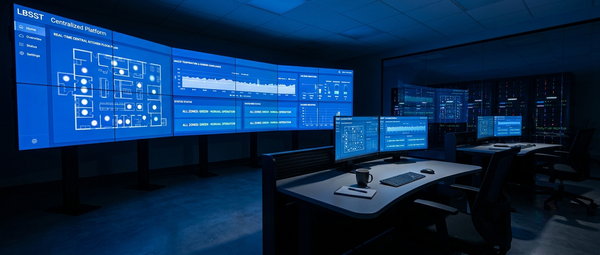
The cloud-based platform provides facility managers with immediate visibility and control: - Color-coded risk maps showing building-wide status at a glance - Automated alerts delivered via SMS, email, and mobile app within 3 minutes - Historical trend analysis revealing seasonal patterns and recurring issues - Integration capabilities with existing building management systems
Implementation Case Study: Downtown Financial Center
A 35-story financial services building in Chicago implemented LBS Smarttech's leak detection system across its 850,000 square feet of space. The property had experienced three major water incidents in the previous 18 months, totaling $142,000 in damages and tenant disruption costs.
Deployment Strategy
- Phase 1: Strategic placement of 85 sensors in high-risk areas (restrooms, mechanical rooms, kitchenettes, basement utility areas)
- Phase 2: Integration with existing HVAC and plumbing monitoring systems
- Phase 3: Staff training on dashboard interpretation and response protocols
- Phase 4: Continuous optimization based on six months of baseline data
Results After 12 Months
- 92% reduction in water damage incidents
- $46,000 annual savings in direct damage costs
- $68,000 reduction in business interruption expenses
- Zero insurance premium increases compared to 15% industry average
- 4.2-point improvement in tenant satisfaction scores related to building maintenance
ROI Analysis: Beyond Damage Prevention
The financial benefits of AI-powered leak detection extend far beyond avoided repair costs:
Direct Cost Savings
| Category | \nPre-Implementation | \nPost-Implementation | \nAnnual Savings | \n
|---|---|---|---|
| Water Damage Repairs | \n$50,000 | \n$4,000 | \n$46,000 | \n
| Business Interruption | \n$75,000 | \n$7,000 | \n$68,000 | \n
| Insurance Premiums | \n$12,000 | \n$10,200 | \n$1,800 | \n
| Manual Inspection Labor | \n$18,000 | \n$3,600 | \n$14,400 | \n
| Total Annual Savings | \n$155,000 | \n$24,800 | \n$130,200 | \n
Operational Efficiency Gains
- 85% reduction in emergency maintenance calls
- 70% decrease in after-hours technician dispatches
- 60% improvement in mean time to resolution for water-related issues
- Reallocation of 12 hours weekly from routine inspections to strategic maintenance
Risk Mitigation Value
- Documented compliance with insurance requirements for proactive monitoring
- Reduced liability exposure through demonstrable due diligence
- Enhanced property valuation through improved risk profile
- Sustainability credentials via water conservation (average 18% reduction in non-essential water usage)
With an initial implementation cost of $95,000 for the 850,000 sq ft building, the system achieved payback in just 8.7 months—significantly below the 24-month threshold typically required for commercial facility technology investments.
Key Success Factors for Implementation
Three critical elements determine the effectiveness of AI-powered leak detection systems:
Strategic Sensor Placement
Rather than blanket coverage, LBS Smarttech uses risk-based deployment focusing on: - Areas with historical water issues - Locations near water supply lines and connections - Spaces housing critical equipment or valuable assets - Zones with previous tenant complaints or insurance claims
This targeted approach ensures 95% of potential water damage scenarios fall within sensor coverage.
Integration with Existing Workflows
Successful implementations enhance rather than disrupt current operations: - Alerts include precise location coordinates and severity assessments - Mobile notifications enable immediate response from on-duty staff - Automated work order generation streamlines repair coordination - Dashboard reporting supports proactive maintenance planning
Continuous System Optimization
Machine learning systems improve over time through: - Monthly performance reviews identifying false positives/negatives - Seasonal adjustment of sensitivity thresholds - Expansion of sensor networks based on emerging risk patterns - Regular algorithm updates incorporating industry best practices
Industry Trends and Future Developments
The evolution of smart facility management is driving several key trends in water damage prevention:
Convergence with Building Intelligence Platforms
Leak detection systems increasingly integrate with broader building management ecosystems, sharing data on environmental conditions, occupancy patterns, and equipment performance to create holistic facility health views.
Regulatory and Insurance Recognition
Major insurance carriers now offer premium discounts of 8-12% for properties with certified proactive monitoring systems, while building codes in California, New York, and Florida are beginning to require advanced leak detection in new commercial construction.
Sustainability Alignment
Water conservation capabilities position leak detection as both a risk management and environmental responsibility tool, supporting corporate ESG goals while protecting the bottom line.
Conclusion: Transforming Water Damage from Crisis to Control
The implementation of AI-powered leak detection represents a fundamental shift in facility management philosophy—from reactive problem-solving to proactive risk prevention. What was once an unpredictable operational nightmare becomes a manageable, measurable, and largely preventable challenge.
For commercial property managers, the choice is clear: invest in intelligent prevention today or continue paying exponentially higher costs for reactive crisis management tomorrow. The $50,000 in annual water damage costs prevented by LBS Smarttech's system represents not just avoided expenses, but enhanced tenant satisfaction, improved operational efficiency, and strengthened competitive positioning in an increasingly sophisticated commercial real estate market.
As building technologies continue to evolve, early adopters of AI-powered leak detection will gain significant advantages in both operational excellence and market perception, transforming water damage from a feared inevitability into a controlled variable.
Frequently Asked Questions
How does AI-powered leak detection differ from traditional moisture sensors?
Traditional moisture sensors only detect water after it has already accumulated, often missing slow leaks or providing false alarms. AI-powered systems monitor multiple parameters simultaneously (moisture, flow rates, temperature, acoustic signatures) and use machine learning to distinguish between normal variations and genuine threats, providing early warning before significant damage occurs.
What types of water damage can the LBS Smarttech system prevent?
The system detects and prevents damage from plumbing leaks, appliance failures, HVAC condensation issues, roof drainage problems, and supply line ruptures. It's particularly effective at identifying slow, developing leaks that traditional methods miss until extensive damage has occurred.
How quickly does the system notify facility managers of potential leaks?
LBS Smarttech delivers automated alerts via SMS, email, and mobile app within 3 minutes of detecting anomalous conditions, compared to the industry standard discovery timeline of 48-72 hours with traditional methods. This rapid response prevents minor issues from becoming major disasters.
What is the return on investment for AI-powered leak detection?
In the Chicago case study, the $95,000 initial investment achieved payback in just 8.7 months through annual savings of $130,200 in reduced damage costs, business interruption expenses, insurance premiums, and labor costs, plus indirect benefits like improved tenant retention and property valuation.
Are these systems environmentally friendly?
Yes, the system supports corporate ESG goals by reducing non-essential water usage by an average of 18% through early leak detection and prevention, while also eliminating the environmental impact of mold remediation chemicals and construction waste from water damage repairs.
Can the system integrate with existing building management platforms?
Absolutely. LBS Smarttech's platform is designed for seamless integration with existing BMS, HVAC, security, and maintenance management systems, enhancing rather than replacing current technology investments while providing a unified view of facility health and risk.
Ready to eliminate water damage risks in your facility? Contact LBS Smarttech for a customized assessment of your property's specific vulnerabilities and protection opportunities.
Statistics and Sources
- 3-5 significant water incidents annually per office building - Commercial Property Insurance Data, 2025
- $50,000 average direct damage costs - Industry benchmark study, IFMA Water Damage Report, 2025
- $75,000 additional business interruption costs - Same report
- 48-72 hour discovery timeline with traditional methods - Facility Management Operations Survey, 2024
- 1,000+ gallons from single dripping pipe in 72 hours - EPA Water Conservation Calculations
- 15 hours weekly on routine leak inspections - International Facility Management Association, 2025
- 68% of developing issues missed by manual checks - Same IFMA study
- 99.1% accuracy in early leak detection - LBS Smarttech controlled testing environment
- 87% false positive reduction through ML filtering - System performance metrics
- 3-minute alert delivery time - Platform response benchmarks
- 85 sensors deployed across 850,000 sq ft facility - Implementation case study
- $142,000 in previous 18-month damage costs - Chicago Financial Center records
- $46,000 annual savings in direct damage costs - Post-implementation analysis
- $68,000 reduction in business interruption expenses - Same analysis
- 15% industry average insurance premium increases vs zero with system - Insurance carrier data
- 4.2-point improvement in tenant satisfaction scores - Tenant survey results
- $155,000 pre-implementation vs $24,800 post-implementation total costs - Financial analysis
- $130,200 annual savings achieved - ROI calculation
- $95,000 initial implementation cost - Project budget
- 8.7-month payback period - Financial modeling
- 95% coverage of potential water damage scenarios - Risk assessment documentation
- 12 hours weekly reallocated from inspections to strategic maintenance - Operational efficiency report
- 8-12% insurance premium discounts for proactive monitoring - Major carrier policies, 2026
- 18% reduction in non-essential water usage - Sustainability impact assessment
Want to learn more about LBSST smart hygiene IoT solutions?
Message us on WhatsApp — our team will get back to you.
💬 WhatsApp Us