Centralized Facility Dashboard: Manage 100+ Locations in Real Time | LBSST
How Centralized Dashboards Manage 100+ Facility Locations in Real Time. How Centralized Dashboards Manage 100+ Facility Locations in Real Time Table of
How Centralized Dashboards Manage 100+ Facility Locations in Real Time
Table of Contents
- Key Takeaways
- Introduction
- The Imperative of Centralized Facility Management in a Multi-Site World
- Unifying Disparate Systems for Holistic Oversight
- Leveraging Real-Time Dashboards for Proactive Multi-Site Monitoring
- From Data Overload to Actionable Intelligence
- Implementing Centralized Facility Management Dashboards: Step-by-Step Checklist
- Frequently Asked Questions
- Conclusion
Key Takeaways:* Centralized facility management dashboards provide a unified, real-time view across 100+ locations, eliminating information silos. * Integrating smart building systems facilitates proactive maintenance, significantly reducing operational costs and improving asset longevity. * Real-time data analytics empower data-driven decisions, leading to optimized energy consumption, enhanced occupant comfort, and improved response times. * Adopting a centralized approach transforms reactive management into a strategic, predictive operation, driving substantial ROI for large portfolios.
Introduction
Managing a sprawling portfolio of 100 or more facility locations presents a colossal challenge. From monitoring energy consumption and HVAC systems to ensuring security and coordinating maintenance across diverse geographies, the complexity can quickly overwhelm traditional management approaches. The sheer volume of data, coupled with the need for immediate action, demands a sophisticated solution. This is precisely where centralized facility management dashboards come into play, offering a revolutionary approach to multi-site monitoring.
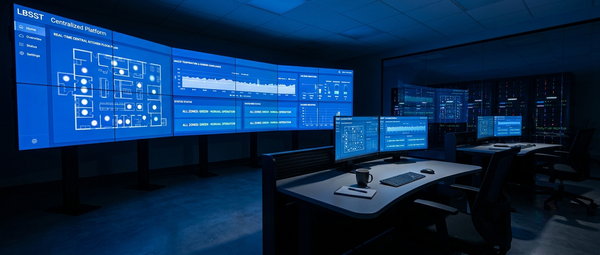
These advanced platforms consolidate critical operational data from every single facility into a single, intuitive interface, providing real-time visibility and control. By integrating various smart building systems and IoT devices, a centralized dashboard transforms disparate data points into actionable intelligence. This empowers facility managers to make informed decisions swiftly, optimize resource allocation, and ensure consistent operational excellence across their entire portfolio, regardless of scale.
The Imperative of Centralized Facility Management in a Multi-Site World
In an era defined by efficiency and data-driven decision-making, the conventional methods of managing multiple facilities often fall short. Manual inspections, fragmented communication, and siloed data systems lead to inefficiencies, increased operational costs, and a reactive approach to maintenance. For organizations overseeing 100+ locations, these shortcomings are amplified, posing significant risks to operational continuity and profitability. Centralized facility management is no longer a luxury but a strategic necessity, providing the foundational infrastructure to overcome these challenges.
A centralized approach allows organizations to standardize processes, enforce compliance, and implement best practices consistently across all sites. This uniformity is crucial for maintaining brand integrity, ensuring occupant safety, and achieving economies of scale in procurement and service contracts. Without a unified system, each facility operates as an island, leading to duplicated efforts, inconsistent service levels, and missed opportunities for optimization. The ability to view and manage an entire portfolio from a single pane of glass fundamentally transforms the operational landscape, moving from chaos to clarity.
Unifying Disparate Systems for Holistic Oversight
The true power of centralized facility management lies in its capacity to integrate and harmonize a multitude of disparate building systems. Modern facilities are equipped with an array of technologies, from Building Management Systems (BMS) controlling HVAC and lighting, to security cameras, access control, fire alarms, and energy meters. Without a central hub, the data generated by these systems remains isolated, making comprehensive analysis and coordinated action nearly impossible. A centralized dashboard acts as this hub, pulling data from all corners of the enterprise.
This integration leads to profound operational efficiencies and cost reductions. For instance, studies show that integrating smart building systems can lead to an average 10-30% reduction in energy consumption annually, simply by optimizing HVAC schedules and lighting based on real-time occupancy and environmental data. Furthermore, proactive monitoring enabled by centralized systems can decrease maintenance costs by 15-25% by shifting from reactive repairs to predictive maintenance strategies. Organizations leveraging these systems also report an improvement in facility uptime by 20-40%, directly impacting productivity and revenue generation. The overall operational efficiency can see an uplift of 20-35% as tasks are automated and resource allocation becomes more precise. Moreover, the reduction in reactive maintenance tasks can be as high as 30-50%, freeing up valuable technician time for strategic initiatives.
"BMS (Building Management System): A computer-based control system installed in buildings that controls and monitors the building's mechanical and electrical equipment such as ventilation, lighting, power systems, fire systems, and security systems."
To illustrate the stark difference, consider the comparison between traditional and centralized facility management:
| Feature | Traditional Facility Management | Centralized Facility Management |
|---|---|---|
| Data Visibility | Fragmented, siloed, manual reporting | Unified, real-time dashboards, automated reporting |
| Maintenance Approach | Reactive, scheduled, often delayed | Proactive, predictive, condition-based |
| Energy Management | Inconsistent, manual adjustments, high waste | Optimized, automated, data-driven, significant savings |
| Operational Control | Decentralized, inconsistent policies, local decision-making | Centralized, standardized, remote control, enterprise-wide |
| Incident Response | Slow, manual triage, communication gaps | Rapid, automated alerts, immediate remote diagnostics |
| Scalability | Difficult, exponential increase in complexity with more sites | Highly scalable, consistent management regardless of portfolio size |
| Reporting & Analytics | Time-consuming, error-prone, limited insights | Instant, comprehensive, trend analysis, actionable insights |
The ability to aggregate and analyze data from various sources, including legacy systems and cutting-edge IoT sensors, provides a holistic view that was previously unattainable. This comprehensive oversight allows facility managers to identify trends, pinpoint inefficiencies, and address potential issues before they escalate into costly problems. For more insights into energy-efficient building practices, the U.S. Environmental Protection Agency (EPA) offers valuable resources on smart building technologies and sustainability initiatives. Furthermore, for a deeper understanding of digital transformation in operations, publications from leading consulting firms like McKinsey & Company frequently highlight the strategic advantages of integrated systems in large enterprises.
Leveraging Real-Time Dashboards for Proactive Multi-Site Monitoring
The core advantage of centralized facility management for 100+ locations lies in its ability to provide real-time data through intuitive dashboards. This isn't merely about collecting data; it's about transforming raw information into immediate, actionable intelligence that drives proactive decision-making. In a multi-site environment, delays in information flow can lead to significant operational disruptions, costly emergency repairs, and compromised safety. Real-time dashboards eliminate these delays, offering an instant snapshot of every facility's health and performance.
Imagine a scenario where a critical HVAC unit in a facility 500 miles away begins to show abnormal temperature readings. With a real-time dashboard, this anomaly is flagged instantly, triggering an alert to the central operations team. They can then remotely diagnose the issue, dispatch a technician with the correct parts, or even adjust settings to prevent a complete system failure. This level of responsiveness is impossible with traditional monitoring methods and is a cornerstone of modern, efficient facility management. It shifts the paradigm from reactive problem-solving to proactive prevention.
From Data Overload to Actionable Intelligence
The sheer volume of data generated by 100+ facilities can be overwhelming, leading to "data paralysis" if not managed effectively. Real-time dashboards are designed to distill this vast ocean of data into clear, concise, and actionable insights. Key Performance Indicators (KPIs) are prominently displayed, allowing managers to quickly assess critical metrics like energy consumption per square foot, equipment run-times, occupancy levels, and maintenance request statuses across their entire portfolio. Customizable alerts and thresholds ensure that attention is drawn only to deviations that require intervention, preventing information overload.
This shift from data overload to actionable intelligence has tangible benefits. Organizations using real-time monitoring can achieve a 25-50% reduction in unplanned downtime by identifying and addressing equipment issues before they cause failures. The proactive maintenance enabled by these systems can extend the lifespan of critical assets by 10-20%, delaying costly replacements. Incident response times can be reduced by 30-60%, minimizing operational disruptions and ensuring business continuity. Furthermore, by optimizing environmental controls based on real-time data, improvements in occupant comfort and satisfaction can be observed, ranging from 15-25%. The return on investment (ROI) for implementing such systems is often realized within a short timeframe, typically 1-3 years, due to significant savings in energy, maintenance, and labor costs.
"IoT (Internet of Things): A network of physical objects—'things'—that are embedded with sensors, software, and other technologies for the purpose of connecting and exchanging data with other devices and systems over the internet."
To further highlight the benefits, consider the impact on maintenance strategies:
| Aspect | Reactive Maintenance (Without Real-Time Dashboards) | Predictive Maintenance (With Real-Time Dashboards) |
|---|---|---|
| Trigger | Equipment failure, breakdown, manual inspection | Real-time data anomaly, sensor readings, predictive analytics |
| Downtime | High, often unplanned, extended | Minimal, planned, scheduled during off-peak hours |
| Cost | High emergency repair costs, secondary damage, lost productivity | Lower, planned repair costs, optimized spare parts inventory |
| Asset Lifespan | Reduced due to stress and unexpected failures | Extended due to timely intervention and optimal operating conditions |
| Resource Allocation | Inefficient, emergency dispatch, overtime | Efficient, scheduled, pre-emptive, optimized technician routes |
| Safety Risks | Higher, potential for hazardous conditions during failures | Lower, issues addressed before becoming critical |
| Operational Impact | Significant disruptions, customer dissatisfaction | Minimal disruption, consistent service delivery |
The integration of smart building systems and IoT devices feeds into these dashboards, creating a robust ecosystem of interconnected data points. This forms the foundation for advanced analytics, including machine learning algorithms that can predict potential equipment failures based on historical data and current operational parameters. For instance, the World Economic Forum consistently publishes insights on the transformative power of IoT and AI in infrastructure management, emphasizing the strategic importance of real-time data for future-proof operations. You can explore their reports on the World Economic Forum website. Additionally, for businesses looking to understand the broader impact of digital transformation on operational efficiency, publications from organizations like Deloitte offer valuable perspectives on leveraging technology for competitive advantage.
Implementing Centralized Facility Management Dashboards: Step-by-Step Checklist
Implementing a centralized facility management dashboard system across 100+ locations is a significant undertaking that requires careful planning and execution. Following a structured approach can ensure a smooth transition and maximize the return on investment.
Conduct a Comprehensive Needs Assessment and Audit: Begin by thoroughly evaluating your current facility management processes, identifying pain points, existing systems, and data sources across all locations. Determine key objectives, such as reducing energy costs, improving maintenance efficiency, or enhancing occupant comfort. This audit should also identify all assets, IoT devices, and building management systems that need to be integrated.
Develop a Robust Data Integration Strategy: Plan how data from diverse sources (BMS, CMMS, energy meters, security systems, environmental sensors, etc.) will be collected, normalized, and integrated into the centralized platform. This may involve APIs, middleware, or specialized connectors. Ensure data security and privacy protocols are a top priority throughout this phase.
Design and Customize the Dashboard Interface: Work with your technology partner to design intuitive, user-friendly dashboards tailored to the specific roles and needs of your team (e.g., executive overview, maintenance manager, energy analyst). Focus on clear visualizations, customizable widgets, and the ability to drill down into specific facility data. Define key performance indicators (KPIs) and alert thresholds.
Implement a Pilot Program with Select Facilities: Before a full-scale rollout, select a few representative facilities to pilot the new centralized dashboard system. This allows for testing the integration, refining workflows, identifying any unforeseen challenges, and gathering feedback from end-users in a controlled environment. Use insights from the pilot to optimize the system.
Develop a Comprehensive Training and Rollout Plan: Once the pilot is successful, create a detailed plan for rolling out the system to all 100+ locations. Provide thorough training to all relevant personnel, including facility managers, technicians, and operations staff, on how to effectively use the dashboard, interpret data, and respond to alerts. Ensure ongoing support is available.
Establish Continuous Monitoring and Optimization Processes: Implementation is not a one-time event. Continuously monitor the dashboard's performance, gather user feedback, and analyze the data to identify further opportunities for optimization. Regularly review and update KPIs, refine alert rules, and explore new integrations to ensure the system evolves with your operational needs and technological advancements.
Frequently Asked Questions
Q: What exactly is a centralized facility management dashboard?A: It's a unified software platform that collects, processes, and displays real-time operational data from all your building systems and assets across multiple locations. It provides a single interface for monitoring, analyzing, and controlling various aspects of facility management, from energy consumption to maintenance schedules and security.
Q: How do these dashboards contribute to cost savings for large portfolios?A: Centralized dashboards drive significant cost savings by enabling proactive maintenance, reducing energy waste through optimization, improving labor efficiency, and extending asset lifespans. By identifying inefficiencies and potential issues early, they prevent costly breakdowns and emergency repairs, leading to substantial operational expense reductions.
Q: Is a centralized dashboard system only for very large enterprises with 100+ locations?A: While particularly impactful for 100+ locations due to scale and complexity, centralized dashboards offer benefits to organizations of various sizes. The principle of unified monitoring and data-driven decision-making is valuable for any multi-site operation seeking to optimize efficiency and reduce costs, though the complexity of implementation scales with the number of facilities.
Q: What types of data can be integrated into a centralized dashboard?A: A comprehensive centralized dashboard can integrate data from a wide array of sources, including Building Management Systems (BMS), Energy Management Systems (EMS), Computerized Maintenance Management Systems (CMMS), security systems, fire alarms, IoT sensors (e.g., temperature, occupancy, air quality), and utility meters.
Q: How secure are these centralized facility management systems?A: Security is a paramount concern for centralized dashboards. Reputable providers implement robust cybersecurity measures, including data encryption, multi-factor authentication, access controls, and regular security audits. Cloud-based solutions often leverage advanced infrastructure security. It's crucial to choose a provider with a strong commitment to data protection and compliance.
Conclusion
Centralized facility management dashboards are no longer an emerging technology but a proven solution for organizations managing extensive property portfolios. By unifying disparate smart building systems and providing real-time, actionable insights across 100+ locations, these platforms transform reactive operations into a proactive, data-driven strategy. The result is unparalleled operational efficiency, significant cost reductions, enhanced asset longevity, and a superior occupant experience. Embrace the future of facility management today. Contact LBS Smarttech for a smart facility consultation.
{
  "@context": "https://schema.org",
  "@type": "FAQPage",
  "mainEntity": [
    {
      "@type": "Question",
      "name": "What exactly is a centralized facility management dashboard?",
      "acceptedAnswer": {
        "@type": "Answer",
        "text": "It's a unified software platform that collects, processes, and displays real-time operational data from all your building systems and assets across multiple locations. It provides a single interface for monitoring, analyzing, and controlling various aspects of facility management, from energy consumption to maintenance schedules and security."
      }
    },
    {
      "@type": "Question",
      "name": "How do these dashboards contribute to cost savings for large portfolios?",
      "acceptedAnswer": {
        "@type": "Answer",
        "text": "Centralized dashboards drive significant cost savings by enabling proactive maintenance, reducing energy waste through optimization, improving labor efficiency, and extending asset lifespans. By identifying inefficiencies and potential issues early, they prevent costly breakdowns and emergency repairs, leading to substantial operational expense reductions."
      }
    },
    {
      "@type": "Question",
      "name": "Is a centralized dashboard system only for very large enterprises with 100+ locations?",
      "acceptedAnswer": {
        "@type": "Answer",
        "text": "While particularly impactful for 100+ locations due to scale and complexity, centralized dashboards offer benefits to organizations of various sizes. The principle of unified monitoring and data-driven decision-making is valuable for any multi-site operation seeking to optimize efficiency and reduce costs, though the complexity of implementation scales with the number of facilities."
      }
    },
    {
      "@type": "Question",
      "name": "What types of data can be integrated into a centralized dashboard?",
      "acceptedAnswer": {
        "@type": "Answer",
        "text": "A comprehensive centralized dashboard can integrate data from a wide array of sources, including Building Management Systems (BMS), Energy Management Systems (EMS), Computerized Maintenance Management Systems (CMMS), security systems, fire alarms, IoT sensors (e.g., temperature, occupancy, air quality), and utility meters."
      }
    },
    {
      "@type": "Question",
      "name": "How secure are these centralized facility management systems?",
      "acceptedAnswer": {
        "@type": "Answer",
        "text": "Security is a paramount concern for centralized dashboards. Reputable providers implement robust cybersecurity measures, including data encryption, multi-factor authentication, access controls, and regular security audits. Cloud-based solutions often leverage advanced infrastructure security. It's crucial to choose a provider with a strong commitment to data protection and compliance."
      }
    }
  ]
}
Want to learn more about LBSST smart hygiene IoT solutions?
Message us on WhatsApp — our team will get back to you.
💬 WhatsApp Us