

How IoT Sensor Networks Save Commercial Buildings $75K in Annual Water Costs
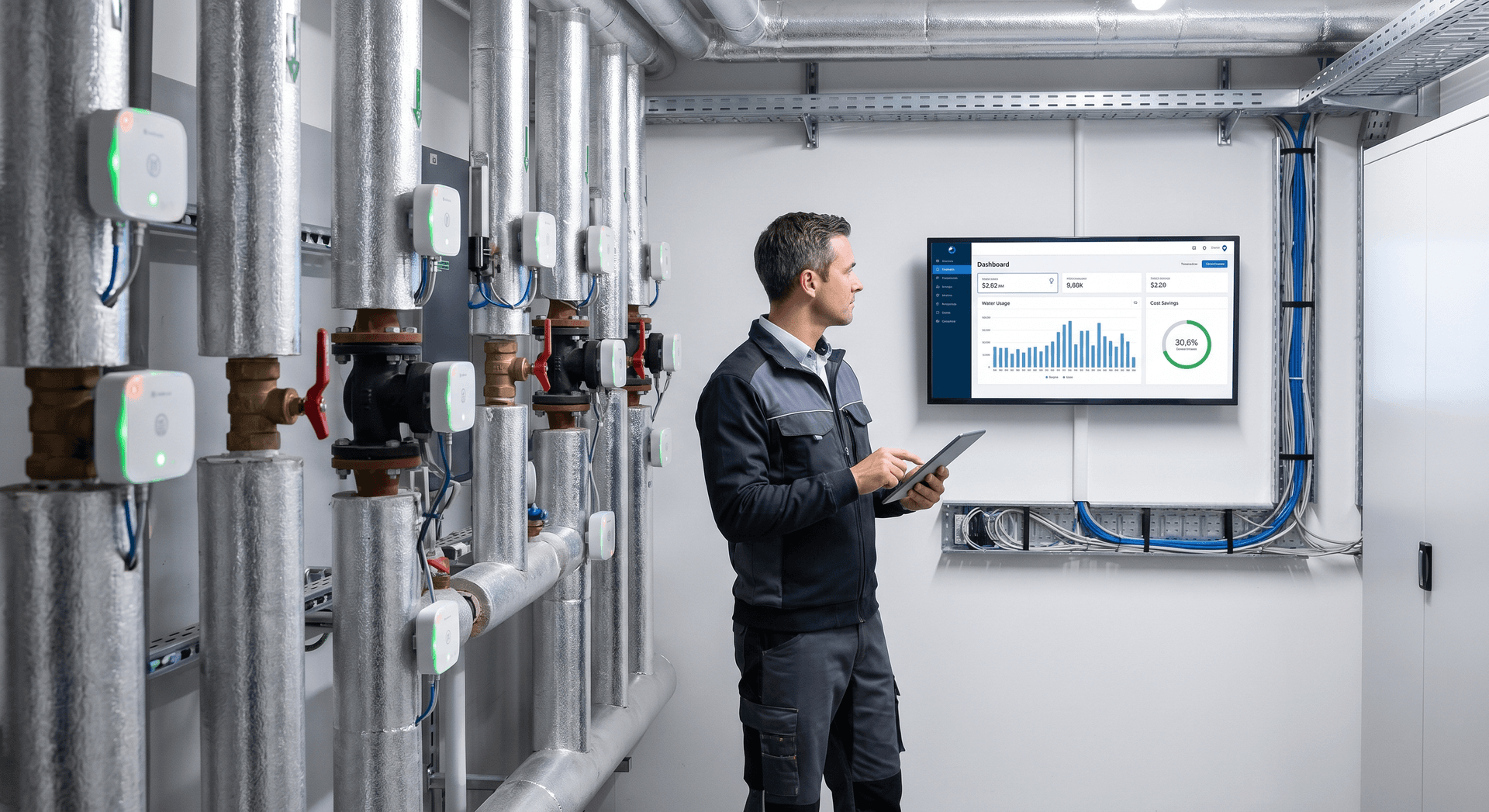
IoT Sensor Networks Save Commercial Buildings $75K in Annual Water Costs
Table of Contents
- Key Takeaways:
- Introduction
- The Hidden Drain: Understanding Commercial Water Waste
- How IoT Sensor Networks Revolutionize Water Management
- Quantifying the Savings: A $75K Annual Impact
- Implementing Smart Water Management: Step-by-Step Checklist
- Frequently Asked Questions
- Conclusion
Key Takeaways:
- Commercial buildings face substantial financial losses, potentially tens of thousands annually, due to undetected water leaks and inefficient usage.
- IoT sensor networks provide real-time data, enabling proactive leak detection, optimized consumption, and significant cost reductions.
- Implementing smart building sensors can lead to an average annual saving of $75,000 in water-related expenses for large commercial properties.
- Beyond direct cost savings, IoT water conservation contributes to sustainability goals, extends asset lifespan, and enhances operational efficiency.
Introduction
In an era where every operational cost is under scrutiny, commercial buildings often overlook a significant drain on their budgets: water waste. From undetected leaks to inefficient irrigation systems, the cumulative effect of poor water management can amount to tens of thousands of dollars annually. However, a revolutionary solution is emerging to combat this silent financial drain: IoT sensor networks. These intelligent systems are transforming commercial water management by providing unprecedented visibility and control, directly answering the challenge of escalating utility costs. By leveraging advanced smart building sensors, properties can identify inefficiencies, prevent costly damage, and achieve remarkable savings, often exceeding $75,000 in annual water costs alone.
The Hidden Drain: Understanding Commercial Water Waste
Commercial buildings, from office complexes to hotels and manufacturing facilities, consume vast quantities of water daily. While some usage is necessary for operations, a significant portion is often lost due to inefficiencies, undetected leaks, and outdated infrastructure. This waste not only inflates utility bills but also contributes to environmental strain and potential property damage. Understanding the root causes of this hidden drain is the first step toward effective commercial water management. Traditional monitoring methods, which often rely on monthly meter readings, are inherently reactive, only alerting facilities managers to problems long after substantial damage and cost have occurred.
The True Cost of Leaks and Inefficiency
Leaks are arguably the most insidious form of water waste in commercial settings. A single, small leak, often invisible to the naked eye, can waste thousands of gallons of water per month. For instance, a leak of just one drip per second can waste over 3,000 gallons per year, costing hundreds of dollars. Multiply this across a large commercial property with complex plumbing, and the figures escalate dramatically. The U.S. Environmental Protection Agency (EPA) estimates that leaks account for over 1 trillion gallons of water wasted annually nationwide, with a significant portion attributable to commercial and institutional facilities Learn more from the EPA. Beyond direct water charges, leaks can lead to extensive property damage, including mold growth, structural compromise, and equipment failure, incurring repair costs that can easily reach $10,000 to $50,000 or more per incident, not including potential business interruption.
"Water Footprint: The total volume of freshwater used to produce the goods and services consumed by an individual or community, including direct and indirect water use."
Inefficient fixtures and systems also contribute significantly. Older toilets can use 3.5 gallons per flush, compared to 1.28 gallons for modern, high-efficiency models. Similarly, inefficient irrigation systems, often programmed without real-time weather data, can overwater landscapes by 30% to 50%, translating to thousands of dollars in unnecessary spending each year. Without granular data on consumption patterns, identifying and rectifying these inefficiencies remains a guessing game, preventing proactive commercial water management.
Beyond the Meter: Indirect Water Costs
The financial impact of water waste extends far beyond the direct charges on a utility bill. Commercial buildings also incur significant indirect costs. For example, the energy required to heat, cool, and pump water contributes substantially to electricity and gas bills. Wasted hot water means wasted energy, with heating costs often accounting for 15% to 25% of a building's total energy consumption. A study by McKinsey & Company highlighted that optimizing water usage can lead to substantial energy savings, reducing a building's overall operational carbon footprint Read McKinsey's insights.
Furthermore, excess water usage can lead to higher wastewater treatment charges, which are often tied directly to consumption. The increased wear and tear on plumbing infrastructure due to continuous, high-volume flow from leaks shortens the lifespan of pipes and equipment, necessitating more frequent and costly repairs or replacements. Over a 10-year period, these cumulative indirect costs can easily add another 20% to 30% on top of direct water bills, making the total financial burden of poor water management far greater than initially perceived.
How IoT Sensor Networks Revolutionize Water Management
The advent of IoT sensor networks has fundamentally changed the landscape of commercial water management. Moving beyond reactive problem-solving, these smart building sensors offer a proactive, data-driven approach to optimize water usage, detect anomalies, and prevent costly incidents. By deploying a network of interconnected sensors throughout a facility, building managers gain real-time visibility into their water infrastructure, enabling informed decision-making and unprecedented control.
Real-time Monitoring and Anomaly Detection
At the core of IoT water conservation is the ability to monitor water flow, pressure, and temperature in real-time. Smart building sensors, strategically placed at key points in a building's plumbing system, transmit continuous data to a central platform. This constant stream of information allows for immediate detection of unusual spikes in consumption, drops in pressure, or changes in temperature that could indicate a leak, burst pipe, or equipment malfunction. Unlike traditional methods that might only flag an issue weeks later during a billing cycle, IoT systems can send instant alerts via email, SMS, or integrated facility management dashboards.
For example, if a pipe bursts in an unoccupied section of a building overnight, an IoT system can detect the sudden increase in flow within minutes. This rapid anomaly detection minimizes the volume of water lost, reduces potential property damage, and drastically cuts down on repair costs. One commercial property reported reducing water damage repair costs by an average of 40% annually after implementing real-time leak detection. This capability is critical for preventing catastrophic events that could lead to business interruption and extensive remediation efforts costing upwards of $100,000 for severe floods.
| Feature | Traditional Water Management | IoT Smart Water Management |
| Detection Method | Manual checks, monthly bills | Real-time sensors, analytics |
| Leak Response | Reactive (weeks/months) | Proactive (minutes/hours) |
| Data Granularity | Aggregate meter readings | Sub-metering, fixture-level |
| Consumption Insight | Limited, historical | Detailed, predictive |
| Cost Savings | Minimal | Significant, ongoing |
| Maintenance | Corrective | Predictive |
Predictive Maintenance and Resource Optimization
Beyond immediate anomaly detection, IoT sensor networks enable sophisticated predictive maintenance strategies. By analyzing historical data on water usage patterns, these systems can identify trends and anticipate potential equipment failures before they occur. For instance, consistent minor fluctuations in a pump's water flow or pressure might signal an impending mechanical issue, allowing maintenance teams to intervene during scheduled downtime rather than facing an emergency repair. This proactive approach extends the lifespan of critical infrastructure, reducing capital expenditure on premature replacements.
IoT water conservation also extends to optimizing resource usage across various building systems. Smart irrigation sensors, for example, can integrate with local weather forecasts to adjust watering schedules based on rainfall and soil moisture levels, preventing overwatering and saving substantial amounts of water and energy. Similarly, sensors in HVAC systems can monitor condensate lines, ensuring efficient operation and preventing overflow issues. This holistic approach to commercial water management not only saves water but also optimizes energy consumption, contributing to a building's overall sustainability goals and reducing operational expenses by an average of 15% in utility costs.
Quantifying the Savings: A $75K Annual Impact
The financial benefits of implementing IoT sensor networks for commercial water management are compelling and measurable. The ability to precisely monitor, control, and optimize water usage translates directly into significant cost reductions, making the return on investment (ROI) for smart technology highly attractive. For many commercial buildings, these savings can easily reach an average of $75,000 annually, positioning IoT water conservation as a critical component of modern facility management.
Case Studies and Tangible Results
Consider a large hospitality chain that deployed IoT smart building sensors across its properties. Within the first year, they identified and rectified dozens of minor leaks that were previously undetected, saving an estimated 1.5 million gallons of water across their portfolio. This translated into a direct cost saving of over $25,000 in water bills for just one mid-sized hotel. Furthermore, by optimizing their laundry and kitchen operations based on real-time data, they reduced water consumption in these high-use areas by an additional 18%, contributing to total annual savings exceeding $80,000 for that property alone.
Another example comes from a university campus, which implemented an IoT-enabled smart irrigation system. By integrating soil moisture sensors and weather data, they reduced outdoor water usage by 35% compared to their previous timed-schedule system. This optimization resulted in annual savings of approximately $45,000 on their landscaping water bill and reduced labor costs associated with manual adjustments. The World Health Organization (WHO) emphasizes the importance of efficient water management in all sectors to ensure global water security, underscoring the broader impact of such technologies Explore WHO water initiatives. These examples demonstrate how IoT water conservation provides a clear ROI smart technology.
Long-term Environmental and Operational Advantages
Beyond immediate financial savings, IoT sensor networks offer substantial long-term environmental and operational advantages. Reducing water consumption directly contributes to sustainability targets, enhancing a company's corporate social responsibility profile. This is increasingly important for attracting tenants, investors, and environmentally conscious customers. By minimizing water waste, buildings also reduce their carbon footprint, as less energy is needed for pumping, heating, and treating water.
Operationally, the granular data provided by smart building sensors empowers facility managers with actionable insights. They can identify peak usage times, understand the performance of individual fixtures, and benchmark water consumption against similar properties. This data-driven approach allows for continuous improvement and refinement of water management strategies. Over a 5-year period, these improvements can lead to cumulative savings far exceeding the initial investment, while simultaneously extending the lifespan of plumbing infrastructure by reducing stress from leaks and inefficient flow, potentially delaying major capital expenditures by several years. The overall efficiency gains and reduced risk of water-related incidents translate into a more resilient, cost-effective, and environmentally responsible commercial property.
Implementing Smart Water Management: Step-by-Step Checklist
Transitioning to smart water management with IoT sensor networks is a strategic investment that yields significant returns. Here’s a practical checklist to guide commercial buildings through the implementation process:
- Conduct a Comprehensive Water Audit: Begin by understanding your current water consumption patterns. Review past utility bills, identify high-usage areas, and conduct a physical inspection for visible leaks or outdated fixtures. This baseline data is crucial for measuring future savings.
- Identify Key Monitoring Points: Determine where to install smart building sensors. Critical locations include main water inlets, major risers, high-consumption areas (e.g., cooling towers, kitchens, laundries, irrigation systems), and potential leak-prone zones (e.g., basements, equipment rooms).
- Select the Right IoT Sensor Network Solution: Research and choose a reputable provider like LBS Smarttech that offers a scalable, robust, and secure IoT platform with appropriate sensor types (e.g., flow meters, pressure sensors, leak detectors) and analytical capabilities tailored to commercial needs.
- Plan for Integration and Data Analytics: Ensure the chosen system can integrate with existing Building Management Systems (BMS) or provide a user-friendly dashboard for real-time data visualization, alert management, and reporting. Data analytics is key to identifying trends and optimizing usage.
- Develop a Phased Deployment Strategy: For large properties, consider a phased rollout to minimize disruption and allow for testing and optimization. Start with critical areas or a pilot zone to demonstrate ROI before expanding across the entire facility.
- Train Staff and Establish Protocols: Educate facility managers, maintenance teams, and relevant staff on how to interpret data, respond to alerts, and utilize the new IoT water conservation system effectively. Establish clear protocols for leak response and system maintenance.
Frequently Asked Questions
Q1: How quickly can a commercial building expect to see ROI from IoT water management? A1: Most commercial buildings begin to see a return on investment within 12 to 24 months. Significant savings often appear sooner, as immediate leak detection and efficiency improvements quickly reduce consumption and prevent costly damage. The long-term benefits continue to grow.
Q2: Are IoT water sensors difficult to install in existing buildings? A2: Modern IoT smart building sensors are designed for flexible installation. Many systems are wireless and non-invasive, minimizing disruption to existing plumbing. Professional installation ensures optimal placement and integration, making the process straightforward for experienced providers.
Q3: Can IoT water conservation systems help with compliance and sustainability goals? A3: Absolutely. By providing detailed data on water usage, these systems help buildings track consumption, identify areas for improvement, and demonstrate compliance with environmental regulations. This data is invaluable for achieving LEED certifications and other sustainability targets.
Q4: What if there's a power outage? Will the sensors still work? A4: Most commercial-grade IoT sensor networks include battery backups for critical components and sensors. This ensures continuous monitoring and data collection even during power interruptions, providing reliability and peace of mind for facility managers.
Q5: How does an IoT system differentiate between normal high usage and a leak? A5: Advanced IoT platforms use sophisticated algorithms and machine learning to analyze historical data and establish baseline usage patterns. Any significant deviation from these learned patterns, especially sudden spikes or continuous flow during off-hours, triggers an alert, distinguishing leaks from normal operations.
Conclusion
The financial and environmental implications of commercial water waste are too significant to ignore. By embracing IoT sensor networks, commercial buildings can move beyond outdated, reactive water management practices to a proactive, data-driven approach that delivers tangible savings. The ability to detect leaks in real-time, optimize consumption, and gain deep insights into water usage patterns translates into an average annual saving of $75,000 for many properties, while also fostering greater sustainability. It's time to transform your facility's water strategy. Contact LBS Smarttech for a smart facility consultation and discover how our IoT solutions can benefit your building.
{
  "@context": "https://schema.org",
  "@type": "FAQPage",
  "mainEntity": [
    {
      "@type": "Question",
      "name": "How quickly can a commercial building expect to see ROI from IoT water management?",
      "acceptedAnswer": {
        "@type": "Answer",
        "text": "Most commercial buildings begin to see a return on investment within 12 to 24 months. Significant savings often appear sooner, as immediate leak detection and efficiency improvements quickly reduce consumption and prevent costly damage. The long-term benefits continue to grow."
      }
    },
    {
      "@type": "Question",
      "name": "Are IoT water sensors difficult to install in existing buildings?",
      "acceptedAnswer": {
        "@type": "Answer",
        "text": "Modern IoT smart building sensors are designed for flexible installation. Many systems are wireless and non-invasive, minimizing disruption to existing plumbing. Professional installation ensures optimal placement and integration, making the process straightforward for experienced providers."
      }
    },
    {
      "@type": "Question",
      "name": "Can IoT water conservation systems help with compliance and sustainability goals?",
      "acceptedAnswer": {
        "@type": "Answer",
        "text": "Absolutely. By providing detailed data on water usage, these systems help buildings track consumption, identify areas for improvement, and demonstrate compliance with environmental regulations. This data is invaluable for achieving LEED certifications and other sustainability targets."
      }
    },
    {
      "@type": "Question",
      "name": "What if there's a power outage? Will the sensors still work?",
      "acceptedAnswer": {
        "@type": "Answer",
        "text": "Most commercial-grade IoT sensor networks include battery backups for critical components and sensors. This ensures continuous monitoring and data collection even during power interruptions, providing reliability and peace of mind for facility managers."
      }
    },
    {
      "@type": "Question",
      "name": "How does an IoT system differentiate between normal high usage and a leak?",
      "acceptedAnswer": {
        "@type": "Answer",
        "text": "Advanced IoT platforms use sophisticated algorithms and machine learning to analyze historical data and establish baseline usage patterns. Any significant deviation from these learned patterns, especially sudden spikes or continuous flow during off-hours, triggers an alert, distinguishing leaks from normal operations."
      }
    }
  ]
}