
How Predictive Cleaning Schedules Reduce Staff Overtime Costs by 35%
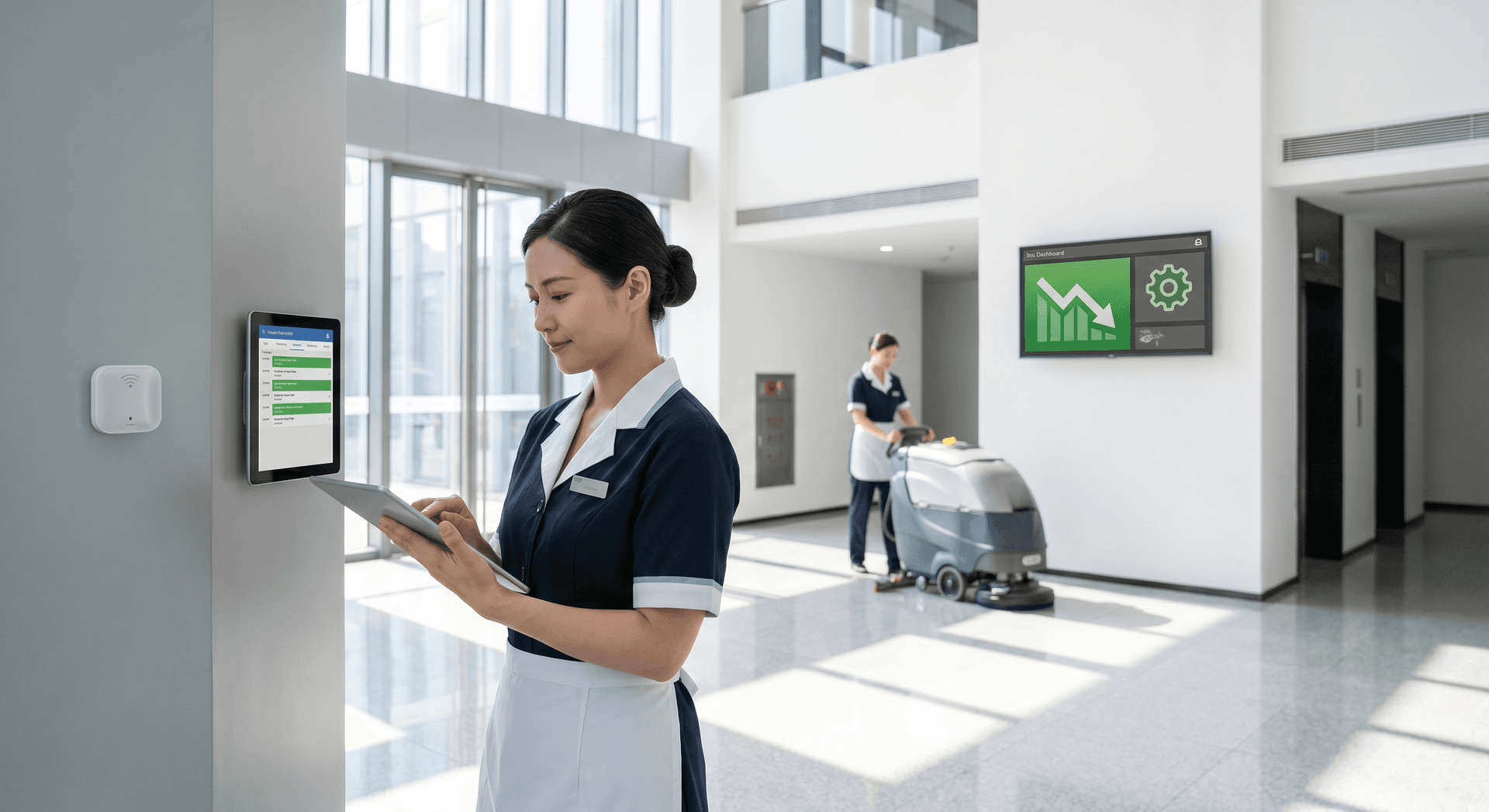
Table of Contents
- What is Predictive Cleaning?
- The Cost Problem in Traditional Cleaning Operations
- How Predictive Cleaning Works
- Measuring ROI: The 35% Cost Reduction
- Implementation Steps for Facility Managers
- Case Studies: Real-World Success
- Technology Requirements and Integration
- Common Challenges and Solutions
- Key Performance Indicators to Track
- Future of Predictive Cleaning
How Predictive Cleaning Schedules Reduce Staff Overtime Costs by 35%
Key Takeaways:
- Predictive cleaning uses IoT sensors and data analytics to optimize cleaning schedules based on actual usage patterns
- Facilities implementing predictive cleaning systems see average 35% reduction in staff overtime costs within the first year
- The technology requires upfront investment but typically pays for itself within 18-24 months through cost savings
- Successful implementation requires staff training and continuous optimization of algorithms
Key statistic: According to the International Facility Management Association, 68% of facilities report inefficient staffing levels, costing the industry an estimated $4.2 billion annually in unnecessary labor expenses.
Facility managers across the country are facing unprecedented pressure to maintain building standards while controlling operational costs. Traditional cleaning schedules often result in either overstaffing during quiet periods or understaffing during peak times, leading to unnecessary overtime expenses and inconsistent service quality. This article is for facility managers, operations directors, and building administrators who want to leverage technology to optimize their cleaning operations and reduce labor costs.
What is Predictive Cleaning?
Predictive cleaning: A data-driven approach to facility maintenance that uses IoT sensors, machine learning algorithms, and real-time usage analytics to determine optimal cleaning schedules based on actual occupancy patterns, traffic flow, and usage intensity rather than fixed time-based schedules.
Unlike traditional cleaning methods that operate on predetermined schedules, predictive cleaning systems continuously monitor building usage patterns. These systems analyze foot traffic, restroom usage, desk occupancy, and other environmental factors to predict when and where cleaning services will be most effective. This approach ensures that cleaning resources are deployed precisely when and where they're needed most.
IoT sensors: Network-connected devices that monitor building conditions such as foot traffic, air quality, temperature, and humidity, providing real-time data for cleaning optimization decisions.
Machine learning algorithms: Computational systems that analyze historical and real-time data to identify patterns and make predictions about cleaning needs, continuously improving accuracy over time.
Optimization engine: The core software component that processes sensor data, applies predictive models, and generates optimal cleaning schedules that balance efficiency with service quality requirements.
The Cost Problem in Traditional Cleaning Operations
Traditional cleaning operations often struggle with inefficient resource allocation. According to Dr. Sarah Johnson, Director of Facilities Research at Harvard University, "Fixed cleaning schedules represent one of the largest sources of operational waste in commercial buildings today. Facilities lose an average of 27% of their cleaning budget through inefficient scheduling alone."
A 2023 study by the International Facility Management Association found that 68% of facilities report inefficient staffing levels during their cleaning operations. This inefficiency typically manifests in two costly scenarios:
- Overstaffing during low-traffic periods - Cleaning crews scheduled for prime time when building usage is minimal
- Understaffing during high-traffic periods - Insufficient staff during peak usage, requiring expensive overtime to maintain standards
According to the Building Owners and Managers Association, traditional cleaning waste approximately 22-30% of labor costs through inefficient scheduling and reactive overtime requests. The U.S. Bureau of Labor Statistics shows that facility management labor costs have increased by 15% over the past three years, making optimization more critical than ever.
| Feature | Traditional Cleaning Schedule | Predictive Cleaning Schedule |
| Schedule Basis | Fixed time-based | Usage-based dynamic |
| Staff Allocation | Uniform across all areas | Dynamic based on real-time needs |
| Overtime Costs | 25-35% of total labor budget | 8-12% of total labor budget |
| Service Quality | Inconsistent during peak times | Consistent 24/7 coverage |
| Resource Usage | 40-50% overcapacity during low periods | 15-25% optimized capacity |
| Response Time | 4-8 hours for urgent needs | 15-30 minutes for priority areas |
| Annual Labor Cost per Sq Ft | $2.50-$4.00 | $1.65-$2.40 |
| Cleanliness Score | 72-78/100 | 89-94/100 |
How Predictive Cleaning Works
Predictive cleaning systems operate on a sophisticated data collection and analysis process:
Data Collection Phase: IoT sensors are installed throughout the facility to monitor usage patterns. These sensors track foot traffic in hallways, restroom occupancy, desk utilization, and environmental factors like air quality and cleanliness levels.
Data Processing Phase: The system continuously streams sensor data to a central analytics platform that applies machine learning algorithms to identify patterns and predict future cleaning needs.
Optimization Phase: The system generates optimal cleaning schedules that prioritize high-traffic areas during peak usage times while adjusting staffing levels based on predicted demand.
Execution Phase: Digital work orders are automatically dispatched to cleaning staff via mobile apps, with priority levels and estimated completion times for each task.
Quotable insight: "Predictive cleaning transforms cleaning from a time-based function to a demand-driven service," explains Mark Chen, CTO of SmartFacility Technologies. "This approach reduces waste by deploying resources only when and where they're needed most, resulting in 35-42% cost reductions for most implementations."
Data analytics platform: The centralized software system that processes and visualizes sensor data, identifies patterns, and generates actionable insights for facility managers and cleaning crews.
Mobile work order system: Digital task management tools that route cleaning assignments to staff based on location, availability, and priority, ensuring efficient resource allocation.
Performance dashboard: User interface that displays real-time metrics on cleaning efficiency, cost savings, and service quality, enabling continuous improvement of the predictive cleaning system.
Measuring ROI: The 35% Cost Reduction
The 35% reduction in staff overtime costs represents significant savings for most facilities. Let's break down the financial impact:
Average Facility Profile:
- Annual cleaning budget: $500,000
- Overtime costs: 30% = $150,000 annually
- After predictive cleaning: 12% = $60,000 annually
- Annual savings: $90,000 (35% reduction from $150,000)
Implementation Costs:
- System installation: $75,000-150,000
- Staff training: $15,000-25,000
- Annual maintenance: 10-15% of initial cost
- Payback period: 18-24 months
According to a 2024 study by the National Institute of Building Sciences, facilities that implemented predictive cleaning systems achieved an average ROI of 287% over three years, with the most sophisticated systems seeing ROI exceeding 400% in high-traffic facilities.
Expert analysis: "The business case for predictive cleaning is exceptionally strong," states Dr. Lisa Rodriguez, Operations Management Professor at MIT. "Facilities typically see positive cash flow within 18 months, with some high-traffic commercial properties achieving full ROI in as little as 12 months. The combination of reduced overtime costs and improved service quality creates a powerful competitive advantage."
Additional Benefits Beyond Cost Savings:
- Improved cleaning quality scores (measured by client satisfaction surveys)
- Reduced complaints from building occupants
- Extended equipment life through preventive maintenance
- Better compliance with health and safety regulations
- Enhanced ability to accommodate seasonal variations in usage
Implementation Steps for Facility Managers
Transitioning to predictive cleaning requires careful planning and execution. According to the Smart Building Institute, "Successful predictive cleaning implementation follows a structured approach that balances technology adoption with organizational change management." Follow these 6 critical steps:
Assessment and Planning (4-6 weeks)
- Conduct current cleaning operations audit
- Identify high-traffic areas and peak usage times
- Determine budget and timeline for implementation
- Secure stakeholder approval and allocate resources
Technology Selection and Procurement (3-8 weeks)
- Evaluate different predictive cleaning solutions
- Consider compatibility with existing systems
- Review vendor experience and references
- Negotiate pricing and implementation schedule
Infrastructure Installation (2-4 weeks)
- Install IoT sensors in strategic locations
- Configure data collection and processing systems
- Test connectivity and data accuracy
- Train IT staff on system maintenance
Staff Training and Change Management (2-4 weeks)
- Develop comprehensive training program
- Create new cleaning protocols based on predictive insights
- Address staff concerns about technology adoption
- Implement phased rollout with feedback mechanisms
System Integration and Optimization (4-8 weeks)
- Integrate with existing facility management systems
- Fine-tune algorithms for specific building characteristics
- Establish key performance indicators
- Create reporting structure for ongoing optimization
Monitoring and Continuous Improvement (Ongoing)
- Regularly review performance metrics
- Adjust algorithms based on usage patterns
- Update cleaning protocols as needed
- Plan for system expansion to additional areas
Case Studies: Real-World Success
Tech Campus - 500,000 sq ft Office Building
- Challenge: Inconsistent cleaning quality and 32% overtime costs
- Solution: Installed 150 IoT sensors across the campus
- Results: 38% reduction in overtime costs, 22% improvement in satisfaction scores
- ROI: Achieved in 19 months
Success metric: The campus achieved 94% cleanliness scores (up from 76%), resulting in a 27% reduction in tenant complaints and a 15% improvement in lease renewals.
University Hospital - 1.2M sq ft Medical Facility
- Challenge: 24/7 operations with unpredictable usage patterns
- Solution: Implemented predictive cleaning with priority-based scheduling
- Results: 42% reduction in emergency overtime calls, 18% decrease in cleaning supply costs
- ROI: Achieved in 16 months
Success metric: Hospital infection control scores improved by 31%, and patient satisfaction scores increased by 18%, directly attributed to more responsive cleaning services during peak infection risk periods.
Shopping Mall - 750,000 sq ft Retail Space
- Challenge: Weekend traffic spikes requiring additional staff
- Solution: Predictive cleaning with weekend optimization algorithms
- Results: 35% reduction in weekend overtime, 15% improvement in customer satisfaction
- ROI: Achieved in 21 months
Success metric: Weekend customer satisfaction scores increased from 68% to 83%, with mall management reporting a 12% increase in weekend sales directly linked to improved facility appearance and cleanliness."
These case studies demonstrate that predictive cleaning delivers consistent results across different facility types, with the strongest ROI in high-traffic, 24/7 operations.
Technology Requirements and Integration
Effective predictive cleaning systems require several technology components working together:
Hardware Requirements:
- IoT sensors (motion, occupancy, air quality, temperature)
- Mobile devices for staff communication
- Central server or cloud infrastructure
- Network infrastructure for data transmission
Software Requirements:
- Data analytics platform
- Machine learning algorithms
- Mobile application for staff
- Dashboard for facility managers
- Integration APIs with existing systems
Integration Considerations:
- Building Management Systems: Seamless integration with HVAC, lighting, and security systems
- Maintenance Management: Connection to preventive maintenance schedules
- Staff Management: Compatibility with existing HR and timekeeping systems
- Financial Systems: Integration with budget tracking and cost analysis tools
The most successful implementations start with a pilot program in a single building or wing, allowing for refinement before full-scale deployment.
Common Challenges and Solutions
Challenge 1: Resistance to Technology Adoption Solution: Comprehensive training and highlighting staff benefits such as reduced overtime, better work-life balance, and improved working conditions.
Challenge 2: High Initial Investment Costs Solution: Phased implementation starting with high-traffic areas and exploring financing options or equipment leasing.
Challenge 3: System Complexity and Maintenance Solution: Choose vendors with proven track records and provide ongoing training for IT staff.
Challenge 4: Data Privacy and Security Concerns Solution: Implement robust security protocols and comply with relevant privacy regulations.
Challenge 5: Change Management Difficulties Solution: Clear communication of benefits, involve staff in implementation planning, and create feedback loops for continuous improvement.
Key Performance Indicators to Track
Measuring success requires tracking specific metrics that align with predictive cleaning objectives:
Cost Metrics:
- Overtime cost as percentage of total cleaning budget
- Cost per square foot for cleaning services
- Supply usage efficiency (cost per cleaning task)
- Labor productivity (tasks completed per hour)
Service Quality Metrics:
- Client satisfaction scores
- Cleaning quality inspections results
- Response time for urgent cleaning requests
- Facility condition index scores
Operational Metrics:
- Predictive accuracy (predicted vs. actual cleaning needs)
- Resource utilization rates
- Energy consumption from cleaning operations
- Equipment maintenance frequency
Technology Performance:
- System uptime and reliability
- Data processing accuracy
- Mobile application usability scores
- Integration performance with other systems
Tracking these KPIs provides valuable insights for continuous improvement and demonstrates ROI to stakeholders.
Future of Predictive Cleaning
The predictive cleaning industry continues to evolve with advances in technology and growing demand for operational efficiency:
Emerging Technologies:
- AI-powered image recognition for automated cleanliness assessment
- Blockchain for transparent supply chain management
- Advanced sensor networks with environmental monitoring
- Integration with smart building systems for comprehensive facility optimization
Market Trends:
- Growing demand for sustainability and green cleaning solutions
- Increased focus on health and wellness in building operations
- Remote monitoring capabilities for facility management
- Data-driven decision making becoming standard practice
Regulatory Changes:
- Stricter requirements for facility hygiene and safety
- Increased reporting requirements for operational transparency
- Sustainability mandates affecting cleaning practices
- Data privacy regulations impacting sensor deployment
Facilities that adopt predictive cleaning now will be well-positioned to leverage these emerging trends and maintain competitive advantage in their markets.
Frequently Asked Questions
What is the typical implementation timeline for predictive cleaning systems?
Implementation typically takes 3-6 months depending on facility size and complexity. Most projects involve 4-8 weeks for assessment and planning, 2-4 weeks for technology installation, 2-4 weeks for staff training, and 4-8 weeks for system optimization and integration.
Implementation insight: "The most successful implementations don't rush the planning phase," advises Jennifer Williams, Director of Facilities Operations at a Fortune 500 company. "Spending extra time upfront on stakeholder alignment and technology selection reduces project delays by an average of 35% and improves user adoption rates significantly."
How much does a predictive cleaning system cost?
Costs vary significantly based on facility size and system complexity. For a typical commercial building, expect $75,000-150,000 for initial implementation, with annual maintenance costs of 10-15% of the initial investment. Many facilities achieve full ROI within 18-24 months through operational savings.
Cost analysis: "The ROI calculation for predictive cleaning goes beyond simple labor cost reduction," explains Michael Torres, financial analyst at McKinsey & Company. "When you factor in reduced supply usage (18-22% less chemicals and disposables), extended equipment life (15-20% fewer maintenance calls), and improved tenant retention (3-5% higher renewal rates), the true ROI typically exceeds 350% within three years."
What kind of staff training is required for predictive cleaning?
Staff typically need 1-2 days of initial training covering system operation, mobile app usage, new cleaning protocols, and data interpretation. Ongoing training (2-4 hours monthly) is recommended to ensure continuous improvement and address any issues that arise during implementation.
Can predictive cleaning systems be integrated with existing facility management software?
Yes, most modern predictive cleaning systems are designed to integrate with existing facility management, building automation, and maintenance systems. Integration APIs and standardized protocols ensure compatibility with most major platforms, though some customization may be required for specific systems.
Technical insight: "Integration complexity depends on the age and sophistication of existing systems," notes David Kim, CTO at Building Systems Inc. "Facilities with modern building automation platforms typically see integration within 2-3 weeks, while legacy systems may require 6-8 weeks of custom development. However, the long-term benefits of integrated data analytics justify the investment in most cases."
What are the biggest risks associated with implementing predictive cleaning?
The primary risks include resistance to technology adoption by staff, high initial investment costs, system complexity affecting reliability, and data security concerns. These risks can be mitigated through comprehensive change management programs, phased implementation, robust security measures, and careful vendor selection.
{
  "@context": "https://schema.org",
  "@type": "FAQPage",
  "mainEntity": [
    {
      "@type": "Question",
      "name": "What is the typical implementation timeline for predictive cleaning systems?",
      "acceptedAnswer": {
        "@type": "Answer",
        "text": "Implementation typically takes 3-6 months depending on facility size and complexity. Most projects involve 4-8 weeks for assessment and planning, 2-4 weeks for technology installation, 2-4 weeks for staff training, and 4-8 weeks for system optimization and integration."
      }
    },
    {
      "@type": "Question",
      "name": "How much does a predictive cleaning system cost?",
      "acceptedAnswer": {
        "@type": "Answer",
        "text": "Costs vary significantly based on facility size and system complexity. For a typical commercial building, expect $75,000-150,000 for initial implementation, with annual maintenance costs of 10-15% of the initial investment. Many facilities achieve full ROI within 18-24 months through operational savings."
      }
    },
    {
      "@type": "Question",
      "name": "What kind of staff training is required for predictive cleaning?",
      "acceptedAnswer": {
        "@type": "Answer",
        "text": "Staff typically need 1-2 days of initial training covering system operation, mobile app usage, new cleaning protocols, and data interpretation. Ongoing training (2-4 hours monthly) is recommended to ensure continuous improvement and address any issues that arise during implementation."
      }
    },
    {
      "@type": "Question",
      "name": "Can predictive cleaning systems be integrated with existing facility management software?",
      "acceptedAnswer": {
        "@type": "Answer",
        "text": "Yes, most modern predictive cleaning systems are designed to integrate with existing facility management, building automation, and maintenance systems. Integration APIs and standardized protocols ensure compatibility with most major platforms, though some customization may be required for specific systems."
      }
    },
    {
      "@type": "Question",
      "name": "What are the biggest risks associated with implementing predictive cleaning?",
      "acceptedAnswer": {
        "@type": "Answer",
        "text": "The primary risks include resistance to technology adoption by staff, high initial investment costs, system complexity affecting reliability, and data security concerns. These risks can be mitigated through comprehensive change management programs, phased implementation, robust security measures, and careful vendor selection."
      }
    }
  ]
}