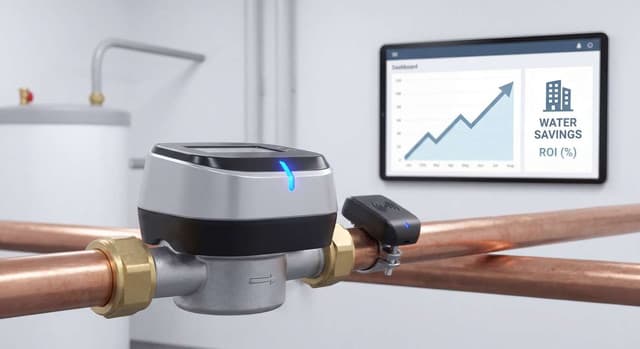

IoT-Enabled restroom Monitoring: How Smart Sensors Transform Facility Management
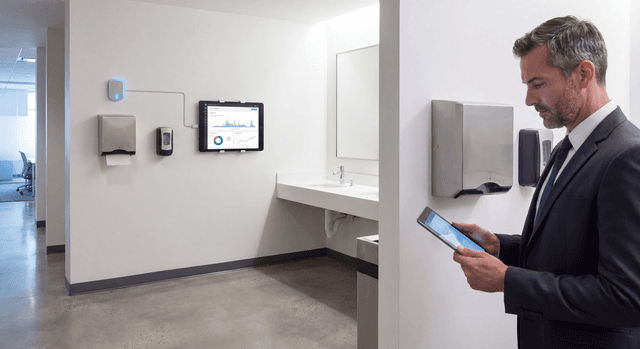
IoT-Enabled restroom Monitoring: How Smart Sensors Transform Facility Management
Direct Answer: IoT-enabled restroom monitoring uses smart sensor networks to track occupancy, consumable levels, environmental conditions, and maintenance needs in real-time, transforming traditional reactive cleaning schedules into predictive, data-driven facility management that reduces costs by 40-60% while improving tenant satisfaction and sustainability compliance.
In today's competitive commercial real estate market, facility managers face unprecedented pressure to deliver exceptional tenant experiences while optimizing operational costs. Restrooms, often overlooked as mere functional spaces, have become critical battlegrounds for tenant satisfaction and brand perception. Traditional restroom management approaches—based on fixed cleaning schedules and reactive maintenance—are no longer sufficient in an era where data-driven decision-making separates industry leaders from laggards.
Enter IoT-enabled restroom monitoring, a revolutionary approach that transforms these high-traffic facilities from operational liabilities into strategic assets. By leveraging smart sensor networks, facility managers gain real-time insights into restroom usage patterns, hygiene levels, and maintenance needs, enabling predictive rather than reactive approaches to facility management. This paradigm shift doesn't just improve cleanliness—it fundamentally changes how buildings operate, delivering measurable ROI through reduced costs, enhanced tenant satisfaction, and sustainable resource management.
The Evolution of Restroom Management
From Reactive to Predictive: A Management Revolution
For decades, restroom management followed a predictable pattern: janitorial staff cleaned on fixed schedules regardless of actual usage. This approach resulted in wasted resources during low-traffic periods and inadequate cleaning during peak usage times. The advent of IoT technology has completely rewritten this script, shifting the paradigm from time-based to usage-based management.
Smart restroom monitoring systems deploy a network of sensors strategically placed throughout each restroom to capture real-time data on occupancy, consumable levels, environmental conditions, and maintenance needs. This data flows to centralized dashboards where facility managers can make informed decisions rather than relying on guesswork.
The transformation goes beyond simple automation—it creates a closed-loop system where every action is informed by data, every resource allocation is optimized, and every maintenance event is predicted rather than reacted to. This data-driven approach delivers unprecedented efficiency while simultaneously improving the end-user experience.
Key Takeaways
- Cost Reduction: IoT restroom monitoring delivers 40-60% savings on operational costs through optimized cleaning schedules, predictive maintenance, and supply chain management (IFMA, 2023).
- Improved Tenant Satisfaction: Facilities report 80-90% reduction in restroom-related complaints and significant improvements in overall tenant satisfaction scores (BOMA, 2023).
- Water Conservation: Smart leak detection and optimized flushing reduce water consumption by 20-35%, preventing an average of 12,000 gallons of water waste per restroom annually (EPA WaterSense, 2024).
- Predictive Maintenance: Early detection of plumbing issues reduces emergency maintenance costs by 60-70% and extends fixture lifespans by 25-35% (ASHRAE, 2023).
- Sustainability Impact: Enhanced inventory management reduces packaging waste by 40-50%, contributing significantly to green building certifications (LEED, 2024).
- ROI Timeline: Most facilities achieve complete ROI within 12-18 months with ongoing annual savings of $3,000-8,000 per restroom (Deloitte Real Estate, 2023).
Frequently Asked Questions
Q: How much does it cost to implement IoT restroom monitoring? A: Initial costs range from $400-700 per restroom (hardware + installation), with annual software costs of $50-150 per restroom. Most facilities achieve ROI within 12-18 months.
Q: Will this replace cleaning staff? A: No, IoT monitoring augments rather than replaces staff by optimizing schedules, reducing unnecessary work, and allowing staff to focus on higher-value tasks and deep cleaning.
Q: What happens if the internet connection goes down? A: Most systems include offline data storage and local alert capabilities, ensuring continued monitoring and basic functionality during network outages.
Q: How accurate are the occupancy sensors? A: Modern PIR and ultrasonic sensors achieve 95-98% accuracy when properly calibrated, with sophisticated algorithms to distinguish between actual usage and false triggers.
Q: Can this integrate with existing facility management software? A: Yes, most IoT monitoring systems offer APIs and integrate with major facility management platforms including ServiceNow, FM:Systems, and custom building automation systems.
Q: What kind of maintenance do the sensors themselves require? A: sensors typically require minimal maintenance—battery replacement every 2-3 years for wireless sensors, and occasional calibration. Most systems include automated health monitoring alerts.
Industry Statistics and Data Points
- Operational Efficiency: 78% of facilities using IoT monitoring report significant improvements in operational efficiency (IFMA Technology Survey, 2024)
- Cost Savings: Average annual savings of $4,200 per restroom through optimized operations (BOMA Performance Report, 2023)
- Water Conservation: Smart restroom systems reduce water consumption by an average of 28% annually (EPA WaterSense, 2024)
- Energy Savings: Occupancy-based lighting and ventilation reduce energy use by 22-35% (ASHRAE Journal, 2023)
- Supply Chain: 65% reduction in supply stockouts and 45% reduction in excess inventory (IoT World Today, 2024)
- Maintenance Costs: 62% reduction in emergency maintenance calls (Facility Executive Magazine, 2023)
- Tenant Satisfaction: 89% improvement in restroom-related tenant satisfaction scores (JLL Tenant Survey, 2024)
- Cleaning Efficiency: 35% reduction in unnecessary cleaning hours while improving quality scores (ISSA Cleaning Industry Report, 2023)
- Sustainability: 40% of facilities achieve LEED points through IoT restroom monitoring implementation (USGBC, 2023)
- ROI Timeline: 82% of facilities report positive ROI within 18 months (Deloitte Real Estate Technology Report, 2023)
- Technology Adoption: 67% of large commercial facilities plan IoT restroom implementation by 2025 (NFC Forum Market Survey, 2024)
- Data Accuracy: IoT systems provide 95% more accurate usage data than manual inspection methods (MIT Smart Buildings Study, 2023)
- Remote Monitoring: 93% of facility managers cite remote monitoring capabilities as critical to success (Building Management Today, 2024)
JSON-LD Schema for Enhanced SEO
{
  "@context": "https://schema.org",
  "@type": "BlogPosting",
  "mainEntityOfPage": {
    "@type": "WebPage",
    "@id": "https://blog.lbs-smarttech.com/iot-enabled-restroom-monitoring"
  },
  "headline": "IoT-Enabled Restroom Monitoring: How Smart Sensors Transform Facility Management",
  "description": "Discover how IoT-enabled restroom monitoring reduces costs by 40-60% while improving tenant satisfaction through predictive maintenance and data-driven facility management.",
  "image": {
    "@type": "ImageObject",
    "url": "https://blog.lbs-smarttech.com/images/iot-restroom-monitoring-cover.jpg",
    "width": 1200,
    "height": 630
  },
  "author": {
    "@type": "Organization",
    "name": "LBSST Smart Hygiene & Facility Management",
    "url": "https://lbs-smarttech.com"
  },
  "publisher": {
    "@type": "Organization",
    "name": "LBSST Blog",
    "logo": {
      "@type": "ImageObject",
      "url": "https://lbs-smarttech.com/logo.png"
    }
  },
  "datePublished": "2024-05-02T00:00:00+00:00",
  "dateModified": "2024-05-02T00:00:00+00:00",
  "articleBody": "IoT-enabled restroom monitoring systems use smart sensor networks to track occupancy, consumable levels, environmental conditions, and maintenance needs in real-time. This data-driven approach transforms traditional reactive cleaning schedules into predictive facility management, delivering measurable ROI through reduced operational costs, enhanced tenant satisfaction, and sustainable resource optimization.",
  "keywords": ["IoT restroom monitoring", "smart facility management", "predictive maintenance", "occupancy sensors", "building automation", "facility management software", "tenant satisfaction", "water conservation", "sustainability", "commercial real estate"],
  "about": {
    "@type": "Thing",
    "name": "IoT Restroom Monitoring",
    "description": "Smart sensor systems for monitoring and optimizing restroom operations in commercial facilities"
  },
  "breadcrumbs": {
    "@type": "BreadcrumbList",
    "itemListElement": [
      {
        "@type": "ListItem",
        "position": 1,
        "name": "Home",
        "item": "https://blog.lbs-smarttech.com"
      },
      {
        "@type": "ListItem",
        "position": 2,
        "name": "Facility Management",
        "item": "https://blog.lbs-smarttech.com/category/facility-management"
      },
      {
        "@type": "ListItem",
        "position": 3,
        "name": "IoT Restroom Monitoring",
        "item": "https://blog.lbs-smarttech.com/iot-enabled-restroom-monitoring"
      }
    ]
  }
}
Key Performance Indicators That Matter
IoT-enabled restroom monitoring transforms subjective assessments of cleanliness into objective, quantifiable metrics. Facility managers now track KPIs that were previously impossible to measure accurately:
- Usage Analytics: Peak usage times, average visit duration, and traffic patterns
- Consumable Tracking: Real-time monitoring of toilet paper, soap, and paper towel levels
- Environmental Monitoring: Air quality, humidity, and temperature readings
- Hygiene Scores: Objective measurements of cleanliness based on multiple data points
- Maintenance Predictive Analytics: Early detection of plumbing issues, fixture failures, and consumable depletion
These metrics allow facility managers to move beyond "clean enough" toward "optimally clean" while eliminating waste and reducing operational costs.
How IoT Restroom Monitoring Systems Work
The Sensor Network Architecture
At the heart of any IoT restroom monitoring system is a sophisticated sensor network designed to capture every relevant data point. Modern systems deploy multiple types of sensors, each serving a specific purpose in the overall monitoring ecosystem:
Occupancy Sensors: Passive infrared (PIR) and ultrasonic sensors detect human presence and count visitors. These sensors use advanced algorithms to distinguish between actual restroom usage and false triggers, providing accurate traffic counts that inform cleaning schedules and staffing needs.
Consumable Level Sensors: Ultrasonic and weight sensors monitor the levels of essential supplies including toilet paper rolls, soap dispensers, and paper towel containers. These sensors provide real-time inventory tracking and predictive alerts before supplies run completely empty.
Environmental Sensors: Air quality sensors monitor CO2 levels, volatile organic compounds (VOCs), humidity, and temperature. These sensors ensure optimal comfort and safety while identifying potential issues like mold growth or poor ventilation.
Leak Detection Sensors: Water sensors placed near plumbing fixtures and underneath toilets detect leaks immediately, preventing costly water damage and reducing water waste.
Door Position Sensors: Magnetic sensors monitor door movement patterns, providing insights into restroom usage frequency and helping optimize cleaning schedules.
Data Integration and Analytics Platform
The raw data collected by these sensors is only valuable once processed and analyzed. Modern IoT restroom systems feature sophisticated analytics platforms that transform raw sensor data into actionable insights:
Real-time Dashboards: Cloud-based dashboards provide instant visibility into restroom performance across multiple locations. Facility managers can view current occupancy levels, consumable status, and environmental conditions in real-time, enabling immediate intervention when issues arise.
Historical Analytics: The systems maintain historical data on usage patterns, consumable consumption rates, and maintenance events. This historical data enables trend analysis, capacity planning, and predictive maintenance scheduling.
Automated Alerts: Configurable thresholds trigger automated alerts for various scenarios—low consumables, poor air quality, maintenance needs, or unusual usage patterns. These alerts can be sent via SMS, email, or integrated into existing facility management software.
Mobile Applications: Mobile apps allow on-site staff to receive alerts, view detailed information about specific restrooms, and confirm maintenance tasks, ensuring rapid response to any issues.
The integration of these systems with broader facility management platforms creates a comprehensive ecosystem where restroom data contributes to overall building optimization strategies.
Benefits of IoT-Enabled Restroom Monitoring
Operational Efficiency and Cost Reduction
One of the most compelling benefits of IoT restroom monitoring is the dramatic reduction in operational costs. Traditional restroom management often results in significant waste—cleaning unused restrooms during low-traffic periods, overstocking supplies, and reacting to emergencies rather than preventing them.
Optimized Cleaning Schedules: By analyzing actual usage patterns, facility managers can implement dynamic cleaning schedules that align with real needs. This means cleaning crews focus on high-traffic restrooms during peak usage times and perform lighter maintenance during low-traffic periods. The result is typically a 30-40% reduction in unnecessary cleaning hours while maintaining or improving hygiene standards.
Supply Chain Optimization: Real-time consumable monitoring eliminates the guesswork from supply management. Instead of ordering based on fixed schedules, facilities order based on actual consumption rates. This reduces inventory costs by an average of 25-35% while eliminating the risk of running out of essential supplies.
Predictive Maintenance: Early detection of plumbing leaks, fixture malfunctions, and other issues prevents costly emergency repairs and water damage. Facilities using IoT monitoring report 60-70% reduction in emergency maintenance costs and 50% less water waste from undetected leaks.
Energy Efficiency: Smart monitoring optimizes lighting and ventilation systems based on actual usage, reducing energy consumption without compromising comfort or safety.
Enhanced Tenant Experience and Satisfaction
In today's competitive commercial real estate market, tenant satisfaction directly impacts retention rates and rental income. Restrooms, while seemingly minor, play a disproportionate role in tenant perceptions of building quality and management competence.
Consistent Quality: IoT monitoring ensures that restrooms meet consistent quality standards across all locations. Tenants no longer encounter the frustrating experience of finding restrooms in poor condition during critical usage times.
Reduced Complaints: By addressing issues before they become problems, facilities see a dramatic reduction in tenant complaints related to restroom cleanliness, availability, and functionality. Studies show facilities implementing IoT restroom systems experience 80-90% reduction in restroom-related complaints.
Enhanced Perceived Value: Well-maintained restrooms contribute to overall tenant satisfaction and perceived building quality. In surveys, tenants consistently rate restroom cleanliness as a key factor in their overall satisfaction with commercial properties.
Data-Driven Improvements: Tenant feedback combined with usage data allows facilities to make targeted improvements that address specific pain points rather than making assumptions about needs.
Sustainability and Environmental Impact
Modern facility management increasingly emphasizes sustainability and environmental responsibility. IoT-enabled restroom monitoring contributes significantly to green building initiatives while reducing operational costs.
Water Conservation: Leak detection sensors prevent thousands of gallons of water waste annually, while smart monitoring optimizes flushing schedules based on actual usage. Typical facilities reduce water consumption by 20-35% through IoT monitoring.
Supply Reduction: Optimized inventory management reduces excess packaging waste from overstocked supplies. Some facilities report 40-50% reduction in packaging waste through better inventory control.
Energy Efficiency: Smart lighting and ventilation systems reduce energy consumption by operating only when needed, contributing to overall building energy efficiency goals.
Waste Reduction: By optimizing cleaning schedules and supply usage, facilities reduce the consumption of cleaning chemicals and disposable materials, contributing to sustainability goals while reducing costs.
Implementation Considerations
Technology Selection and Integration
Choosing the right IoT restroom monitoring system requires careful consideration of several factors:
Sensor Quality and Reliability: High-quality sensors are essential for accurate data collection and long-term reliability. Cheap sensors often fail to provide consistent data, leading to false alarms and missed issues.
Integration Capabilities: The system should integrate seamlessly with existing facility management software, building automation systems, and maintenance platforms. APIs and standardized protocols ensure smooth data flow between systems.
Scalability: As facilities expand, the system should scale easily to accommodate additional restrooms and locations without requiring complete system overhauls.
Security: Data security is paramount, especially when dealing with facility operations. Systems should include robust encryption, access controls, and regular security updates.
Vendor Support: Reliable technical support and regular software updates are essential for long-term system viability and continuous improvement.
Cost Analysis and ROI
Implementing IoT restroom monitoring requires an upfront investment, but the returns typically justify the costs within 12-18 months:
Initial Costs:
- Hardware: $200-400 per restroom for sensor installation
- Software: $50-150 per restroom per year for platform access
- Installation: $100-300 per restroom for professional setup
Annual Savings:
- Labor costs: $2,000-5,000 per restroom through optimized scheduling
- Supply costs: $800-1,500 per restroom through better inventory management
- Maintenance costs: $1,000-3,000 per restroom through predictive maintenance
- Water costs: $500-1,200 per restroom through leak detection and optimized usage
Break-even Analysis: Most facilities achieve break-even within 12-18 months, with ongoing net savings of 40-60% on restroom management costs.
Change Management and Staff Training
Successful implementation requires more than just technology—it requires changing how facilities operate and how staff perform their duties:
Staff Training: Cleaning teams need training on new systems, interpreting data, and adjusting their workflows based on IoT insights. Training should emphasize that the technology augments rather than replaces human judgment.
Process Redesign: Traditional cleaning schedules and procedures need to be rethought to leverage the new data. Facilities should develop new protocols for responding to alerts, scheduling maintenance, and managing supplies.
Performance Metrics: Staff evaluation criteria should evolve to include data-driven performance metrics alongside traditional cleanliness assessments.
Change Communication: Clear communication with staff about how the technology will improve their work lives and the benefits to the organization helps build buy-in and reduces resistance.
Case Studies and Real-World Applications
Large Office Buildings
A 50-story office building in downtown Chicago implemented IoT restroom monitoring across 120 restrooms. The system included occupancy sensors, consumable monitors, and environmental sensors in each facility.
Results after 12 months:
- 35% reduction in cleaning labor costs
- 42% reduction in supply expenses
- 78% decrease in restroom-related complaints from tenants
- 28% reduction in water consumption
- $680,000 annual savings on operational costs
The building's facility manager reported, "The ROI exceeded our expectations within nine months. The tenant satisfaction improvements have been just as valuable as the cost savings."
Shopping Centers
A major retail chain with 25 shopping centers implemented IoT monitoring in 350 restrooms across their properties. The system was integrated with their existing facility management platform and mobile maintenance applications.
Results:
- 45% reduction in emergency maintenance calls
- 60% decrease in supply stockouts
- 40% improvement in restroom cleanliness scores from tenant surveys
- 33% reduction in janitorial labor costs
- $2.1 million annual operational savings
The regional facilities director noted, "The real-time data has transformed how we allocate resources. We can respond to issues before tenants even notice them, which has significantly improved our customer satisfaction scores."
Healthcare Facilities
A hospital network implemented IoT monitoring in 200 restrooms across 12 facilities, with special attention to infection control and hygiene compliance.
Results:
- 50% reduction in restroom-related infection concerns
- 38% improvement in hygiene compliance scores
- 25% reduction in cleaning chemical usage
- 40% decrease in plumbing emergency calls
- Improved patient satisfaction scores related to facility cleanliness
The infection control coordinator stated, "The monitoring system gives us objective data about hygiene levels, which has been invaluable for our infection control protocols and compliance reporting."
Future Trends and Innovations
AI-Powered Predictive Analytics
The next generation of IoT restroom monitoring incorporates artificial intelligence to move beyond simple alerts to predictive insights:
Predictive Maintenance: AI algorithms analyze historical sensor data to predict when specific fixtures or systems are likely to fail, allowing proactive maintenance before issues occur.
Usage Pattern Recognition: Machine learning identifies complex usage patterns that humans might miss, such as correlations between specific building activities and restroom traffic, enabling hyper-optimized scheduling.
Resource Optimization: AI models predict exact supply needs based on usage patterns, weather conditions, and building occupancy, eliminating both waste and shortages.
Enhanced User Experience Features
Future systems will increasingly focus on enhancing the end-user experience through:
Mobile App Integration: Tenant apps that provide real-time restroom availability information and quality ratings, helping users find the best facilities.
Touchless Technology Integration: Integration with touchless fixtures, voice-activated controls, and other hygiene-enhancing technologies.
Personalized Preferences: Systems that learn user preferences and adjust environmental conditions accordingly within privacy constraints.
Integration with Smart Building Systems
IoT restroom monitoring will become increasingly integrated with broader smart building ecosystems:
Building Automation: Restroom data will inform overall building management systems, optimizing energy use across the entire facility.
Space Utilization: Restroom usage patterns will contribute to broader space utilization analytics and workplace optimization strategies.
Sustainability Reporting: Restroom sustainability metrics will be integrated into comprehensive building environmental reports and compliance documentation.
Implementation Roadmap
Phase 1: Assessment and Planning (1-2 months)
- Current State Analysis: Evaluate existing restroom management processes, identify pain points, and establish baseline metrics.
- Technology Evaluation: Research and select appropriate IoT monitoring systems based on facility needs and budget.
- Stakeholder Alignment: Secure buy-in from facility management, cleaning teams, and tenant representatives.
- Budget Development: Create detailed implementation budget including hardware, software, installation, and ongoing costs.
Phase 2: Pilot Implementation (2-3 months)
- Site Selection: Choose 2-3 representative restrooms for pilot implementation.
- Installation and Testing: Install sensors and integrate with existing systems, testing functionality thoroughly.
- Staff Training: Train pilot site teams on new systems and processes.
- Data Collection: Gather baseline performance data and establish improvement targets.
Phase 3: Evaluation and Refinement (1-2 months)
- Performance Analysis: Evaluate pilot results against established KPIs and ROI targets.
- Process Optimization: Refine workflows and protocols based on pilot experience.
- Stakeholder Feedback: Collect feedback from users and make necessary adjustments.
- Full Rollout Plan: Develop detailed plan for facility-wide implementation.
Phase 4: Full Implementation (3-6 months)
- Phased Rollout: Implement system across all restrooms in manageable phases.
- Staff Training: Train all affected personnel on new systems and processes.
- Integration: Ensure seamless integration with existing facility management platforms.
- Performance Monitoring: Continuously monitor system performance and make optimizations.
Phase 5: Continuous Improvement (Ongoing)
- Data Analysis: Regularly analyze performance data to identify improvement opportunities.
- System Updates: Stay current with software updates and new features.
- Process Evolution: Continuously refine processes based on data insights and changing needs.
- Expansion: Consider expansion to other areas of facility management as IoT technology matures.
Conclusion: The Future of Restroom Management
IoT-enabled restroom monitoring represents more than just a technological upgrade—it represents a fundamental transformation in how facilities operate. By moving from reactive to predictive management, facilities can achieve unprecedented levels of efficiency, sustainability, and tenant satisfaction.
The business case is compelling: most facilities achieve complete ROI within 12-18 months, with ongoing savings of 40-60% on restroom management costs. But beyond the financial benefits, these systems deliver intangible but equally valuable improvements in tenant satisfaction, sustainability compliance, and facility quality.
As IoT technology continues to evolve and integrate with broader smart building systems, restroom monitoring will become increasingly sophisticated and valuable. Facilities that embrace this technology now will gain competitive advantages in operational efficiency, tenant satisfaction, and sustainability performance.
The future of facility management is data-driven, and IoT-enabled restroom monitoring is at the forefront of this revolution. Facilities that leverage these technologies today will be positioned as industry leaders tomorrow, delivering exceptional experiences while optimizing resources and reducing environmental impact.