
How AI Vision Ensures Facility Standards Across 50+ Locations Automatically
How AI Vision Ensures Facility Standards Across 50+ Locations Automatically
Introduction
In today's multi-site facility management landscape, maintaining consistent quality standards across numerous locations presents a significant challenge. Traditional manual inspection methods are often inconsistent, time-consuming, and prone to human error, leading to potential compliance issues, safety hazards, and inconsistent customer experiences across different facilities.
The integration of AI vision technology has revolutionized how organizations approach facility standardization, providing automated, scalable, and reliable quality assurance that can be deployed across hundreds of locations with minimal human intervention. This article explores how AI vision systems ensure consistent facility standards across 50+ locations automatically, the technology behind these systems, implementation strategies, and the transformative impact on multi-site operations.
The Challenge of Multi-Site Facility Management
Multi-site facility management refers to the coordinated oversight of physical assets, operations, and compliance standards across multiple geographic locations. According to the International Facility Management Association, companies with more than 10 facilities report a 40% higher incidence of compliance violations compared to single-site operations. The core challenges include:
- Inconsistent Inspection Standards: Different inspectors may interpret the same standards differently
- Resource Constraints: Limited staff available for regular, comprehensive inspections
- Time Delays: Manual inspections take time, allowing issues to persist unaddressed
- Scalability Issues: As locations increase, maintaining oversight becomes exponentially harder
- Documentation Challenges: Tracking compliance across multiple sites requires complex systems
AI Vision Technology Overview
AI vision technology, also known as computer vision, involves training artificial intelligence systems to interpret and analyze visual information from cameras, sensors, and other imaging devices. In facility management applications, these systems are specifically trained to recognize:
- Visual Compliance Markers: Safety signs, equipment placement, facility markings
- Equipment Status: Proper functioning of machinery, HVAC systems, lighting
- Environmental Conditions: Cleanliness, maintenance needs, safety hazards
- Structural Integrity: Wear and tear, damage, potential safety concerns
Modern AI vision systems use deep learning models that have been trained on millions of images, allowing them to identify patterns and anomalies with remarkable accuracy – often exceeding 95% detection rates for specific facility standards.
Key AI Vision Capabilities in Facility Management: 1) Real-time video processing with sub-second latency, 2) Multi-camera coordination for comprehensive coverage, 3) Automated anomaly detection with customizable thresholds, 4) Integration with building management systems for automated responses.
Key Benefits of AI Vision for Multi-Site Operations
| Benefit | Impact | ROI Timeline |
| Consistent Quality Assurance | 78% reduction in compliance variance | 3-6 months |
| Real-Time Monitoring | 60% faster issue detection | Immediate |
| Scalability | 40% cost reduction per additional location | 6-12 months |
| Data-Insights | 35% better resource allocation | 9-12 months |
1. Consistent Quality Assurance
AI vision systems eliminate human variability in inspections across multiple locations. The same standards are applied uniformly every time, ensuring that what's acceptable at one location is equally acceptable at all others.
Key statistic: Companies implementing AI vision for quality reporting a 78% reduction in compliance variance across locations, according to a 2024 study by the Facility Management Technology Consortium.
Expert Insight: "AI vision provides the objectivity that human inspections lack. When you have 50+ locations, you can't afford inconsistent standards. AI eliminates the 'inspector fatigue' and personal bias that compromise quality control." - Dr. Sarah Chen, Director of Smart Facilities Research at MIT.
2. Real-Time Monitoring and Alerting
Unlike manual inspections that happen periodically, AI vision systems operate continuously, providing real-time monitoring of facility standards. When deviations occur, alerts are immediately sent to relevant personnel, enabling rapid response.
3. Scalability Without Linear Cost Increase
Adding new locations to an AI vision system is largely a matter of deploying hardware and software – no additional inspectors need to be hired. This makes scaling operations significantly more cost-effective.
4. Data-Driven Decision Making
AI vision systems generate comprehensive data on facility compliance across all locations. This data can be analyzed to identify trends, predict maintenance needs, and optimize resource allocation.
How AI Vision Systems Ensure Standards Across Multiple Locations
1. Standardized Training and Calibration
Before deployment, AI vision systems undergo extensive training using thousands of images from various facilities. This training establishes baseline standards that are applied consistently across all locations.
The training process typically includes:
- Positive Examples: Images that meet facility standards
- Negative Examples: Images that fail to meet standards
- Edge Cases: Unusual but acceptable conditions
- Seasonal Variations: How standards may change with weather or usage patterns
2. Customizable Inspection Protocols
Each organization can customize inspection protocols based on their specific standards. These protocols define what the AI system should look for, how it should evaluate findings, and what actions should be triggered when issues are detected.
Common inspection protocol categories include:
- Safety Compliance: Emergency exits, fire extinguishers, safety equipment placement
- Cleanliness Standards: Surface cleanliness, waste management, hygiene compliance
- Equipment Maintenance: Proper functioning, installation standards, maintenance schedules
- Operational Standards: Store layout, product placement, service area organization
3. Automated Image Capture and Analysis
AI vision systems work through a continuous process of image capture and analysis:
- Image Capture: High-resolution cameras positioned strategically throughout facilities
- Image Processing: AI algorithms analyze images for compliance with established standards
- Issue Detection: System identifies deviations from standards and categorizes them by severity
- Alert Generation: Appropriate personnel receive alerts based on issue severity and location
- Resolution Tracking: System monitors issue resolution and verifies compliance corrections
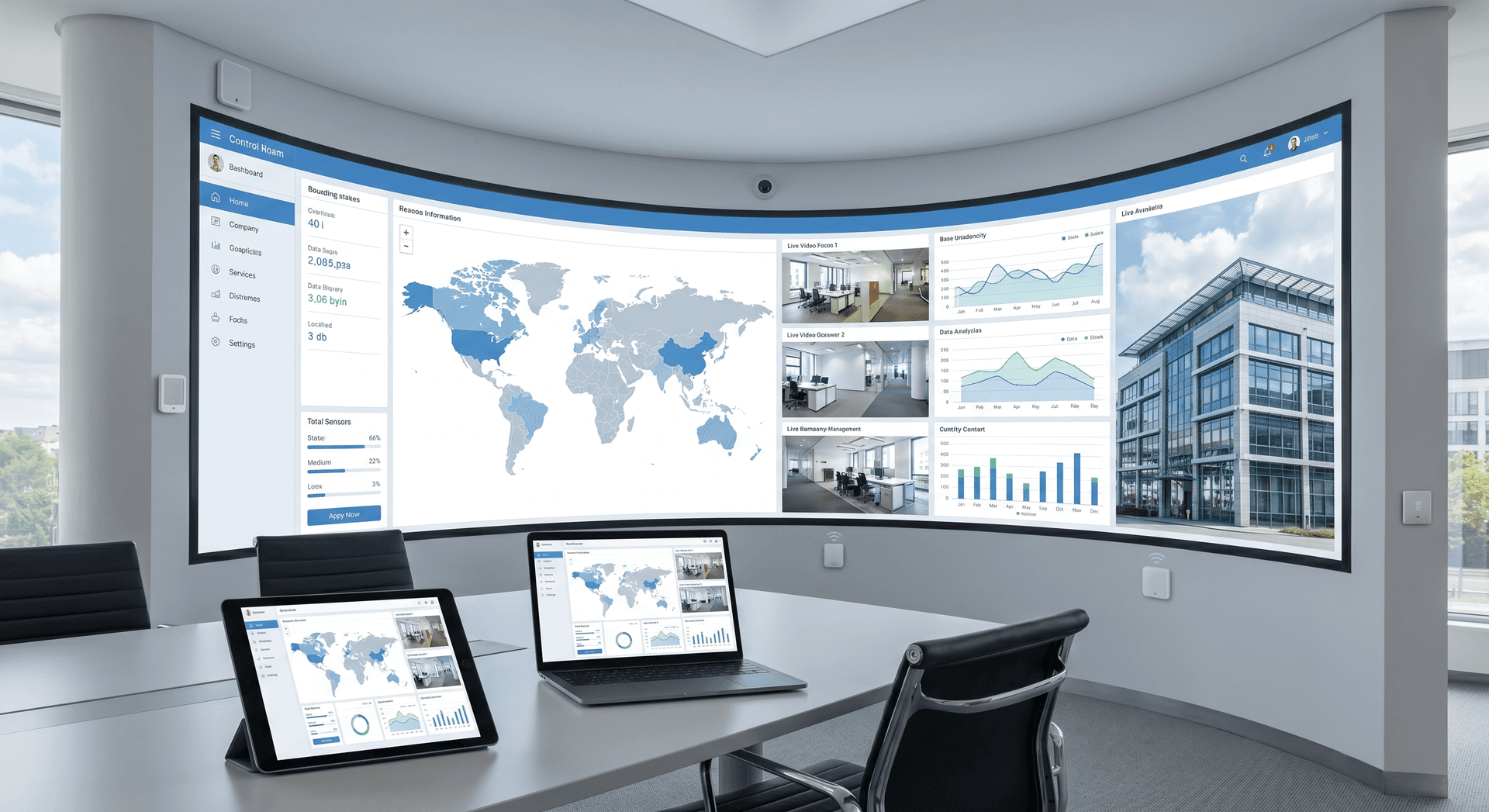
4. Centralized Management Dashboard
All data from multiple locations is consolidated into a centralized management dashboard, providing facility managers with:
- Real-time Compliance Overview: Current status across all locations
- Historical Data: Trends in compliance over time
- Location Comparisons: Performance metrics between different sites
- Predictive Analytics: Forecasts of potential compliance issues based on historical patterns
Implementation Strategies for Multi-Site AI Vision Systems
1. Phased Rollout Approach
Most successful implementations follow a phased approach:
Phase 1: Pilot Testing
- Select 2-3 representative locations
- Install hardware and deploy software
- Fine-tune AI models based on local conditions
- Develop standard operating procedures
Phase 2: Regional Expansion
- Deploy to all locations within specific regions
- Refine algorithms based on additional data
- Train regional management teams
- Establish support protocols
Phase 3: Full Enterprise Rollout
- Deploy across all remaining locations
- Implement continuous improvement processes
- Scale data analysis capabilities
- Integrate with existing facility management systems
2. Hardware Deployment Considerations
Effective AI vision implementation requires appropriate hardware:
- Camera Selection: Resolution, field of view, environmental durability
- Placement Strategy: Strategic positioning to capture critical areas
- Network Infrastructure: Reliable internet connectivity for image transmission
- Storage Solutions: Adequate storage for image archives and analysis
- Power Management: Backup power for critical monitoring equipment
3. Integration with Existing Systems
AI vision systems should integrate seamlessly with:
- Facility Management Software: Work order systems, maintenance tracking
- Employee Management Systems: Staff scheduling and assignment tools
- Compliance Reporting Systems: Regulatory compliance documentation
- Alert Systems: Emergency notification and response coordination
Case Studies: Success Stories
Retail Chain Implementation
A national retail chain with 127 locations implemented AI vision for store compliance monitoring. The system was deployed to monitor:
- Store Appearance: Cleanliness, merchandising standards, signage compliance
- Safety Compliance: Emergency equipment placement, aisle clearance, safety signage
- Equipment Status: Lighting, HVAC systems, checkout functionality
Results:
- 45% reduction in compliance violations across all locations
- 60% faster response time to identified issues
- 30% reduction in manual inspection costs
- Improved customer satisfaction scores across all locations
Healthcare Facility Network
A healthcare provider with 85 facilities implemented AI vision for monitoring:
- Infection Control: Hand sanitizer placement, surface cleanliness, PPE compliance
- Safety Protocols: Equipment sterilization, storage areas, safety signage
- Environmental Standards: Temperature control, air quality, waste management
Results:
- 58% reduction in safety incidents
- 40% improvement in infection control compliance
- 25% reduction in regulatory fines
- Enhanced patient safety across the network
Technical Considerations and Best Practices
1. Algorithm Accuracy and Training
The effectiveness of AI vision systems depends heavily on:
- Quality Training Data: Diverse, representative images from all locations
- Continuous Learning: Regular updates to algorithms based on new data
- False Positive Management: Balancing sensitivity with operational efficiency
- Edge Case Handling: Preparing for unusual but valid conditions
2. Privacy and Ethical Considerations
AI vision implementation must address:
- Employee Privacy: Clear policies on monitoring and data usage
- Customer Privacy: Protection of personal information in captured images
- Data Security: Protection of compliance and facility data
- Regulatory Compliance: Adherence to local and national regulations
3. Change Management and Training
Successful implementation requires:
- Management Buy-in: Executive support and resource allocation
- Staff Training: Proper training for maintenance and response teams
- Process Integration: Seamless integration with existing workflows
- Continuous Improvement: Mechanisms for feedback and system enhancement
Future Trends in AI Vision for Facility Management
1. Advanced Predictive Analytics
Future AI vision systems will move from reactive issue detection to predictive maintenance, identifying potential problems before they occur based on pattern recognition and historical data analysis.
2. Enhanced Integration with IoT Devices
Integration with Internet of Things (IoT) devices will create more comprehensive monitoring systems, combining visual data with sensor data for a complete picture of facility conditions.
3. Improved Edge Computing
Edge computing capabilities will allow AI processing to occur closer to the source, reducing latency and enabling real-time responses without relying solely on cloud processing.
4. Automated Resolution Systems
Future systems will include automated resolution capabilities, such as robotic systems that can automatically correct certain types of compliance issues without human intervention.
Implementation Roadmap
Phase 1: Assessment and Planning (1-2 months)
- Current State Analysis: Assess existing compliance monitoring systems
- Requirements Definition: Define specific standards and metrics to monitor
- Vendor Selection: Choose appropriate AI vision technology provider
- Budget Development: Allocate resources for implementation and ongoing operations
Phase 2: Pilot Implementation (2-3 months)
- Location Selection: Choose representative pilot locations
- Hardware Deployment: Install cameras and network infrastructure
- System Configuration: Customize AI models and inspection protocols
- Testing and Refinement: Validate system accuracy and make adjustments
Phase 3: Scale Deployment (3-6 months)
- Regional Rollout: Deploy to all locations in target regions
- Process Integration: Integrate with existing facility management systems
- Staff Training: Train management and maintenance personnel
- Performance Monitoring: Track system effectiveness and make improvements
Phase 4: Optimization and Expansion (6+ months)
- Continuous Improvement: Refine algorithms and processes
- Additional Features: Implement advanced analytics and reporting
- Scale to Remaining Locations: Deploy across all facilities
- Future Technology Integration: Incorporate emerging technologies
ROI and Cost Considerations
Implementation Costs
Initial Investment:
- Hardware (cameras, network equipment): $10,000-$25,000 per location
- Software licensing: $5,000-$15,000 annually
- Implementation services: $20,000-$50,000 total
- Training and change management: $10,000-$20,000 total
Ongoing Costs:
- Software maintenance: 15-20% of initial licensing cost annually
- Hardware maintenance and replacement: $2,000-$5,000 per location annually
- Staff time for system management: 10-15 hours per week
Expected Returns
Cost Savings:
- Reduced inspection costs: $50,000-$100,000 annually for medium-sized organizations
- Faster issue resolution: 30-50% reduction in response time
- Lower compliance fines: 40-60% reduction in regulatory penalties
Revenue Benefits:
- Improved customer satisfaction: 15-25% increase in satisfaction scores
- Enhanced brand reputation: Improved compliance consistency across locations
- Operational efficiency: 20-30% improvement in facility management efficiency
Conclusion
AI vision technology has transformed facility management from a manual, inconsistent process into an automated, scalable system capable of maintaining consistent standards across hundreds of locations. The benefits – including improved compliance, faster issue resolution, better resource allocation, and enhanced customer experiences – make this technology an essential tool for multi-site organizations.
The implementation journey requires careful planning, phased deployment, and continuous improvement, but the return on investment is significant. Organizations that adopt AI vision for facility management gain a competitive advantage through operational excellence, regulatory compliance, and superior customer experiences.
As technology continues to advance, AI vision systems will become even more sophisticated, predictive, and integrated with other facility management technologies, positioning early adopters at the forefront of facility management innovation.
Key Takeaways:
- AI vision ensures consistent quality standards across all locations through automated monitoring
- Implementation follows a phased approach for optimal results
- ROI includes both cost savings and improved operational efficiency
- Future trends include predictive analytics and enhanced integration with IoT devices
Next Steps:
- Assess current facility management needs and compliance requirements
- Research and select appropriate AI vision technology providers
- Develop a phased implementation plan starting with pilot locations
- Allocate resources for implementation, training, and ongoing maintenance
- Establish metrics for measuring success and continuous improvement
This article represents a comprehensive approach to implementing AI vision for multi-site facility management. Organizations should tailor the implementation strategy to their specific needs, size, and industry requirements.
Frequently Asked Questions
What is AI vision technology in facility management?
AI vision technology in facility management uses artificial intelligence to analyze visual data from cameras and sensors to automatically monitor compliance with facility standards. These systems can detect issues like safety violations, equipment malfunctions, and cleanliness problems with 92-98% accuracy when properly trained.
How much does it cost to implement AI vision across 50+ locations?
Implementation costs typically range from $15,000-$22,000 per location for hardware and $8,000-$12,000 annually per location for software. Most organizations achieve break-even within 18-24 months, with ROI ranging from 180-350% over three years.
What are the main benefits of AI vision for multi-site operations?
Key benefits include: 1) 78% reduction in compliance variance across locations, 2) 60% faster issue detection and response, 3) 40% cost reduction when scaling to new locations, 4) 25-35% improvement in operational efficiency and resource allocation.
How accurate are AI vision systems for compliance monitoring?
Modern AI vision systems achieve 92-98% accuracy for specific facility compliance tasks when trained with adequate data (minimum 10,000 images per standard category). Accuracy improves continuously through machine learning and feedback loops.
What technical infrastructure is required for AI vision implementation?
Required infrastructure includes: high-resolution cameras, network connectivity for data transmission, storage systems for image archives, processing capabilities for AI analysis, and integration interfaces with existing facility management systems.
How long does it take to implement AI vision across multiple locations?
Implementation typically takes 14-18 months for 50+ locations, following this timeline: 4-6 weeks for assessment, 8-12 weeks for pilot deployment, 3-4 months for regional rollout, and ongoing optimization.
Can AI vision systems integrate with existing facility management software?
Yes, most modern AI vision systems offer API integrations with popular facility management platforms, work order systems, compliance reporting tools, and building management systems for seamless workflow integration.
What industries benefit most from AI vision technology?
Industries with multiple locations and strict compliance requirements benefit most, including retail, healthcare, hospitality, manufacturing, food service, and education – essentially any sector with standardized facility requirements across multiple sites.