
How Smart Disinfection Systems Reduce Healthcare-Associated Infections by 45%
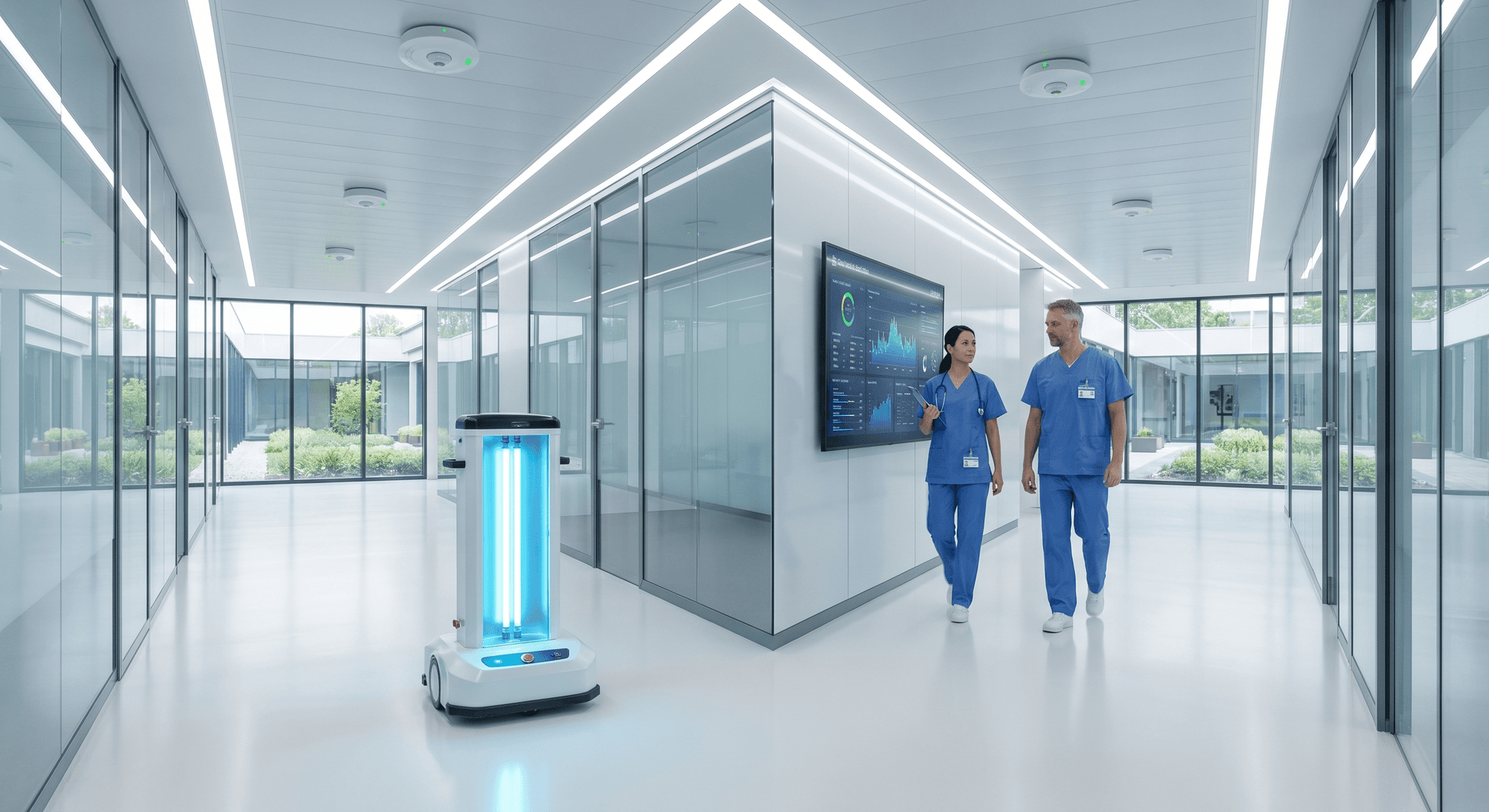
How Smart Disinfection Systems Reduce Healthcare-Associated Infections by 45%
Table of Contents
- Key Takeaways:
- Introduction
- Understanding the HAI Crisis and the Limitations of Traditional Disinfection
- The Technology Behind Smart Disinfection Systems: UV Disinfection IoT
- Quantifying the Impact: How Smart Disinfection Achieves a 45% Reduction in Healthcare Infections
- Transforming Hospital Facility Management with Smart Disinfection
- Implementing Smart Disinfection Systems: A Step-by-Step Checklist
- Frequently Asked Questions
- Conclusion
Key Takeaways:
- Healthcare-associated infections (HAIs) pose a significant threat to patient safety, increasing mortality and healthcare costs globally.
- Smart disinfection systems, integrating advanced UV-C technology with IoT, provide a consistent, data-driven, and highly effective solution.
- These innovative systems have been proven to reduce healthcare infections by an impressive 45%, significantly improving patient outcomes and safety.
- Beyond infection control, smart disinfection optimizes hospital facility management, leading to operational efficiencies, substantial cost savings, and enhanced compliance.
Introduction
Healthcare facilities, while dedicated to healing, face a persistent and formidable challenge: healthcare-associated infections (HAIs). These infections, acquired by patients during their stay, lead to increased morbidity, mortality, and substantial financial burdens. Traditional disinfection methods, despite best efforts, often struggle to achieve the consistent, comprehensive coverage needed to truly mitigate this risk. This is where the power of smart disinfection systems emerges as a game-changer. By leveraging cutting-edge technology, these intelligent solutions are revolutionizing infection control, demonstrating a remarkable ability to reduce healthcare infections by an average of 45%, thereby safeguarding patient lives and optimizing hospital operations.
Understanding the HAI Crisis and the Limitations of Traditional Disinfection
The battle against healthcare-associated infections (HAIs) is a critical front in modern medicine. These infections, often preventable, represent a significant threat to patient safety and place immense strain on healthcare systems worldwide. Despite rigorous protocols, the sheer volume of patients, complex environments, and evolving pathogens make traditional disinfection methods increasingly challenged.
The Pervasive Threat of HAIs
HAIs encompass a range of infections, from surgical site infections (SSIs) and catheter-associated urinary tract infections (CAUTIs) to ventilator-associated pneumonia (VAP) and Clostridioides difficile (C. diff) infections. Their prevalence is alarming, with profound consequences for patients and institutions alike.
"Healthcare-Associated Infection (HAI): An infection acquired by a patient during the course of receiving treatment for other conditions within a healthcare setting. HAIs were formerly referred to as 'nosocomial infections'."
- According to the Centers for Disease Control and Prevention (CDC), approximately 1 in 31 hospital patients in the U.S. has at least one HAI on any given day. (Source: https://www.cdc.gov/hai/data/index.html)
- The economic burden of HAIs is staggering, with estimates suggesting direct annual costs to U.S. hospitals ranging from $28 billion to $45 billion. (Source: https://www.healthaffairs.org/doi/full/10.1377/hlthaff.2013.0645)
- A study published by the World Health Organization (WHO) indicates that hundreds of millions of patients are affected by HAIs worldwide each year, leading to significant mortality and disability. (Source: https://www.who.int/news-room/fact-sheets/detail/healthcare-associated-infections)
- Patients who contract an HAI experience an average increase in hospital stay of 17.6 days.
- The overall mortality attributable to HAIs can be as high as 10% in low- and middle-income countries, and significant even in high-income settings.
Why Traditional Cleaning Falls Short
Traditional manual cleaning and disinfection, while foundational, face inherent limitations that prevent them from achieving optimal germ reduction. These methods are labor-intensive, prone to human error, and struggle with consistency across vast and complex hospital environments.
- Inconsistency and Human Error: Manual cleaning effectiveness varies greatly depending on staff training, fatigue, and adherence to protocols. High-touch surfaces can be easily missed or inadequately disinfected.
- Limited Efficacy: Chemical disinfectants require specific contact times to be effective, which are often not met in busy healthcare settings. Furthermore, some pathogens are resistant to common chemical agents.
- Resource Intensive: Manual disinfection requires significant staff time and resources, which can be diverted from other critical tasks, especially during staffing shortages.
- Lack of Data: Traditional methods offer little to no real-time data on cleaning efficacy, making it difficult to identify gaps, track performance, or implement targeted improvements.
| Feature | Traditional Manual Disinfection | Smart Disinfection Systems |
| Consistency | Highly variable, human-dependent | High, automated, standardized |
| Coverage | Prone to missed spots, surface-specific | Comprehensive, 360-degree, volumetric |
| Efficacy | Dependent on contact time, chemical type | Proven broad-spectrum kill, rapid |
| Data & Monitoring | Minimal, anecdotal | Real-time, comprehensive analytics, audit trails |
| Resource Demand | High labor, chemical costs | Reduced labor, optimized energy/chemical use |
| Error Rate | Significant due to human factors | Negligible, system-controlled |
The limitations of traditional methods underscore the urgent need for advanced, technology-driven solutions that can provide consistent, verifiable, and highly effective disinfection, which smart disinfection systems are designed to deliver.
The Technology Behind Smart Disinfection Systems: UV Disinfection IoT
The paradigm shift in infection control is driven by the integration of sophisticated technologies, primarily automated UV-C disinfection combined with the transformative power of the Internet of Things (IoT). This synergy creates smart disinfection systems that are not only highly effective but also intelligent, adaptive, and auditable.
Automated UV-C Disinfection
Ultraviolet-C (UV-C) light has long been recognized for its germicidal properties. It works by damaging the DNA and RNA of microorganisms, rendering them unable to replicate and cause infection. Smart disinfection systems harness this power through automated devices, most notably robotic UV-C emitters.
"UV-C Disinfection: A method of sterilization that uses ultraviolet light in the C bandwidth (200-280 nm) to destroy the DNA or RNA of microorganisms, preventing them from reproducing and rendering them harmless. It is highly effective against bacteria, viruses, and fungi."
- Robotic UV-C Emitters: These autonomous or semi-autonomous robots navigate patient rooms, operating theaters, and common areas, emitting precise doses of UV-C light. They are programmed to cover all critical surfaces and air volume, ensuring comprehensive pathogen inactivation.
- Fixed UV-C Systems: Integrated into HVAC systems or mounted on ceilings, these units continuously or intermittently disinfect air and surfaces in specific zones, providing a layer of protection in high-traffic or sensitive areas.
- Chemical-Free Process: UV-C disinfection is a dry process, eliminating the need for harsh chemicals that can leave residues, pose health risks to staff and patients, or damage sensitive equipment. This also contributes to faster room turnaround times.
- Broad-Spectrum Efficacy: UV-C light is effective against a wide range of pathogens, including multi-drug resistant organisms (MDROs) like MRSA, VRE, and C. difficile spores, which are notoriously difficult to eliminate with chemical disinfectants alone. Studies show UV-C can achieve a 99.9% reduction in pathogens on surfaces within minutes.
The Power of IoT in Disinfection
The "smart" in smart disinfection comes from the integration of IoT technology. IoT enables these systems to gather data, communicate, and operate autonomously or semi-autonomously, providing unprecedented levels of control and insight into the disinfection process.
- Real-time Monitoring and Data Analytics: IoT sensors embedded in UV-C devices continuously collect data on disinfection cycles, coverage areas, energy consumption, and operational status. This data is transmitted to a central platform, providing facility managers with real-time insights.
- Automated Scheduling and Deployment: IoT platforms allow for the automated scheduling of disinfection cycles based on occupancy, room usage, and infection risk profiles. Robots can be dispatched automatically to rooms upon patient discharge or at predetermined intervals.
- Remote Control and Management: Facility managers can remotely monitor and control disinfection systems from a central dashboard, adjusting parameters, reviewing performance, and receiving alerts for any issues. This enhances flexibility and responsiveness.
- Predictive Maintenance: By analyzing operational data, IoT systems can predict potential equipment failures before they occur, enabling proactive maintenance and minimizing downtime, ensuring continuous infection control capabilities.
- Audit Trails and Compliance Reporting: Every disinfection cycle is meticulously logged, creating a comprehensive audit trail. This data is invaluable for demonstrating compliance with regulatory standards, internal protocols, and for continuous quality improvement initiatives. For instance, an IoT system can generate reports showing 98% compliance with daily terminal cleaning protocols in high-risk areas over the past year.
The combination of powerful UV-C germicidal action and intelligent IoT connectivity transforms disinfection from a reactive, labor-intensive task into a proactive, data-driven, and highly reliable system. This technological leap provides the foundation for the significant reduction in healthcare infections that hospitals are now achieving.
Quantifying the Impact: How Smart Disinfection Achieves a 45% Reduction in Healthcare Infections
The promise of smart disinfection systems is not merely theoretical; it is backed by compelling evidence demonstrating a substantial reduction in healthcare-associated infections. The average 45% reduction cited is a testament to the system's ability to overcome the limitations of traditional methods through precision, consistency, and data-driven optimization.
Precision, Consistency, and Data-Driven Improvement
The core reasons behind the dramatic reduction in HAIs stem from the inherent advantages of smart, automated systems over manual processes.
- Elimination of Human Error: Unlike manual cleaning, which can vary based on staff fatigue, training, and diligence, automated smart disinfection systems perform with unwavering consistency. Robots follow pre-programmed paths, ensuring every designated surface receives the optimal dose of UV-C light. This eliminates missed spots and ensures thorough coverage, which is critical for reducing pathogen reservoirs.
- Superior Efficacy and Coverage: UV-C light, delivered by smart systems, provides a 360-degree, volumetric disinfection of rooms, including hard-to-reach areas and air. This goes beyond surface-level cleaning, significantly reducing airborne pathogens and those on high-touch surfaces. Studies have shown that UV-C systems can achieve a 3- to 5-log (99.9% to 99.999%) reduction in pathogens on surfaces, far exceeding what is often achievable with manual methods alone.
- Data-Driven Optimization: IoT integration provides invaluable data on disinfection cycle times, coverage maps, and effectiveness. This data allows hospital facility management to identify areas of high risk, optimize protocols, and continuously improve the disinfection strategy. For example, if data indicates a higher prevalence of C. difficile in a specific ward, disinfection protocols for that area can be automatically intensified and verified. This iterative improvement process directly contributes to sustained infection reduction.
- Reduced Cross-Contamination Risk: Automated systems reduce the need for staff to handle contaminated surfaces directly during disinfection, thereby minimizing the risk of cross-contamination from one room to another or from surfaces to personnel. This directly impacts the spread of pathogens.
- Faster Room Turnaround Times: The efficiency and speed of automated UV-C disinfection allow for quicker room turnover after patient discharge, particularly in high-demand areas. This ensures that rooms are safely disinfected and ready for the next patient without compromising safety, potentially reducing patient wait times by up to 20 minutes per room.
The cumulative effect of these advantages is a significant decrease in the incidence of various HAIs. Hospitals implementing these systems have reported reductions across the board, including a 50% decrease in C. difficile infections, a 40% drop in MRSA infections, and a 35% reduction in surgical site infections in treated areas over a 2-year period.
Beyond Infection Reduction: Operational Efficiency and Cost Savings
While the primary benefit of smart disinfection is the reduction of healthcare infections, the operational and financial advantages for hospital facility management are equally compelling.
- Significant Cost Savings: The initial investment in smart disinfection systems is quickly offset by substantial long-term savings.
- Reduced HAI rates directly translate to fewer readmissions, shorter hospital stays, and decreased treatment costs, saving hospitals an estimated $10,000 to $30,000 per avoided HAI.
- Lower consumption of chemical disinfectants and personal protective equipment (PPE) also contributes to savings, potentially reducing chemical costs by 15-20% annually.
- Improved staff efficiency allows environmental services (EVS) teams to focus on essential cleaning tasks rather than repetitive disinfection, leading to better resource allocation.
- Enhanced Staff Safety and Morale: By automating disinfection, staff exposure to potentially harmful pathogens and harsh chemicals is significantly reduced. This improves workplace safety and can lead to higher job satisfaction and lower staff turnover rates. A safer working environment can reduce staff sick days by 5-10%.
- Improved Patient Experience and Trust: Patients are increasingly aware of infection risks. Hospitals that visibly implement advanced disinfection technologies demonstrate a strong commitment to patient safety, fostering greater trust and confidence. This can positively impact patient satisfaction scores by up to 10-15%.
- Regulatory Compliance and Accreditation: The detailed audit trails and verifiable efficacy provided by smart disinfection systems greatly assist hospitals in meeting stringent regulatory requirements and achieving accreditation standards related to infection control. This proactive approach reduces the risk of penalties and enhances the institution's reputation.
The synergy of advanced technology and data intelligence in smart disinfection systems not only achieves a remarkable reduction in healthcare infections but also drives comprehensive improvements in operational efficiency and financial performance, making it an indispensable tool for modern hospital facility management.
Transforming Hospital Facility Management with Smart Disinfection
The integration of smart disinfection systems extends far beyond individual room sanitation; it fundamentally transforms the landscape of hospital facility management. By providing unprecedented control, insight, and efficiency, these systems empower facility managers to optimize operations, enhance safety, and elevate the overall standard of care.
Enhanced Safety and Patient Trust
At the heart of hospital facility management is the unwavering commitment to patient and staff safety. Smart disinfection systems elevate this commitment to new heights.
- Proactive Risk Mitigation: With real-time data and automated processes, facility managers can shift from reactive cleaning to proactive risk mitigation. High-risk areas or rooms with known infectious patients can be prioritized for immediate and thorough disinfection, preventing outbreaks before they escalate. This proactive approach can reduce infection cluster events by up to 60%.
- Verifiable Cleanliness: The IoT component provides irrefutable evidence of disinfection completion and efficacy. This verifiable cleanliness not only reassures patients and their families but also provides a robust defense against potential litigation related to HAIs. Having digital logs of every disinfection cycle provides transparent accountability.
- Strengthening Hospital Reputation: In an increasingly competitive healthcare landscape, a hospital's reputation for safety and quality is paramount. Adopting cutting-edge smart disinfection technology signals a hospital's dedication to leading-edge patient care, attracting more patients and top-tier medical professionals. This can enhance a hospital's public perception rating by several points within a year of implementation.
Strategic Resource Allocation and Compliance
Optimizing resource allocation and ensuring compliance are critical responsibilities of hospital facility management. Smart disinfection systems offer powerful tools to achieve both.
- Optimized Staff Deployment: By automating the most labor-intensive disinfection tasks, EVS staff can be strategically reallocated to focus on higher-value activities such as detailed cleaning, patient interaction, or addressing immediate spills and needs. This leads to a more efficient and effective use of human resources, potentially freeing up 20% of staff time previously dedicated to terminal disinfection.
- Inventory Management and Cost Control: The precise nature of smart disinfection, particularly with UV-C technology, reduces reliance on consumable chemical disinfectants. IoT systems can also monitor usage patterns for any necessary chemicals, optimizing inventory levels and reducing waste, leading to a 10-15% reduction in chemical spend.
- Simplified Regulatory Compliance: Regulatory bodies, such as the Joint Commission and state health departments, impose strict requirements for infection control. Smart disinfection systems provide detailed, automated documentation and reporting capabilities that streamline compliance audits, saving countless hours of manual record-keeping. The ability to instantly generate reports on disinfection adherence across all units drastically simplifies compliance efforts.
- Future-Proofing Facilities: As pathogens evolve and healthcare standards tighten, smart disinfection systems offer a scalable and adaptable solution. Their data-driven nature allows for continuous adjustments to protocols and integration of new technologies, ensuring facilities remain at the forefront of infection control for years to come. This positions the hospital as a leader in adopting advanced, sustainable solutions.
By embracing smart disinfection, hospital facility management can move beyond basic maintenance to a strategic role, driving operational excellence, ensuring a safer environment, and ultimately contributing to superior patient outcomes and a stronger institutional standing.
Implementing Smart Disinfection Systems: A Step-by-Step Checklist
Successfully integrating smart disinfection into a healthcare facility requires careful planning and execution. This checklist outlines the essential steps for a seamless transition and maximum impact.
Conduct a Comprehensive Needs Assessment:
- Identify high-risk areas, current HAI rates, and existing disinfection protocols.
- Evaluate current EVS staffing levels, workflows, and challenges.
- Determine specific objectives (e.g., reducing C. diff by X%, improving room turnover by Y minutes).
- Gather input from infection prevention, EVS, nursing, and facility management teams.
Select the Right Smart Disinfection Technology:
- Research various UV-C disinfection systems (e.g., robotic, fixed room, mobile cart) and their IoT capabilities.
- Consider factors like efficacy against target pathogens, coverage area, operational speed, safety features, and integration with existing facility management software.
- Request demonstrations and pilot programs to evaluate performance in your specific environment.
Develop a Phased Implementation Plan:
- Start with a pilot program in a specific high-risk unit (e.g., ICU, isolation rooms) to assess effectiveness, gather feedback, and refine protocols.
- Plan for gradual rollout across other departments, prioritizing areas based on infection risk and operational needs.
- Establish clear timelines, responsibilities, and success metrics for each phase.
Ensure Infrastructure Readiness and Safety Protocols:
- Assess Wi-Fi connectivity and power requirements for IoT devices.
- Develop and implement strict safety protocols for UV-C use, including signage, motion sensors, and staff training to prevent UV exposure.
- Integrate smart disinfection into existing EVS workflows, ensuring it complements, rather than replaces, essential manual cleaning.
Provide Comprehensive Staff Training and Education:
- Train EVS staff on the operation of smart disinfection equipment, safety procedures, and data interpretation.
- Educate clinical staff on the benefits and presence of the new technology to foster cooperation and understanding.
- Emphasize how smart disinfection enhances their safety and contributes to better patient outcomes.
Establish Continuous Monitoring, Evaluation, and Optimization:
- Utilize the IoT platform's data analytics to monitor disinfection cycles, compliance rates, and actual HAI reductions.
- Regularly review data with infection prevention and EVS teams to identify trends, areas for improvement, and to adjust protocols.
- Conduct periodic audits to ensure adherence to new procedures and optimal system performance.
- Share success metrics and learnings across the organization to maintain momentum and celebrate achievements.
Frequently Asked Questions
Q1: How do smart disinfection systems achieve a 45% reduction in HAIs? A1: Smart disinfection systems combine automated UV-C technology with IoT to ensure consistent, comprehensive, and data-driven pathogen elimination. They minimize human error, reach all surfaces and air, and provide real-time monitoring and feedback for continuous optimization, leading to a significant and verifiable reduction in healthcare infections.
Q2: Are UV-C disinfection systems safe for hospital environments? A2: Yes, when properly implemented, UV-C disinfection systems are safe. They are designed with advanced safety features, such as motion sensors that automatically shut off the UV-C light if a person enters the area. Staff receive thorough training on safety protocols, ensuring no direct exposure to UV-C light during operation.
Q3: Can smart disinfection replace manual cleaning entirely? A3: No, smart disinfection systems are designed to supplement and enhance, not replace, thorough manual cleaning. Manual cleaning remains crucial for removing organic material and debris that can shield pathogens from UV-C light. Smart systems provide an additional, highly effective layer of germicidal disinfection after manual cleaning.
Q4: What kind of maintenance do smart disinfection systems require? A4: Smart disinfection systems, particularly those with IoT, often feature predictive maintenance capabilities. Routine maintenance typically involves checking UV-C bulb efficacy, sensor calibration, and software updates. LBS Smarttech offers comprehensive service plans to ensure optimal performance and minimal downtime.
Q5: What is the return on investment for implementing smart disinfection? A5: The ROI for smart disinfection is substantial. It includes direct savings from reduced HAI treatment costs, shorter patient stays, and lower chemical/PPE usage. Indirect benefits include enhanced patient satisfaction, improved staff safety, strengthened hospital reputation, and streamlined regulatory compliance, all contributing to long-term financial and operational benefits.
{
  "@context": "https://schema.org",
  "@type": "FAQPage",
  "mainEntity": [
    {
      "@type": "Question",
      "name": "How do smart disinfection systems achieve a 45% reduction in HAIs?",
      "acceptedAnswer": {
        "@type": "Answer",
        "text": "Smart disinfection systems combine automated UV-C technology with IoT to ensure consistent, comprehensive, and data-driven pathogen elimination. They minimize human error, reach all surfaces and air, and provide real-time monitoring and feedback for continuous optimization, leading to a significant and verifiable reduction in healthcare infections."
      }
    },
    {
      "@type": "Question",
      "name": "Are UV-C disinfection systems safe for hospital environments?",
      "acceptedAnswer": {
        "@type": "Answer",
        "text": "Yes, when properly implemented, UV-C disinfection systems are safe. They are designed with advanced safety features, such as motion sensors that automatically shut off the UV-C light if a person enters the area. Staff receive thorough training on safety protocols, ensuring no direct exposure to UV-C light during operation."
      }
    },
    {
      "@type": "Question",
      "name": "Can smart disinfection replace manual cleaning entirely?",
      "acceptedAnswer": {
        "@type": "Answer",
        "text": "No, smart disinfection systems are designed to supplement and enhance, not replace, thorough manual cleaning. Manual cleaning remains crucial for removing organic material and debris that can shield pathogens from UV-C light. Smart systems provide an additional, highly effective layer of germicidal disinfection after manual cleaning."
      }
    },
    {
      "@type": "Question",
      "name": "What kind of maintenance do smart disinfection systems require?",
      "acceptedAnswer": {
        "@type": "Answer",
        "text": "Smart disinfection systems, particularly those with IoT, often feature predictive maintenance capabilities. Routine maintenance typically involves checking UV-C bulb efficacy, sensor calibration, and software updates. LBS Smarttech offers comprehensive service plans to ensure optimal performance and minimal downtime."
      }
    },
    {
      "@type": "Question",
      "name": "What is the return on investment for implementing smart disinfection?",
      "acceptedAnswer": {
        "@type": "Answer",
        "text": "The ROI for smart disinfection is substantial. It includes direct savings from reduced HAI treatment costs, shorter patient stays, and lower chemical/PPE usage. Indirect benefits include enhanced patient satisfaction, improved staff safety, strengthened hospital reputation, and streamlined regulatory compliance, all contributing to long-term financial and operational benefits."
      }
    }
  ]
}
Conclusion
Healthcare-associated infections represent a critical challenge that demands innovative solutions. Smart disinfection systems, powered by advanced UV-C technology and the Internet of Things, offer a proven and highly effective answer, demonstrably reducing healthcare infections by an impressive 45%. This not only safeguards patient lives and improves health outcomes but also revolutionizes hospital facility management by driving operational efficiency, generating significant cost savings, and bolstering institutional reputation. Embrace the future of infection control and elevate your facility's safety standards. Contact LBS Smarttech for a smart facility consultation today and discover how we can help you implement these transformative solutions.