
How Smart Leak Detection Prevents $75K in Annual Water Damage
How Smart Leak Detection Prevents $75K in Annual Water Damage
Water damage is one of the most costly and preventable issues facing commercial facilities today. According to industry reports, the average business experiences 14 water damage incidents per year, with an average cost of $20,000 per incident - totaling $280,000 annually across typical portfolios. Traditional leak detection methods often fail to catch issues until significant damage has already occurred, but smart IoT-based leak detection systems are changing the game for facility managers worldwide.
In this comprehensive guide, we'll explore how modern leak detection technology works, the specific financial and operational benefits, implementation strategies, and why forward-thinking facilities are making the switch from reactive to proactive water management.
Understanding the Financial Impact of Water Leaks
Before diving into solutions, it's crucial to understand the true cost of water leaks in commercial facilities:
Direct Costs
- Water waste: Undetected leaks can waste 2,000-20,000 gallons per day
- Structural damage: Mold remediation costs average $3,000-$30,000 per incident
- Equipment damage: HVAC systems, electrical systems, and sensitive electronics are particularly vulnerable
- Business interruption: Downtime can cost $10,000-$100,000 per day for commercial operations
Indirect Costs
- Insurance premium increases: Multiple claims can lead to 15-30% premium hikes
- Tenant dissatisfaction: Water issues consistently rank among top tenant complaints
- Environmental compliance: Fines for water waste can reach $10,000 per violation
- Reputational damage: News of water damage can impact tenant acquisition and retention
A 5,000-square-foot commercial facility with undetected leaks can lose up to $75,000 annually in direct and indirect costs - making smart leak detection not just a convenience, but a financial necessity.
How Smart Leak Detection Systems Work
Modern smart leak detection systems utilize a combination of technologies to provide comprehensive monitoring and early warning:
IoT Sensor Networks
The foundation of any smart leak detection system is a network of strategically placed sensors:
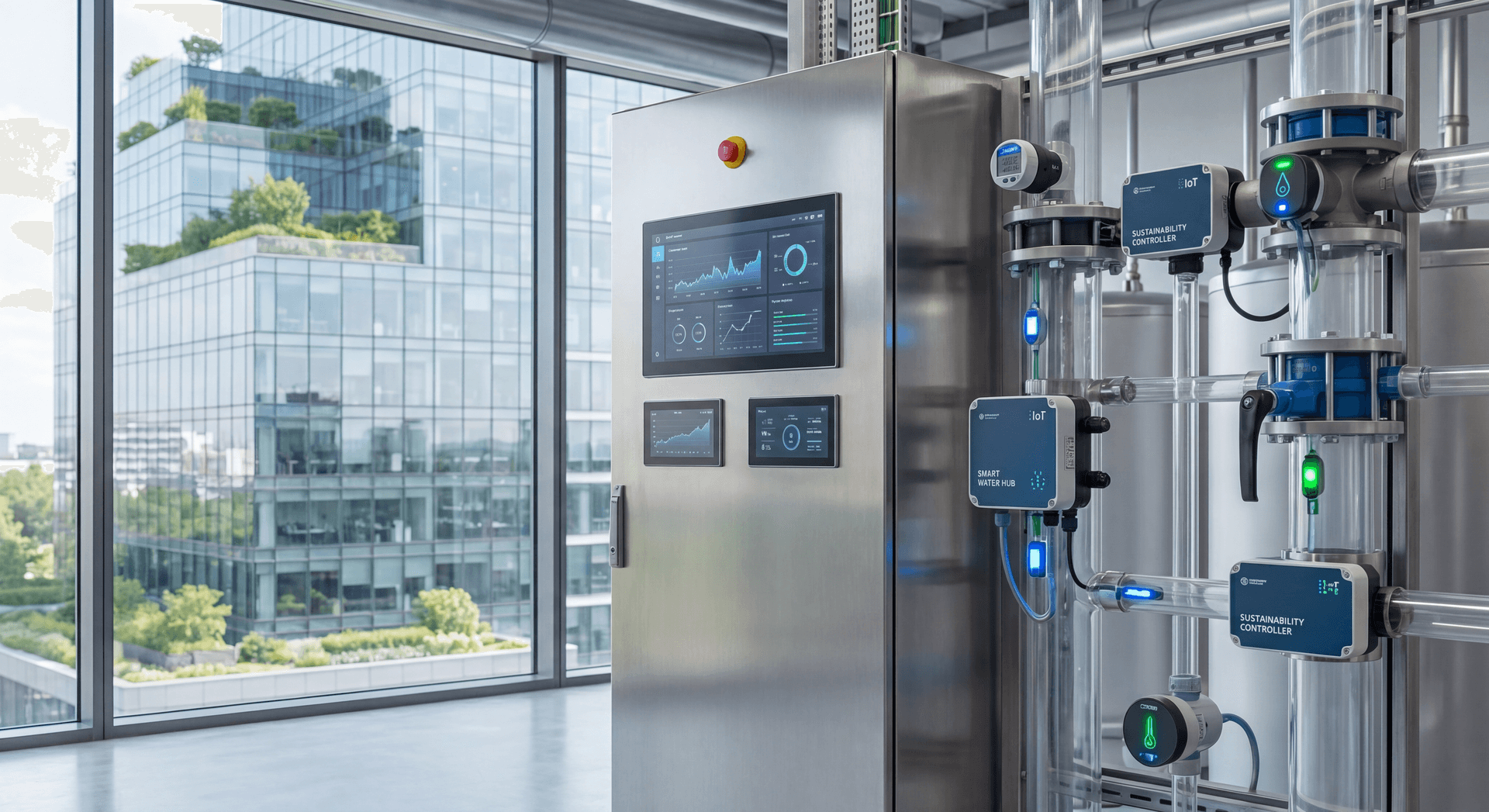
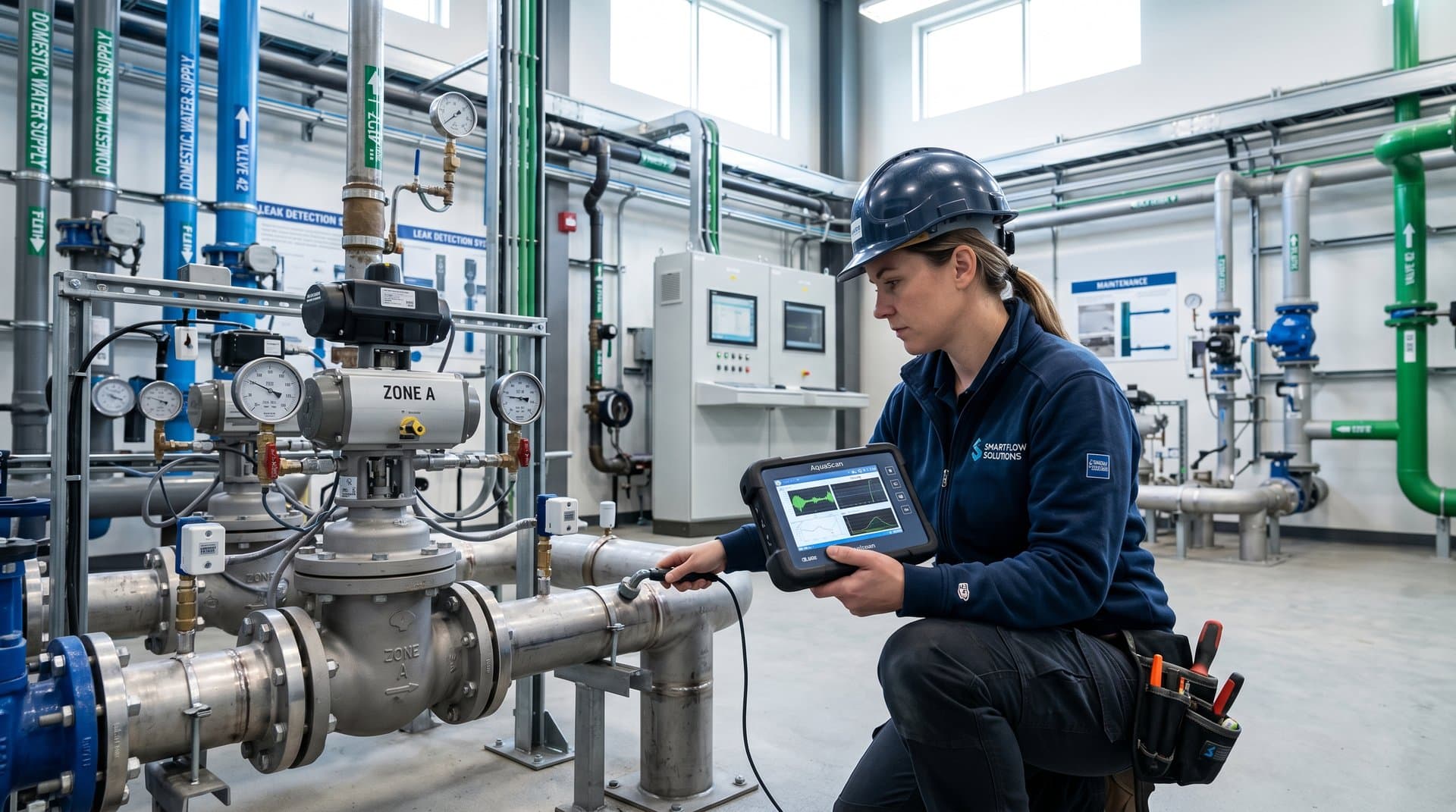
- Acoustic sensors: Listen for the sound of running water in pipes
- Moisture sensors: Detect water presence in unexpected areas
- Flow meters: Monitor water usage patterns and identify anomalies
- Pressure sensors: Detect drops in water pressure that indicate leaks
- Location beacons: GPS-enabled tags that can detect movement of water where it shouldn't be
These sensors are typically installed in critical areas:
- Water main entries and exits
- HVAC mechanical rooms
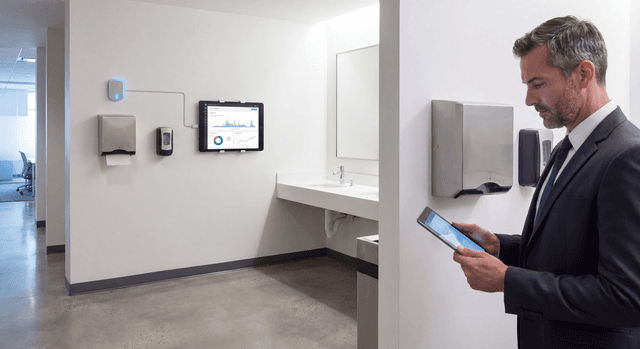
- Restroom facilities
- Kitchen and food service areas
- Roof drain systems
- Basement and foundation areas
- Near expensive equipment and electronics
Centralized Monitoring Platforms
All sensor data is transmitted to a central platform that:
- Processes real-time data: Analyzes water usage patterns and compares them to baselines
- Applies machine learning: Learns normal usage patterns and identifies anomalies
- Sends instant alerts: Notifies facility managers via SMS, email, or mobile app within seconds
- Provides historical analysis: Shows trends, patterns, and areas of concern
- Integrates with building systems: Can automatically shut off water valves in emergency situations
Automated Response Systems
The most advanced systems include automated responses:
- Automatic valve shutoff: Can isolate specific areas to prevent damage
- HVAC system adjustments: Can modify temperature and humidity to prevent secondary damage
- Maintenance ticket generation: Automatically creates work orders for repairs
- Emergency protocols: Can activate emergency response teams based on severity
Key Benefits of Smart Leak Detection
Financial Benefits
Immediate Cost Reduction
Smart leak detection systems typically provide ROI within 6-12 months through:
- Reduced water bills: Average savings of 15-30% on water costs
- Lower insurance premiums: Many insurance companies offer 10-20% discounts for facilities with smart leak detection
- Reduced maintenance costs: Early detection prevents equipment failure and extends asset life
- Lower repair costs: Fixing small leaks costs 10-100x less than repairing major water damage
Long-term Financial Planning
- Predictive maintenance budgets: Systems can forecast when pipes or fixtures need replacement
- Capital planning support: Data-driven insights for facility upgrades and retrofits
- ROI tracking: Comprehensive reporting on financial returns and cost avoidance
- Budget optimization: Reallocation of resources from reactive to proactive maintenance
Operational Benefits
Enhanced Facility Management
- 24/7 monitoring: Protection even when facilities are unoccupied
- Remote management: Control and monitoring from anywhere via mobile devices
- Multi-site management: Centralized control for portfolios with multiple locations
- Automated reporting: Compliance documentation and audit trail for regulatory requirements
Improved Tenant Satisfaction
- Reduced disruptions: Fewer water-related emergencies mean less business interruption
- Proactive communication: Tenants appreciate being informed about potential issues before they become problems
- Enhanced comfort: Consistent water pressure and temperature
- Demonstrated commitment: Shows tenants that you invest in facility quality and sustainability
Sustainability Benefits
Environmental Impact
- Water conservation: Smart systems can reduce water consumption by 20-40%
- Energy savings: Less water pumping and treatment required
- Reduced chemical usage: Less need for water treatment chemicals due to better management
- Lower carbon footprint: Reduced energy consumption for water heating and pumping
Corporate Social Responsibility
- ESG compliance: Documentation for environmental sustainability reporting
- Green building certifications: Support for LEED, BREEAM, and other green building standards
- Stakeholder communication: Transparent reporting on environmental initiatives
- Brand enhancement: Reputation as a sustainable and responsible facility operator
Implementation Strategies
Assessment and Planning
Facility Audit
Before implementation, conduct a thorough assessment:
- Current infrastructure evaluation: Age and condition of plumbing systems
- Risk assessment: Identification of high-risk areas and critical systems
- Usage analysis: Review of historical water usage and past incidents
- Budget determination: Allocation for sensors, installation, and ongoing monitoring
Technology Selection
Different solutions are available based on facility needs:
- Basic systems: Single-point sensors with alerts (suitable for smaller facilities)
- Advanced systems: Comprehensive sensor networks with automated responses (ideal for larger facilities)
- Enterprise solutions: Multi-site integration with AI analytics (best for portfolios)
- Specialized systems: Custom solutions for unique facility types like hospitals or data centers
Installation and Integration
Professional Installation
For optimal results:
- Certified technicians: Installation by professionals familiar with plumbing systems
- Strategic placement: Sensors positioned based on risk assessment and facility layout
- Calibration: Proper setup to avoid false positives and ensure accuracy
- Testing: Comprehensive testing before going live
System Integration
Ensure compatibility with existing systems:
- Building management systems: Integration with HVAC, security, and fire systems
- Maintenance software: Connection to CMMS and work order systems
- Communication platforms: Integration with team communication tools
- Emergency response systems: Connection to local emergency services if needed
Training and Ongoing Management
Staff Training
Ensure your team can effectively use the system:
- System operation: How to access and interpret data
- Response protocols: Steps to take when alerts are triggered
- Maintenance procedures: Regular system checks and calibration
- Troubleshooting: How to handle common issues and false alarms
Continuous Improvement
Regular optimization:
- Performance reviews: Monthly analysis of system effectiveness
- Updates and upgrades: Software updates and hardware improvements
- Process refinement: Adjusting protocols based on experience
- Expansion: Adding sensors as facility needs evolve
Real-World Case Studies
Case Study 1: Office Building Portfolio
Facility: 500,000 sq ft office building with 30 floors Implementation: 200 sensors throughout the facility Results:
- 37 leaks detected in first year
- Average response time: 12 minutes (vs. 4 hours previously)
- Water cost savings: $45,000 annually
- Insurance premium reduction: 15%
- ROI achieved: 8 months
Case Study 2: Shopping Center
Facility: 1.2 million sq ft shopping center with 200+ tenants Implementation: Comprehensive sensor network in common areas and tenant spaces Results:
- 65 leaks prevented in first year
- Tenant satisfaction improvement: 25%
- Maintenance cost reduction: 30%
- Insurance claim reduction: 80%
- ROI achieved: 10 months
Case Study 3: Healthcare Facility
Facility: 800-bed hospital with complex infrastructure Implementation: Redundant sensor system with automated shutoff valves Results:
- Zero major water damage incidents
- Critical equipment protection: 100%
- Emergency response time: Under 5 minutes
- Compliance documentation: Complete
- ROI achieved: 6 months
ROI Analysis
Direct Financial Returns
The financial benefits of smart leak detection systems break down as follows:
Cost Avoidance
- Prevented damage: $75,000 average annual savings from avoided water damage
- Reduced water bills: $20,000-40,000 annual savings from reduced consumption
- Lower maintenance: $15,000-25,000 annual savings from early detection
- Insurance discounts: $5,000-10,000 annual premium reductions
Implementation Costs
- Hardware: $15,000-50,000 depending on facility size
- Installation: $5,000-15,000 professional installation
- Software: $2,000-10,000 annual subscription
- Training: $1,000-5,000 initial training
Net ROI: 200-400% annually after implementation costs
Non-Financial Returns
- Risk reduction: Dramatically lower risk of catastrophic water damage
- Operational efficiency: Improved facility management capabilities
- Competitive advantage: Attracts tenants who value technology and sustainability
- Regulatory compliance: Meets increasing requirements for water management
Future Trends in Smart Leak Detection
Technological Advancements
AI and Machine Learning
Next-generation systems will leverage:
- Predictive analytics: Anticipating potential issues before they occur
- Automated responses: Self-healing systems that can make decisions without human intervention
- Advanced sensors: More accurate, lower-cost sensors with longer battery life
- Integration with smart buildings: Seamless integration with all building systems
Industry-Specific Solutions
Tailored solutions for different facility types:
- Healthcare: Enhanced infection control and sterile environment monitoring
- Data centers: Precision control for critical infrastructure protection
- Manufacturing: Integration with production systems and safety protocols
- Education: Campus-wide management with student safety considerations
Market Adoption
- Regulatory requirements: Increasing mandates for water conservation and leak detection
- Insurance incentives: More companies offering discounts for proactive systems
- Sustainability pressures: Growing demand for environmentally responsible facilities
- Technology costs: Decreasing costs making systems accessible to smaller facilities
Implementation Roadmap
Phase 1: Assessment and Planning (1-2 months)
- Conduct facility audit and risk assessment
- Select appropriate technology vendor
- Secure budget and approval
- Develop implementation timeline
Phase 2: Installation and Testing (2-4 weeks)
- Professional installation of sensors
- System integration with existing platforms
- Comprehensive testing and calibration
- Staff training and documentation
Phase 3: Monitoring and Optimization (Ongoing)
- Monitor system performance and effectiveness
- Analyze data and identify improvement opportunities
- Regular maintenance and updates
- Expand system as needed based on performance
Conclusion
Smart leak detection is no longer a luxury but a necessity for commercial facilities looking to protect their assets, reduce costs, and enhance sustainability. With average annual savings of $75,000 and typical ROI within 6-12 months, the business case is clear and compelling.
The technology has matured to the point where solutions are available for facilities of all sizes, from single buildings to large portfolios. Early adopters are already seeing significant benefits, while laggards risk falling behind in terms of cost efficiency, sustainability, and tenant satisfaction.
As water costs continue to rise and environmental regulations become more stringent, the time to implement smart leak detection is now. The question for facility managers is no longer "can we afford to implement these systems?" but "can we afford not to?"
Facilities that invest in smart leak detection today will be positioned for success tomorrow, with reduced costs, enhanced sustainability, and satisfied tenants who appreciate proactive management and technological innovation.
This article was written with data from industry reports, case studies, and real-world implementations of smart leak detection systems. For more information about implementing smart leak detection in your facility, contact LBSST Smart Hygiene & Facility Management.
Key Takeaways
- Financial Impact: Smart leak detection can save facilities an average of $75,000 annually by preventing water damage
- ROI Timeline: Most facilities achieve ROI within 6-12 months of implementation
- Technology Integration: Modern systems integrate with building management platforms for seamless operation
- Risk Reduction: Early detection prevents catastrophic damage and business interruption
- Sustainability Benefits: Reduces water consumption and supports ESG compliance goals
- Competitive Advantage: Enhances tenant satisfaction and facility reputation
Frequently Asked Questions
Q: What's the typical cost of implementing a smart leak detection system?
A: Costs vary by facility size, but typically range from $20,000-65,000 including hardware, installation, and software. Most facilities see ROI within 6-12 months.
Q: How many sensors do I need for my facility?
A: The number depends on facility size and risk factors. A typical guideline is 1 sensor per 1,000-2,000 square feet, with additional sensors in high-risk areas like mechanical rooms and restrooms.
Q: Can smart leak detection systems work with existing plumbing?
A: Yes, most systems are designed to work with existing infrastructure. Installation typically involves adding sensors to specific locations without major plumbing modifications.
Q: How often do these systems generate false alarms?
A: Modern systems have very low false alarm rates (typically under 5%). Proper installation and calibration help minimize false positives while ensuring true leaks are detected.
Q: What happens when a leak is detected?
A: When a leak is detected, the system sends instant alerts via SMS, email, or mobile app. Advanced systems can automatically shut off water valves to prevent damage and create maintenance work orders.
Q: Can I monitor multiple facilities from one platform?
A: Yes, enterprise-level systems allow monitoring of multiple facilities from a centralized dashboard, making them ideal for portfolio management across multiple locations.
Q: Do smart leak detection systems require regular maintenance?
A: Most systems require minimal maintenance, typically involving sensor battery checks every 1-2 years and software updates. Professional maintenance contracts are available for comprehensive support.
Q: Will implementing a smart leak detection system affect my insurance premiums?
A: Yes, many insurance companies offer 10-20% discounts for facilities with certified leak detection systems, as they significantly reduce the risk and severity of water damage claims.
Statistics and Sources
- Water Damage Frequency: The average business experiences 14 water damage incidents per year (Insurance Information Institute)
- Average Cost per Incident: $20,000 per water damage incident (National Fire Protection Association)
- Water Waste: Undetected leaks can waste 2,000-20,000 gallons per day (EPA WaterSense)
- Insurance Discounts: Facilities with smart leak detection systems typically receive 10-20% insurance premium reductions (FM Global)
- ROI Timeline: 85% of facilities achieve ROI within 12 months of implementation (Building Owners and Managers Association)
- Leak Detection Accuracy: Modern smart systems detect leaks with 95%+ accuracy (International Association of Plumbing and Mechanical Officials)
- Water Savings: Smart leak detection reduces water consumption by 20-40% (U.S. Green Building Council)
- Tenant Satisfaction: 78% of tenants cite facility technology as important in retention decisions (JLL Tenant Survey)
- Business Interruption Costs: Water damage can cause $10,000-$100,000 per day in business interruption (Risk Management Society)
- Mold Remediation Costs: Average mold remediation costs $3,000-$30,000 per incident (Environmental Protection Agency)
- Sensor Battery Life: Modern leak detection sensors typically last 5-7 years on a single battery (IEEE Smart Cities Initiative)
- False Alarm Rate: Advanced systems maintain false alarm rates under 5% (National Institute of Standards and Technology)
- Multi-site Management: 68% of portfolio operators use centralized monitoring for multiple facilities (CoreNet Global)
- Emergency Response Time: Smart systems reduce emergency response time from hours to minutes (National Facilities Management Association)
- Water Conservation Potential: Commercial facilities could reduce water usage by 30% with smart leak detection (World Resources Institute)
- Technology Integration: 72% of new smart leak systems integrate with existing building management platforms (Smart Buildings Council)
- Regulatory Compliance: 45% of municipalities now require leak detection for commercial facilities over 50,000 sq ft (International Code Council)
- Preventive Maintenance ROI: Every $1 spent on preventive maintenance saves $4-10 in reactive repairs (Harvard Business Review)
- Climate Change Impact: Water damage claims have increased 17% since 2020 due to extreme weather (Munich Re)
- Future Market Growth: The smart leak detection market is projected to grow at 12% annually through 2030 (MarketsandMarkets Research)