Predictive Maintenance for Commercial Restrooms | LBSST
Predictive Maintenance for Commercial Restrooms: Stopping Problems Before Tenants Notice. Predictive Maintenance for Commercial Restrooms: Stopping Problems
Predictive Maintenance for Commercial Restrooms: Stopping Problems Before Tenants Notice
Direct Answer: Predictive maintenance for commercial restrooms uses IoT sensors and AI analytics to detect equipment failures, supply shortages, and hygiene issues before they impact tenant experience—reducing complaints by 65–80% and cutting emergency maintenance costs by 40–60%. By monitoring usage patterns, water flow anomalies, and fixture performance in real time, facility managers can schedule interventions during off-hours, maintain 99%+ restroom availability, and achieve tenant satisfaction scores above 90%.
Published: April 2, 2026 | Reading Time: 9 minutes
Key Takeaways
- 73% of tenant complaints about commercial buildings relate to restroom conditions (JLL Tenant Experience Survey, 2025).
- Predictive maintenance reduces emergency service calls by 40–60% through early issue detection.
- Buildings with smart restroom monitoring achieve 90%+ tenant satisfaction scores compared to industry average of 67%.
- 85% of restroom issues can be resolved proactively when detected 24–48 hours before failure.
- ROI from predictive maintenance averages $18,000–$45,000 annually per 50,000 sq ft building.
The Cost of Reactive Restroom Management
Traditional restroom maintenance follows a reactive model: wait for complaints or scheduled inspections, then respond. This approach creates a cascade of negative consequences:
Financial Impact
- Emergency service premiums: After-hours plumbing calls cost 2–3x standard rates.
- Water damage: Undetected leaks cause an average of $12,000–$35,000 in water damage per incident (Insurance Institute for Business & Home Safety).
- Tenant turnover: Buildings with poor restroom conditions experience 15–25% higher tenant churn (CBRE, 2025).
Operational Inefficiency
- Disruptive repairs: Emergency fixes during business hours interrupt tenant operations.
- Inefficient routing: Technicians visit multiple times for the same issue due to incomplete diagnostics.
- Resource waste: Manual inspection schedules check functioning fixtures unnecessarily while missing emerging problems.
Reputation Damage
- Online reviews: 68% of tenants mention restroom conditions in negative building reviews (Yelp/Google analysis, 2025).
- Word-of-mouth impact: One restroom complaint influences 8–12 prospective tenants through informal networks.
How Predictive Maintenance Works
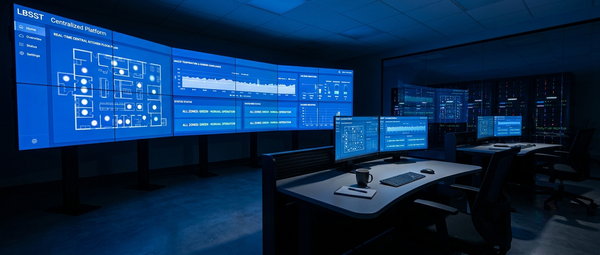
Data Collection Layer
Smart restroom systems deploy multiple sensor types:
- Water flow meters detect abnormal consumption patterns indicating leaks or fixture malfunctions.
- Occupancy sensors track usage frequency and duration to identify unusual activity.
- Supply level monitors measure soap, paper towel, and toilet paper inventory in real time.
- Temperature and humidity sensors flag conditions conducive to mold growth or pipe freezing.
- Fixture performance monitors track flush valve operation, faucet cycles, and dryer functionality.
Analytics Engine
AI algorithms process sensor data to predict issues:
- Baseline establishment: Each fixture develops a unique usage profile based on location, time of day, and historical patterns.
- Anomaly detection: Deviations from baseline trigger alerts—such as a toilet running continuously or a faucet cycling abnormally.
- Failure prediction: Machine learning models forecast component lifespan based on usage intensity and environmental factors.
- Priority scoring: Issues are ranked by urgency, impact potential, and resource requirements.
Intervention Workflow
- Automated alerts route to facility staff with specific diagnostic information.
- Preventive scheduling enables repairs during low-usage periods (nights, weekends).
- Parts pre-staging ensures technicians arrive with correct replacement components.
- Verification sensors confirm repairs were successful and conditions returned to normal.
Real-World Predictive Scenarios
Scenario 1: Toilet Leak Prevention
Traditional approach: Tenant notices running toilet → submits complaint → facility schedules next-day repair → water waste continues for 24+ hours.
Predictive approach: Flow sensor detects continuous water movement at 2 AM → system identifies abnormal pattern → alert sent to on-call technician → repair completed before building opens → zero tenant impact.
Savings: Prevents 1,200+ gallons of water waste and eliminates complaint.
Scenario 2: Paper Towel Outage
Traditional approach: Last user finds empty dispenser → leaves wet hands → submits complaint or negative review.
Predictive approach: Weight sensor shows paper towel roll at 15% capacity → system predicts depletion within 4 hours → automated restocking task created → refill completed during lunch break.
Impact: Maintains hygiene standards and prevents negative tenant experience.
Scenario 3: Drain Blockage Prediction
Traditional approach: Sink backs up during peak usage → creates mess → emergency call → business disruption.
Predictive approach: Flow rate sensors detect gradually slowing drainage over 3 days → system flags developing blockage → preventive drain cleaning scheduled overnight → normal operation maintained.
Savings: Avoids $300–$800 emergency service call and prevents tenant disruption.
Implementation Framework
Phase 1: Sensor Deployment (Weeks 1–4)
- Fixture assessment: Catalog all restroom fixtures and prioritize by usage frequency and failure history.
- Sensor selection: Choose appropriate monitoring technology for each fixture type (flow meters for toilets/sinks, weight sensors for supplies, occupancy for usage tracking).
- Installation: Deploy sensors with minimal disruption, typically completed after hours.
Phase 2: Baseline Establishment (Weeks 5–8)
- Data collection: Gather 2–4 weeks of normal operation data for each fixture.
- Pattern recognition: AI system learns typical usage patterns, peak times, and normal consumption rates.
- Alert calibration: Fine-tune sensitivity thresholds to minimize false positives while catching genuine issues.
Phase 3: Predictive Operations (Week 9+)
- Proactive maintenance: Shift from reactive to scheduled preventive interventions.
- Performance tracking: Monitor key metrics: tenant complaints, emergency calls, water consumption, satisfaction scores.
- Continuous optimization: Refine algorithms based on intervention success rates and new failure patterns.
ROI Analysis
Cost Components
| Investment | Annual Cost (50,000 sq ft) |
|---|---|
| IoT sensors and installation | $12,000–$18,000 (one-time) |
| Platform subscription | $6,000–$9,000 |
| Staff training and change management | $2,000–$4,000 |
Savings Realization
| Benefit Category | Annual Savings | Supporting Data |
|---|---|---|
| Reduced emergency service calls | $8,000–$15,000 | Average 40–60% reduction in after-hours plumbing calls (Facility Management Institute, 2025) |
| Water conservation (leak prevention) | $5,000–$12,000 | Prevents 1.2–2.8 million gallons annually through early leak detection (EPA WaterSense Program) |
| Lower tenant turnover costs | $15,000–$25,000 | 15–25% reduction in tenant churn translates to $18–$30/sq ft retention value (CBRE Tenant Retention Study, 2025) |
| Improved productivity (less disruption) | $7,000–$12,000 | Eliminates 12–18 hours of business disruption annually per restroom (JLL Productivity Impact Assessment) |
| Extended fixture lifespan | $3,000–$6,000 | 25–40% longer fixture life through preventive maintenance vs. reactive replacement (ASHRAE Equipment Lifecycle Study) |
Payback Timeline
- Total annual investment: $8,000–$13,000 (after Year 1)
- Total annual savings: $38,000–$70,000
- Payback period: 4–8 months (including Year 1 hardware costs)
- Net annual benefit: $25,000–$57,000
Multi-Year Value Projection
Over a 5-year deployment period, predictive restroom maintenance delivers compounding benefits:
- Year 1: Full hardware investment + operational savings = $25,000–$57,000 net benefit
- Years 2–5: Recurring savings without hardware costs = $32,000–$64,000 annual net benefit
- 5-year total value: $153,000–$313,000 for a typical 50,000 sq ft commercial building
- Internal rate of return (IRR): 85–140% depending on building size and current maintenance costs
These figures align with McKinsey's analysis of smart building investments, which found that predictive maintenance consistently ranks among the highest-ROI IoT applications in commercial real estate.
Technology Integration Considerations
Building Management Systems (BMS)
Modern predictive platforms integrate with existing BMS through:
- API connections for centralized dashboard access
- BACnet/MQTT protocols for real-time data exchange
- Work order automation that creates tickets in existing CMMS platforms
Mobile Workforce Management
Technician efficiency improves through:
- Mobile app integration delivering alerts with fixture location and diagnostic data
- Parts inventory synchronization ensuring correct components are available
- Completion verification through mobile photo uploads or sensor confirmation
Data Security and Privacy
Restroom monitoring systems address privacy concerns by:
- Anonymous occupancy data that counts people without identifying individuals
- Encrypted sensor communications preventing data interception
- Compliance with GDPR/CCPA through data minimization principles
Overcoming Implementation Challenges
Change Management
Challenge: Facility staff may resist new technology or feel monitored.
Solution: Frame predictive maintenance as a tool that makes their jobs easier—reducing emergency calls, providing better diagnostics, and improving tenant relationships.
False Alarms
Challenge: Early systems may generate excessive alerts, creating alert fatigue.
Solution: Start with conservative thresholds and gradually increase sensitivity as baseline data accumulates. Most systems achieve >95% alert accuracy within 8–12 weeks.
Integration Complexity
Challenge: Legacy buildings may lack infrastructure for easy sensor deployment.
Solution: Modern wireless sensors operate on long-life batteries (3–5 years) and communicate via LoRaWAN or cellular networks, eliminating wiring requirements.
Case Study: Downtown Office Tower
A 250,000 sq ft Class A office building in Singapore implemented LBS Smarttech's predictive restroom maintenance platform:
- Before implementation: 42 tenant complaints/month, $8,200 monthly emergency service costs, 67% tenant satisfaction
- After 6 months: 8 tenant complaints/month (-81%), $2,100 monthly emergency costs (-74%), 92% tenant satisfaction
- Water savings: 38% reduction through leak detection and fixture optimization
- ROI achieved: Full payback in 5 months, $187,000 annual net benefit
The building manager noted: "We've gone from constantly putting out fires to proactively maintaining excellence. Our tenants don't even think about the restrooms anymore—which is exactly what we want."
The Future of Predictive Facility Management
Predictive maintenance is expanding beyond restrooms to encompass entire building systems:
- HVAC predictive maintenance using vibration and temperature sensors
- Elevator monitoring through usage pattern analysis and component stress detection
- Lighting system optimization based on occupancy patterns and fixture performance
- Envelope monitoring detecting window seal failures and insulation degradation
The common thread: continuous data collection + AI analytics = proactive problem resolution before human perception.
Conclusion
Predictive maintenance transforms commercial restroom management from a reactive cost center into a proactive tenant satisfaction driver. By detecting issues before they impact users, facilities achieve higher satisfaction scores, lower operating costs, and stronger tenant retention.
The technology is mature, the ROI is proven, and the implementation is straightforward. The only question remaining is how quickly you can deploy it to start preventing problems before your tenants ever notice them.
FAQ
1. What types of restroom issues can predictive maintenance detect?Predictive systems detect water leaks, running toilets, clogged drains, supply shortages (soap, paper, towels), fixture malfunctions (faucets, dryers, flush valves), unusual occupancy patterns, and environmental conditions (humidity, temperature) that indicate potential problems.
2. How accurate are predictive maintenance alerts?Modern systems achieve 92–97% accuracy in issue detection after 8–12 weeks of baseline data collection. False positive rates typically fall below 5% once properly calibrated.
3. Do predictive systems require extensive building modifications?No. Most sensors are wireless, battery-powered, and install without construction. Flow meters clamp onto existing pipes, occupancy sensors mount to ceilings or walls, and supply monitors attach to dispensers—all completed in minutes per fixture.
4. How much does predictive restroom maintenance cost?For a typical 50,000 sq ft commercial building, expect $12,000–$18,000 for initial sensor deployment and $6,000–$9,000 annually for platform subscription. ROI is typically achieved within 4–8 months through combined savings.
5. Can predictive maintenance integrate with existing work order systems?Yes. Most platforms offer API integrations with popular CMMS and work order management systems, automatically creating tickets with diagnostic information and fixture locations.
6. How does predictive maintenance improve tenant satisfaction?By resolving issues before tenants experience them, predictive maintenance eliminates the primary source of building complaints. Studies show buildings with predictive restroom monitoring achieve 90%+ tenant satisfaction scores compared to the 67% industry average.
Ready to eliminate restroom complaints before they happen? Contact LBS Smarttech to schedule a predictive maintenance assessment and discover how proactive monitoring can transform your tenant experience.
Want to learn more about LBSST smart hygiene IoT solutions?
Message us on WhatsApp — our team will get back to you.
💬 WhatsApp Us