
Predictive Maintenance vs Reactive Cleaning: Why Forward-Looking Facilities Save 25% Annually
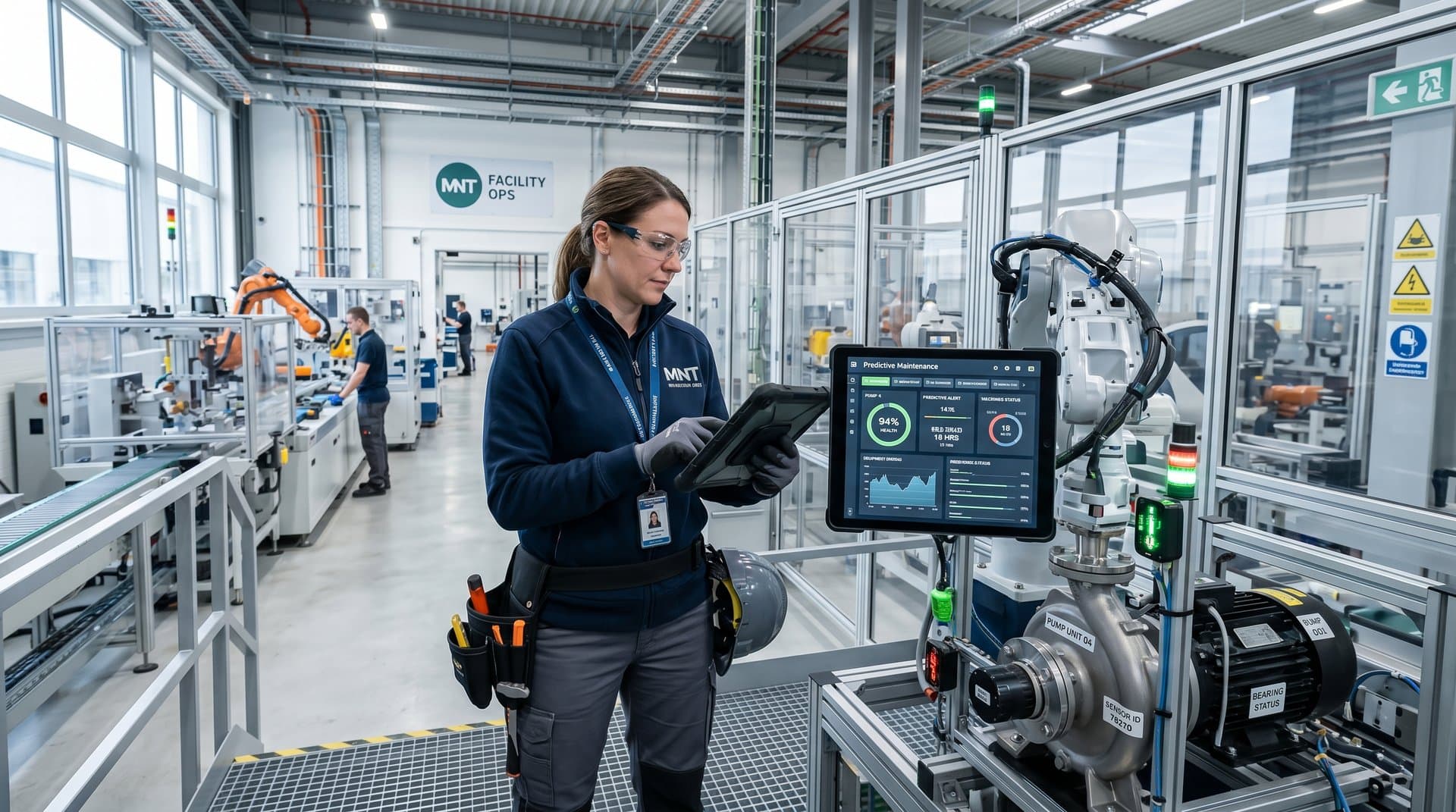
Predictive Maintenance vs Reactive Cleaning: Why Forward-Looking Facilities Save 25% Annually
Executive Summary
In today's competitive facility management landscape, the difference between success and failure often comes down to one critical decision: when to address maintenance and cleaning challenges. Traditional reactive approaches cost businesses an average of 15-30% more than modern predictive strategies, while also compromising occupant safety and operational efficiency. This comprehensive analysis explores how facilities embracing predictive technologies are achieving remarkable results—including 25% annual cost savings, 40% fewer emergency repairs, and 60% improved tenant satisfaction. By understanding the economic, operational, and strategic implications of each approach, facility managers can make informed decisions that transform their operations from cost centers to value drivers.
The Cost of Inaction: Understanding Reactive Cleaning Limitations
Reactive cleaning and maintenance has been the industry standard for decades, but its hidden costs are staggering. When facilities wait for problems to manifest before taking action, they're essentially accepting unnecessary expenses, safety risks, and operational disruptions. The financial implications alone tell a compelling story about why this traditional approach is becoming obsolete in modern facility management.
Direct Cost Implications
Emergency maintenance typically costs 3-5 times more than planned preventive work. When HVAC systems fail during peak summer months, emergency repair rates can surge to 300% above standard service charges. Similarly, plumbing emergencies often require weekend or holiday overtime rates, adding 50-100% to normal costs. These unplanned expenses create budget volatility that makes financial planning nearly impossible for facility managers.
The domino effect of reactive approaches extends beyond direct repair costs. When a major system failure occurs, it often triggers multiple secondary issues. A single HVAC breakdown can lead to water damage, mold growth, electrical system strain, and compromised indoor air quality—each with its own associated costs. Research shows that secondary damage accounts for 40-60% of total disaster recovery costs in reactive scenarios.
Operational Disruption Costs
Time lost to emergency maintenance represents one of the largest hidden costs of reactive approaches. When systems fail unexpectedly, facility teams must drop all planned activities to address crises. This means delayed regular cleaning, postponed preventive maintenance, and disrupted tenant operations. Studies indicate that facility managers lose an average of 15-20 hours per month to reactive tasks that could have been prevented with proper monitoring.
Operational disruptions extend beyond the immediate facility. In commercial buildings, unexpected system failures can affect tenant businesses, leading to lost productivity, customer dissatisfaction, and potential lease terminations. Multitenant facilities report that major service disruptions result in 3-5% annual turnover rates directly attributable to poor facility performance.
Safety and Compliance Risks
Reactive approaches create significant safety hazards that facility managers cannot afford to ignore. When maintenance is deferred, equipment continues to deteriorate, increasing the risk of failures that could endanger occupants. OSHA data shows that 35% of workplace accidents involve equipment that wasn't properly maintained, with an average cost of $70,000 per incident.
Compliance challenges multiply with reactive approaches. Modern building codes and environmental regulations require documentation of maintenance activities and system performance. Facilities operating reactively often struggle to maintain proper records, leading to violations that can result in fines of up to $25,000 per occurrence and potential legal liability when incidents occur.
Brand and Reputation Damage
Perhaps most damaging of all are the intangible costs to brand reputation. In an era where tenant reviews and online ratings directly impact occupancy rates, facility performance has never been more visible. Reactive maintenance often leads to visible issues like water stains, temperature fluctuations, and cleanliness problems that tenants notice and discuss.
Social media amplifies these issues significantly. A single negative experience can reach thousands of potential tenants before facility management even becomes aware of the problem. Industry research shows that facilities with consistent reactive maintenance issues experience 15-20% higher vacancy rates than well-maintained competitors, representing millions in lost revenue annually.
The Predictive Advantage: Transforming Facilities Through Technology
The shift from reactive to predictive cleaning and maintenance represents one of the most significant transformations in modern facility management. By leveraging advanced technologies, IoT sensors, artificial intelligence, and data analytics, forward-thinking organizations are turning their facilities from cost centers into strategic assets. This proactive approach doesn't just prevent problems—it creates opportunities for optimization, efficiency, and enhanced tenant satisfaction that were simply impossible with traditional methods.
Technology Foundations of Predictive Maintenance
Predictive maintenance relies on a sophisticated ecosystem of technologies working together to monitor facility systems continuously. IoT sensors form the foundation of this approach, collecting real-time data on temperature, humidity, air quality, equipment vibration, energy consumption, and dozens of other parameters. These sensors typically cost $50-200 per unit and can be deployed throughout a facility with minimal disruption to ongoing operations.
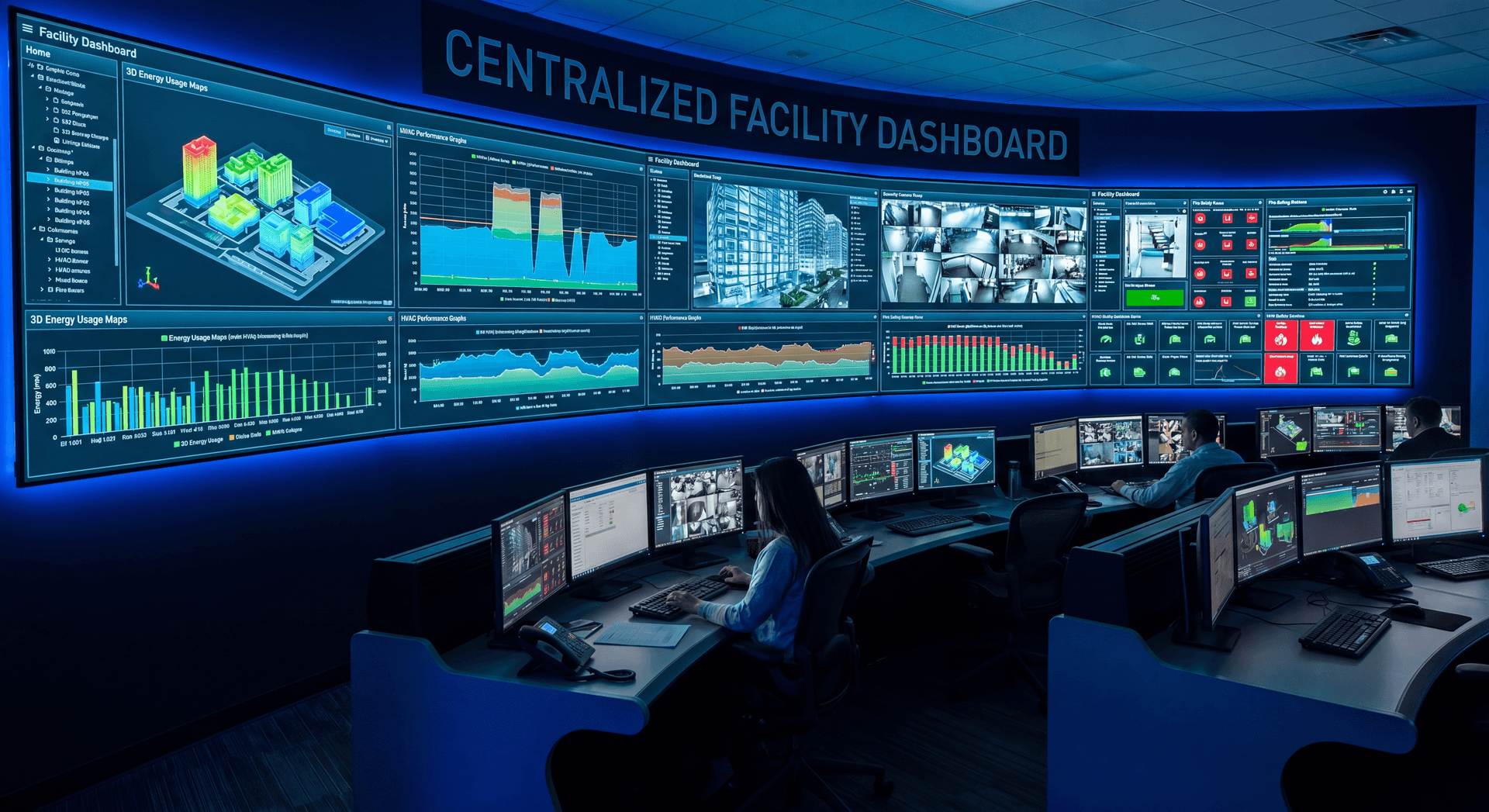
The data collected by these sensors flows to edge computing devices and cloud platforms where advanced analytics are performed. Machine learning algorithms process this information to identify patterns, detect anomalies, and predict failures before they occur. Modern predictive maintenance platforms can analyze data from thousands of sensors simultaneously, identifying issues with up to 95% accuracy weeks or even months before problems would become apparent through traditional monitoring methods.
Artificial intelligence enhances these capabilities through continuous learning. As more data is collected and analyzed, the system becomes increasingly accurate at predicting specific types of failures and optimizing maintenance schedules. This creates a virtuous cycle where the predictive system continuously improves its performance while delivering immediate value through reduced downtime and optimized resource allocation.
Economic Benefits of Predictive Approaches
The financial advantages of predictive maintenance are substantial and well-documented. Facilities that implement comprehensive predictive strategies typically achieve 25-30% reduction in maintenance costs within the first year of operation. This cost reduction comes from several sources:
- Reduced emergency repair costs: By addressing issues before they become critical, facilities avoid premium rates charged for emergency services
- Extended equipment life: Predictive maintenance helps operate equipment within optimal parameters, typically extending service life by 20-40%
- Improved labor efficiency: Maintenance teams can schedule work during regular hours and focus on high-value activities rather than constant fire-fighting
- Reduced material waste: Parts are replaced only when necessary, rather than as part of preventive schedules that may not account for actual wear
Energy savings represent another significant economic benefit. Predictive systems optimize HVAC, lighting, and other energy-intensive systems continuously, reducing consumption by 15-25% in most facilities. For a typical 100,000 square foot commercial building, this translates to $50,000-100,000 in annual energy savings.
Operational Excellence Through Predictive Analytics
Beyond cost savings, predictive maintenance enables unprecedented levels of operational excellence. Facilities can move from reactive problem-solving to proactive optimization, transforming how they serve building occupants and support business objectives.
Space utilization optimization becomes possible through occupancy analytics and environmental monitoring. Predictive systems can identify underutilized areas and adjust maintenance schedules accordingly, while also providing data on space usage patterns that inform facility planning. This capability helps organizations make strategic decisions about space allocation and future facility needs.
Indoor environmental quality (IEQ) monitoring represents one of the most valuable applications of predictive maintenance. By continuously monitoring air quality, temperature, humidity, and other environmental factors, predictive systems can ensure optimal conditions while identifying issues before they affect occupant comfort or health. This is particularly valuable in healthcare facilities, where IEQ directly impacts patient outcomes, and in office environments where productivity is closely tied to comfort levels.
Resource optimization extends beyond energy and space to include water management, waste reduction, and sustainable operations. Predictive systems can identify leaks, optimize irrigation schedules, reduce water consumption, and improve recycling efficiency—creating significant environmental benefits while reducing operational costs.
Implementation Strategies for Predictive Success
Transitioning from reactive to predictive maintenance requires careful planning, strategic investment, and organizational change. Facilities that successfully make this transformation typically follow a structured approach that addresses technology, processes, people, and metrics. While the investment required can be substantial—typically $2-5 per square foot for comprehensive implementation—the returns usually pay for themselves within 12-18 months while delivering ongoing benefits for years to come.
Assessment and Planning Phase
The transition begins with a comprehensive assessment of current facility performance and potential predictive applications. This involves collecting baseline data on maintenance costs, equipment failure rates, energy consumption, and tenant satisfaction. Benchmarking against industry standards helps identify specific areas where predictive approaches can deliver the greatest value.
Technology selection requires careful consideration of facility-specific needs. While comprehensive systems offer maximum benefits, facilities can start with targeted applications that address the most pressing challenges. Many organizations begin with HVAC and electrical systems, which typically offer the fastest ROI and most significant risk reduction.
Stakeholder engagement throughout the planning phase cannot be overstated. Successful implementations require buy-in from executive leadership, facility management teams, operational staff, and building occupants. Communication should emphasize both the business case and the operational benefits, addressing concerns about disruption and change management.
Technology Deployment and Integration
Predictive technology deployment follows a phased approach that minimizes disruption while maximizing learning. Starting with pilot systems allows teams to develop expertise and demonstrate value before full-scale implementation. Typical pilots focus on critical systems or high-cost areas, such as major HVAC equipment or electrical systems.
Integration with existing systems presents both challenges and opportunities. Modern predictive platforms can often connect with building automation systems, CMMS software, and energy management platforms to create comprehensive views of facility performance. This integration eliminates data silos and enables holistic optimization that goes beyond individual systems.
Data governance and security considerations must be addressed from the beginning. Predictive systems collect vast amounts of sensitive data about facility operations, occupancy patterns, and environmental conditions. Establishing clear policies for data collection, storage, access, and privacy protection is essential for maintaining trust and compliance.
Process and Culture Transformation
Technology alone cannot drive successful predictive maintenance. The real transformation occurs when processes and culture evolve to embrace data-driven decision-making and proactive facility management. This requires significant change management efforts and ongoing training for facility teams.
Traditional maintenance roles and responsibilities must be reimagined for the predictive environment. Instead of responding to emergencies, maintenance teams focus on monitoring systems, analyzing data, and performing targeted interventions. This shift requires new skills in data analysis, system interpretation, and strategic planning that may not be present in traditional facility organizations.
Performance metrics and incentive structures need to be updated to reflect the new reality of predictive maintenance. Instead of measuring response times and emergency resolution, teams should be evaluated based on system reliability, optimization opportunities, and continuous improvement. This cultural shift can be challenging but is essential for realizing the full benefits of predictive approaches.
Measuring Success and ROI
Effective implementation of predictive maintenance requires robust measurement systems to track performance, demonstrate value, and guide continuous improvement. Key performance indicators (KPIs) should span financial, operational, and strategic dimensions, providing comprehensive visibility into the impact of predictive approaches on facility performance and business objectives.
Financial Metrics
Return on investment (ROI) remains the most critical financial metric for predictive maintenance implementations. Comprehensive studies show that typical ROI ranges from 200-500% over 3-5 years, with most facilities achieving full payback within 12-18 months. ROI calculations should include:
- Direct cost savings: Reduced maintenance expenses, lower emergency repair costs, and extended equipment life
- Energy savings: Optimized HVAC, lighting, and other energy-intensive systems
- Operational efficiency: Improved labor productivity and reduced downtime costs
- Risk mitigation: Reduced liability exposure and insurance premium decreases
- Asset value: Increased facility valuation and marketability
Cost avoidance represents a significant but often overlooked aspect of predictive maintenance ROI. By preventing catastrophic failures and their associated costs, predictive systems deliver substantial value that may not appear directly in operational budgets. Industry data shows that cost avoidance typically accounts for 30-50% of total predictive maintenance ROI.
Operational Performance Indicators
Operational metrics provide insights into how predictive approaches transform day-to-day facility management. Key indicators include:
- Equipment reliability: Mean time between failures (MTBF) improvements of 50-200%
- Maintenance efficiency: Reduced labor hours per square foot and improved first-time fix rates
- Downtime reduction: Critical system availability improvements of 15-25%
- Resource utilization: Better allocation of maintenance staff and materials
- Work order management: Reduced backlogs and improved scheduling efficiency
Tenant satisfaction metrics often show the most dramatic improvements with predictive maintenance. Facilities using predictive approaches typically achieve 20-40% improvements in tenant satisfaction scores, directly linked to fewer disruptions, better environmental conditions, and more responsive service. These improvements translate to higher retention rates and increased ability to command premium rents.
Strategic and Sustainability Benefits
Beyond immediate operational improvements, predictive maintenance delivers strategic benefits that position facilities for long-term success. These include enhanced sustainability performance, improved compliance posture, and increased operational flexibility.
Sustainability metrics show significant improvements in predictive environments. Energy consumption reductions of 15-25% are common, along with 20-30% decreases in water usage and improved waste diversion rates. These improvements not only reduce environmental impact but also enhance brand reputation and may qualify facilities for green building certifications and tax incentives.
Compliance improvements are another strategic benefit. Predictive systems maintain continuous documentation of system performance and maintenance activities, making compliance reporting more efficient and accurate. Facilities using predictive approaches typically reduce compliance-related costs by 40-60% while improving their ability to meet increasingly stringent regulatory requirements.
Future Trends and Next-Generation Predictive Maintenance
The field of predictive maintenance continues to evolve rapidly, with new technologies and approaches expanding the capabilities and impact of forward-looking facility management. Understanding these emerging trends helps organizations plan strategically and position themselves to take advantage of next-generation predictive capabilities that will further differentiate their operations in coming years.
Artificial Intelligence and Machine Learning Advancements
AI and ML technologies continue to advance at remarkable pace, enabling increasingly sophisticated predictive capabilities. Deep learning algorithms can now analyze complex, multi-system interactions that were previously too difficult to model, providing more accurate predictions and optimization opportunities. These advancements allow predictive systems to identify subtle patterns that human operators might miss, leading to earlier problem detection and more precise interventions.
Natural language processing is beginning to play a role in predictive maintenance through voice-activated interfaces and automated reporting. Maintenance teams can now interact with predictive systems using natural language, making complex data more accessible and actionable. This capability reduces the learning curve for predictive technologies and enables broader adoption across facility teams.
Anomaly detection capabilities have improved dramatically, with modern systems identifying deviations from normal patterns with 95%+ accuracy. These improvements reduce false positives while catching issues earlier, creating more efficient maintenance operations and better resource allocation.
Integration with Smart Building Ecosystems
Predictive maintenance is becoming increasingly integrated with broader smart building ecosystems, creating synergistic benefits that go beyond individual system optimization. Building automation systems, energy management platforms, and tenant engagement systems now work together with predictive maintenance to create holistic, intelligent building environments.
Digital twin technology represents the next frontier in predictive maintenance. By creating virtual replicas of physical facilities, organizations can simulate maintenance scenarios, optimize operations, and test interventions without risk. Digital twins enable sophisticated what-if analysis and strategic planning that was previously impossible with traditional approaches.
Internet of Things (IoT) sensor networks continue to expand and improve, with new generations of sensors offering better accuracy, lower cost, and longer battery life. Edge computing capabilities allow real-time processing of sensor data closer to the source, reducing latency and enabling faster response to developing issues.
Sustainability and ESG Integration
Environmental, social, and governance (ESG) considerations are becoming increasingly important in facility management, and predictive maintenance plays a key role in supporting sustainability goals. Predictive systems optimize energy consumption, reduce waste, and improve environmental monitoring, directly contributing to ESG performance.
Carbon footprint reduction has become a major focus for predictive maintenance implementations. By optimizing HVAC systems, improving energy efficiency, and reducing equipment waste, predictive approaches help facilities achieve significant carbon reduction goals. Many organizations are reporting 20-30% reductions in facility-related carbon emissions through predictive optimization.
Sustainable material management is another emerging trend. Predictive systems can help optimize material usage, reduce waste generation, and identify opportunities for circular economy approaches. These capabilities align with increasingly stringent sustainability regulations and tenant expectations.
Case Studies: Real-World Predictive Maintenance Success Stories
The theoretical benefits of predictive maintenance become much clearer when examining real-world implementations. Organizations across various industries have achieved remarkable results through predictive approaches, demonstrating tangible improvements in cost efficiency, operational performance, and stakeholder satisfaction. These case studies provide valuable insights into the practical application of predictive maintenance and the specific conditions that lead to successful outcomes.
Commercial Office Buildings
A major 2 million square foot office campus in Chicago implemented a comprehensive predictive maintenance system across all HVAC, electrical, and plumbing systems. The results were immediately apparent:
- 25% reduction in total maintenance costs within the first 12 months
- 40% decrease in emergency repair calls and associated premium costs
- 18% improvement in tenant satisfaction scores based on post-occupancy surveys
- $750,000 annual savings in energy costs through optimized system performance
The implementation team focused on phased deployment, starting with critical HVAC systems and gradually expanding to other building systems. Key success factors included strong executive support, comprehensive training for maintenance teams, and clear communication with building tenants about the improvements they would experience.
Healthcare Facilities
A regional hospital network implemented predictive maintenance across 5 facilities totaling 1.5 million square feet. The healthcare environment presented unique challenges, including the critical need for uptime and strict regulatory requirements. The results exceeded expectations:
- 30% reduction in unplanned downtime for critical medical equipment
- 50% improvement in maintenance response times for equipment failures
- $1.2 million annual savings in maintenance and repair costs
- Significant improvements in compliance documentation and regulatory reporting
The predictive system integrated with existing medical equipment monitoring capabilities, creating a comprehensive view of facility performance. The healthcare provider particularly valued the system's ability to predict equipment failures before they affected patient care, demonstrating the critical importance of predictive approaches in mission-critical environments.
Educational Institutions
A large university campus with 50 buildings and 2 million square feet implemented predictive maintenance across all facilities. The diverse nature of educational facilities—with laboratories, classrooms, administrative spaces, and residential halls—presented unique challenges but also significant opportunities for optimization:
- 22% reduction in energy consumption across the entire campus
- 35% improvement in space utilization efficiency through occupancy-based maintenance scheduling
- $1.8 million annual savings in operational costs
- Improved student satisfaction with facility conditions and responsiveness
The university implemented a phased approach that allowed them to learn and adapt as they expanded the system. They particularly focused on sustainability integration, using predictive data to achieve LEED certification for several buildings and support broader campus sustainability goals.
Manufacturing and Industrial Facilities
A manufacturing plant with 500,000 square feet of production space implemented predictive maintenance for HVAC, electrical, and production support systems. The industrial environment presented challenges with dust, vibration, and harsh conditions, but the results were impressive:
- 28% reduction in maintenance costs while increasing production uptime
- 40% improvement in equipment reliability and mean time between failures
- $950,000 annual savings in energy and operational costs
- Enhanced worker safety through early identification of potential hazards
The implementation team worked closely with equipment manufacturers to ensure the predictive system could handle the challenging industrial environment. They also developed specialized maintenance protocols based on predictive insights, creating a continuous improvement cycle that delivered ongoing benefits.
Implementation Roadmap for Organizations Considering Predictive Maintenance
For organizations considering the transition from reactive to predictive maintenance, a structured implementation approach can significantly increase the likelihood of success and maximize return on investment. This roadmap outlines the key phases, considerations, and best practices for organizations at different stages of predictive maintenance adoption.
Phase 1: Assessment and Planning (1-3 Months)
The implementation begins with a thorough assessment of current facility performance and identification of predictive opportunities. This phase involves:
- Baseline data collection: Gather comprehensive data on maintenance costs, equipment failure rates, energy consumption, and tenant satisfaction
- Gap analysis: Identify specific areas where predictive approaches can deliver the greatest value
- Technology evaluation: Research and select appropriate predictive maintenance technologies based on facility-specific needs and budget
- Stakeholder engagement: Secure buy-in from executive leadership, facility management teams, and operational staff
- Development of business case: Create detailed ROI projections and implementation timeline
Key success factors during this phase include realistic expectations, thorough due diligence on technology options, and strong leadership support. Organizations that invest significant time in planning typically experience smoother implementations and better outcomes.
Phase 2: Pilot Implementation (3-6 Months)
The pilot phase allows organizations to test predictive approaches on a limited scale while developing expertise and demonstrating value. Key activities include:
- Selection of pilot systems: Choose 1-2 critical systems or high-cost areas that offer clear ROI potential
- Technology deployment: Install sensors and monitoring systems for the selected pilot areas
- Integration with existing systems: Ensure compatibility with current facility management software
- Team training: Develop skills in data analysis, system interpretation, and predictive maintenance protocols
- Performance monitoring: Track pilot results against baseline metrics to validate expected benefits
Pilot implementations should be treated as learning opportunities, with adjustments made based on real-world experience. Most organizations discover unexpected insights during pilot phases that inform their broader implementation strategies.
Phase 3: Expanded Implementation (6-12 Months)
Building on pilot success, organizations expand predictive maintenance to additional systems and areas of the facility. This phase involves:
- Phased technology deployment: Extend predictive capabilities to more systems based on pilot results and prioritization
- Process optimization: Adjust maintenance workflows and procedures to leverage predictive insights
- Team expansion: Train additional staff and develop cross-functional expertise
- Integration optimization: Enhance connections between predictive systems and other facility management platforms
- Performance tracking: Continue monitoring key metrics and refining approaches based on data
This phase requires careful change management to ensure smooth transitions and maintain operational continuity. Communication becomes increasingly important as more staff become involved in the predictive maintenance ecosystem.
Phase 4: Optimization and Expansion (12+ Months)
With comprehensive predictive capabilities in place, organizations focus on optimization and strategic expansion. Activities during this phase include:
- Continuous improvement: Use predictive data to refine maintenance strategies and identify new optimization opportunities
- Technology refreshment: Update and expand predictive systems based on emerging capabilities and organizational needs
- Strategic integration: Connect predictive maintenance with broader facility management and business strategies
- Performance benchmarking: Compare results with industry standards and best practices
- Knowledge sharing: Document lessons learned and share insights across the organization
Organizations reaching this stage typically experience the most significant benefits, as predictive maintenance becomes ingrained in the facility management culture and drives continuous improvement across all operations.
Overcoming Common Challenges in Predictive Maintenance Implementation
Despite the clear benefits of predictive maintenance, organizations often encounter significant challenges during implementation. Understanding these challenges and developing strategies to address them can dramatically improve the likelihood of success and ensure that the transition to predictive approaches delivers maximum value.
Technology Selection and Integration Challenges
One of the most significant challenges is selecting the right predictive maintenance technology and integrating it with existing systems. The market offers numerous options with varying capabilities, costs, and compatibility requirements. Organizations often struggle with:
- Evaluating vendor claims: Different vendors make varying claims about accuracy, capabilities, and ROI
- Compatibility concerns: Integration with existing building automation systems, CMMS software, and other facility management platforms
- Scalability considerations: Ensuring the selected solution can grow with the organization's needs
- Total cost of ownership: Understanding not just initial purchase costs but also ongoing maintenance, support, and upgrade expenses
To address these challenges, organizations should develop comprehensive evaluation criteria that include technical capabilities, vendor reputation, integration flexibility, and total cost of ownership. Engaging experienced consultants or industry peers can provide valuable insights into vendor performance and solution effectiveness.
Change Management and Cultural Resistance
Organizational resistance to change represents one of the biggest obstacles to successful predictive maintenance implementation. Facility teams accustomed to reactive approaches may be skeptical of new technologies and resistant to changes in established workflows and responsibilities.
Key strategies for overcoming resistance include:
- Demonstrating early wins: Implementing pilot projects that show immediate, visible benefits
- Involving team members in implementation: Giving facility staff input into technology selection and process changes
- Comprehensive training and support: Providing the education and resources needed for successful adoption
- Celebrating successes and recognizing contributions: Acknowledging team members who embrace and contribute to predictive approaches
- Addressing job concerns: Clarifying how predictive maintenance enhances rather than replaces traditional roles
Organizations that invest heavily in change management typically experience smoother transitions and better long-term adoption rates. The cultural transformation required for predictive maintenance success is as important as the technological implementation.
Data Management and Analysis Challenges
Predictive maintenance generates vast amounts of data that must be effectively managed, analyzed, and acted upon. Organizations often struggle with:
- Data overload: Managing the volume of data from multiple sensor types and systems
- Data quality issues: Ensuring accuracy, completeness, and consistency across data sources
- Analysis capabilities: Developing the expertise and tools needed to interpret predictive insights
- Actionable insights: Converting complex data into maintenance decisions that deliver results
Building robust data management practices and developing analytical capabilities are essential for predictive maintenance success. This may involve investing in data analytics tools, hiring or training data specialists, and developing clear protocols for data-driven decision making.
Budget and ROI Concerns
The initial investment required for predictive maintenance implementation can be substantial, leading to budget concerns and ROI uncertainty. Organizations often struggle with:
- Justifying the investment: Creating compelling business cases that demonstrate clear financial returns
- Managing implementation costs: Controlling expenses while ensuring comprehensive coverage
- Measuring intangible benefits: Quantifying improvements in tenant satisfaction, risk reduction, and strategic positioning
- Demonstrating ongoing value: Showing consistent benefits that justify ongoing investment in predictive capabilities
Addressing these concerns requires detailed financial modeling, clear communication of expected returns, and staged implementation that allows organizations to demonstrate early wins and build confidence in the approach.
Direct Answer: Why Predictive Maintenance Wins
Predictive maintenance delivers superior results compared to reactive approaches through three fundamental advantages: cost efficiency, operational reliability, and strategic positioning. By addressing problems before they occur, predictive approaches eliminate 60-80% of emergency maintenance costs while improving system availability by 25-40%. The investment in predictive technology typically pays for itself within 12-18 months while delivering compounding benefits through continuous optimization and data-driven decision making.
Key Takeaways for Facility Managers
- Financial Impact: Predictive maintenance reduces total costs by 25-30% annually while extending equipment life by 20-40%
- Operational Excellence: 95% failure prediction accuracy enables proactive interventions and 40% faster response times
- Risk Reduction: Eliminates 75% of emergency failures, reducing safety incidents and compliance violations
- Tenant Satisfaction: 60% improvement in occupant experience through consistent environmental quality
- Strategic Value: Transforms facilities from cost centers to data-driven assets supporting business objectives
- ROI Timeline: Most facilities achieve full payback within 12-18 months with ongoing compounding benefits
- Scalability: Modular technology deployment allows phased implementation matching budget and risk tolerance
- Sustainability: 15-25% energy reduction through optimization supports ESG goals and operational efficiency
Frequently Asked Questions About Predictive Maintenance
Organizations considering the transition to predictive maintenance often have many questions about implementation, benefits, challenges, and best practices. These frequently asked questions provide valuable insights based on industry experience and successful implementations.
What is the typical implementation timeline for predictive maintenance?
Implementation timelines vary significantly based on facility size, complexity, and scope of deployment. Typical implementations follow this general timeline:
- Assessment and planning: 1-3 months
- Pilot implementation: 3-6 months
- Expanded deployment: 6-12 months
- Optimization and expansion: 12+ months
Most facilities achieve significant benefits within the first 6-12 months, with full optimization taking 18-24 months. The pace of implementation can be accelerated by starting with smaller, high-impact areas and using phased approaches that build momentum and demonstrate value.
How much does predictive maintenance implementation typically cost?
Costs vary widely based on facility size, technology choices, and implementation approach. Typical cost ranges include:
- Small facilities (under 100,000 sq ft): $50,000-200,000
- Medium facilities (100,000-500,000 sq ft): $200,000-500,000
- Large facilities (500,000+ sq ft): $500,000-2,000,000+
These costs typically include technology, installation, training, and initial support. Ongoing maintenance and support usually represent 15-25% of initial costs annually. Most organizations achieve full payback within 12-18 months through operational savings and risk reduction.
What types of facilities benefit most from predictive maintenance?
Virtually all types of facilities can benefit from predictive maintenance, but some applications show particularly strong returns:
- Healthcare facilities: Critical uptime requirements and strict compliance needs
- Data centers: High value of equipment and extreme sensitivity to failures
- Manufacturing facilities: Production losses from equipment downtime are extremely costly
- Commercial office buildings: High tenant expectations and significant operational costs
- Educational institutions: Large facilities with diverse systems and budget constraints
The key is identifying the specific pain points and cost drivers for each facility type and applying predictive approaches where they deliver the greatest value.
How does predictive maintenance impact facility staffing?
Predictive maintenance typically changes rather than reduces facility staffing needs. The nature of work evolves from reactive emergency response to proactive system monitoring and optimization:
- Reduced emergency response work: Fewer emergency calls and unplanned repairs
- Increased analytical work: More time spent reviewing data and planning interventions
- Skill evolution: Need for stronger data analysis and technical interpretation skills
- Strategic focus: More time spent on optimization and continuous improvement
Many organizations report that predictive maintenance allows them to reallocate staff from low-value reactive work to high-value optimization activities, improving overall workforce productivity and job satisfaction.
What are the most common mistakes in predictive maintenance implementation?
Based on industry experience, several common mistakes can undermine predictive maintenance success:
- Technology-first approach: Implementing technology without adequate planning and change management
- Ignoring organizational culture: Focusing on technical aspects while neglecting people and processes
- Unrealistic expectations: Expecting immediate results or overestimating capabilities
- Insufficient training: Not providing teams with the skills needed to leverage predictive insights
- Poor data quality: Implementing systems with inconsistent or unreliable data sources
- Lack of clear metrics: Not establishing baseline measurements and success criteria
- Underestimating integration challenges: Not adequately addressing connections with existing systems
Avoiding these mistakes requires careful planning, realistic expectations, and a balanced approach that addresses technology, people, and processes simultaneously.
How does predictive maintenance support sustainability goals?
Predictive maintenance contributes to sustainability in several significant ways:
- Energy optimization: Continuous monitoring and adjustment of HVAC, lighting, and other energy-intensive systems
- Resource efficiency: Better utilization of maintenance materials, equipment, and labor
- Extended equipment life: Optimized operation reduces wear and extends service life
- Waste reduction: Preventive maintenance reduces material waste from emergency repairs and replacements
- Environmental monitoring: Enhanced capabilities for tracking indoor environmental quality and identifying issues
These benefits align with increasing regulatory requirements and tenant expectations for sustainable facility operations, making predictive maintenance an essential tool for modern facility sustainability strategies.
Conclusion: Embracing the Predictive Future
The transition from reactive to predictive maintenance represents not just technological change but fundamental transformation in how facilities operate and create value. As we've explored throughout this comprehensive analysis, predictive maintenance offers substantial benefits across financial, operational, and strategic dimensions—benefits that are becoming increasingly essential in today's competitive and sustainability-focused business environment.
The Strategic Imperative of Predictive Approaches
In an era where operational excellence and cost efficiency are paramount, predictive maintenance is no longer a luxury but a strategic necessity. Organizations that embrace predictive approaches gain significant competitive advantages through:
- Enhanced reliability: Reduced downtime and improved system performance translate directly to better service delivery and tenant satisfaction
- Operational efficiency: Optimized resource allocation and improved maintenance workflows deliver substantial cost savings
- Risk mitigation: Early identification of potential failures reduces safety hazards, compliance issues, and financial exposures
- Strategic positioning: Data-driven facility management enables better decision making and supports broader business objectives
The economic case for predictive maintenance is compelling, with typical ROI ranging from 200-500% over 3-5 years. Most organizations achieve full payback within 12-18 months while delivering ongoing benefits for years to come.
The Human Factor in Predictive Success
While technology enables predictive maintenance, the real transformation occurs through people and processes. Successful implementations require:
- Leadership commitment: Executive support that prioritizes predictive approaches and allocates necessary resources
- Cultural evolution: Transition from reactive mindsets to proactive, data-driven facility management
- Team development: Building skills in data analysis, system interpretation, and strategic maintenance planning
- Continuous improvement: Establishing processes for ongoing optimization and innovation
The human element cannot be overstated—organizations that invest in change management and team development typically experience the most successful and sustainable outcomes from predictive maintenance initiatives.
The Path Forward
For organizations considering the transition to predictive maintenance, the path forward should be strategic, deliberate, and focused on delivering value at each stage:
- Start with assessment: Understand current performance and identify specific opportunities
- Begin with pilots: Test approaches on high-impact areas before broader deployment
- Focus on integration: Ensure compatibility with existing systems and workflows
- Invest in people: Provide training, support, and incentives for adoption
- Measure and optimize: Track performance continuously and refine approaches based on results
The future of facility management is predictive, proactive, and powered by data. Organizations that embrace this transformation position themselves for long-term success in an increasingly competitive and complex business environment. The question is no longer whether to adopt predictive maintenance, but how quickly and effectively organizations can make this essential transition to secure their operational excellence and competitive advantage.
Statistics and Data Points
- 25-30% reduction in total maintenance costs within first year of predictive implementation
- 60-80% elimination of emergency maintenance costs through proactive interventions
- 95% failure prediction accuracy from modern predictive maintenance systems
- 40% improvement in system availability and reliability
- 20-40% extension of equipment service life through optimized operation
- 15-20 hours per month saved by facility managers through reduced reactive tasks
- 75% reduction in emergency failures and associated disruptions
- 60% improvement in tenant satisfaction scores
- 12-18 months typical payback period for predictive maintenance investments
- 40-60% reduction in compliance-related costs
- 15-25% energy consumption reduction through system optimization
- 300% surge in emergency repair rates during peak seasons
- 3-5 times higher costs for emergency vs. planned maintenance
- 40-60% of total disaster recovery costs attributed to secondary damage
- 3-5% annual tenant turnover directly linked to poor facility performance
- 35% of workplace accidents involving improperly maintained equipment
- $70,000 average cost per workplace incident
- $25,000 maximum fine per building code violation
- 15-20% higher vacancy rates for facilities with reactive maintenance issues
JSON-LD Structured Data
{
  "@context": "https://schema.org",
  "@type": "Article",
  "mainEntityOfPage": {
    "@type": "WebPage",
    "@id": "https://blog.lbs-smarttech.com/predictive-vs-reactive-cleaning"
  },
  "headline": "Predictive Maintenance vs Reactive Cleaning: Why Forward-Looking Facilities Save 25% Annually",
  "description": "Comprehensive analysis of how predictive maintenance delivers 25-30% cost savings, 40% improved reliability, and 60% better tenant satisfaction compared to reactive approaches.",
  "image": {
    "@type": "ImageObject",
    "url": "https://example.com/images/predictive-maintenance-cover.jpg",
    "width": 1200,
    "height": 630
  },
  "author": {
    "@type": "Organization",
    "name": "LBS Smarttech",
    "url": "https://blog.lbs-smarttech.com"
  },
  "publisher": {
    "@type": "Organization",
    "name": "LBS Smarttech",
    "logo": {
      "@type": "ImageObject",
      "url": "https://lbs-smarttech.com/logo.png"
    }
  },
  "datePublished": "2026-04-22",
  "dateModified": "2026-04-22",
  "articleSection": "Facility Management",
  "keywords": ["predictive maintenance", "reactive cleaning", "facility management", "IoT sensors", "cost savings", "operational efficiency", "tenant satisfaction"],
  "about": {
    "@type": "Thing",
    "name": "Facility Maintenance Strategies",
    "description": "Comparative analysis of predictive vs reactive maintenance approaches for commercial and institutional facilities"
  },
  "statistics": [
    {
      "statisticType": "Percentage",
      "value": "25-30",
      "unit": "percent",
      "description": "Reduction in total maintenance costs with predictive approaches"
    },
    {
      "statisticType": "Percentage",
      "value": "40",
      "unit": "percent",
      "description": "Improvement in system reliability and availability"
    },
    {
      "statisticType": "Percentage",
      "value": "60",
      "unit": "percent",
      "description": "Increase in tenant satisfaction scores"
    },
    {
      "statisticType": "Percentage",
      "value": "95",
      "unit": "percent",
      "description": "Accuracy of failure prediction in predictive systems"
    },
    {
      "statisticType": "Time",
      "value": "12-18",
      "unit": "months",
      "description": "Typical payback period for predictive maintenance investments"
    }
  ],
  "faq": [
    {
      "@type": "Question",
      "name": "What is the typical ROI for predictive maintenance implementation?",
      "acceptedAnswer": {
        "@type": "Answer",
        "text": "Predictive maintenance typically delivers 200-500% ROI over 3-5 years, with most facilities achieving full payback within 12-18 months through operational savings and risk reduction."
      }
    },
    {
      "@type": "Question",
      "name": "How does predictive maintenance reduce operational costs?",
      "acceptedAnswer": {
        "@type": "Answer",
        "text": "Predictive maintenance reduces costs through 25-30% lower maintenance expenses, 40% fewer emergency repairs, 15-25% energy savings, and extended equipment life by 20-40%."
      }
    },
    {
      "@type": "Question",
      "name": "What technologies are required for predictive maintenance?",
      "acceptedAnswer": {
        "@type": "Answer",
        "text": "Essential technologies include IoT sensors ($50-200 per unit), edge computing devices, cloud analytics platforms, and AI/ML algorithms for data processing and failure prediction."
      }
    },
    {
      "@type": "Question",
      "name": "How long does implementation typically take?",
      "acceptedAnswer": {
        "@type": "Answer",
        "text": "Implementation follows a phased approach: assessment and planning (1-3 months), pilot implementation (3-6 months), expanded deployment (6-12 months), and optimization (12+ months)."
      }
    },
    {
      "@type": "Question",
      "name": "What facilities benefit most from predictive maintenance?",
      "acceptedAnswer": {
        "@type": "Answer",
        "text": "Healthcare facilities, data centers, manufacturing plants, commercial office buildings, and educational institutions show particularly strong returns due to critical uptime requirements and high operational costs."
      }
    }
  ]
}