Smart Water Sensors Cut Commercial Usage 40% | LBSST
Water Conservation Analytics: How Smart Sensors Reduce Commercial Building Water Usage by 40%. Water Conservation Analytics: How Smart Sensors Reduce
Water Conservation Analytics: How Smart Sensors Reduce Commercial Building Water Usage by 40%
Direct Answer: Smart water sensors can reduce commercial building water usage by 40% through real-time monitoring, leak detection, and data-driven optimization of water fixtures and systems. This technology provides immediate utility cost savings, supports ESG reporting requirements, and typically achieves ROI within 6-18 months while maintaining user comfort and hygiene standards.
In an era of increasing environmental consciousness and rising utility costs, commercial building owners and facility managers face mounting pressure to demonstrate sustainable practices while maintaining operational efficiency. Water conservation has emerged as a critical component of Environmental, Social, and Governance (ESG) reporting, with smart sensor technology offering unprecedented opportunities to reduce water consumption by up to 40% without compromising user experience or hygiene standards.
The Growing Imperative for Water Conservation in Commercial Facilities
Water scarcity affects over 40% of the global population, and commercial buildings account for nearly 17% of total freshwater withdrawals in developed economies. Regulatory frameworks are tightening worldwide, with cities like Los Angeles, Singapore, and Melbourne implementing mandatory water efficiency standards for commercial properties. Simultaneously, corporate sustainability commitments and tenant expectations are driving demand for demonstrable water conservation measures.
Financial Impact of Water Waste
The financial implications of inefficient water usage extend far beyond utility bills. Water damage from undetected leaks costs commercial property owners an estimated $14 billion annually in the United States alone. Additionally, inefficient water systems contribute to higher energy consumption through unnecessary pumping, heating, and treatment processes, creating a cascade of operational inefficiencies.
ESG Reporting Requirements
Environmental, Social, and Governance (ESG) reporting has become increasingly standardized, with frameworks like GRI (Global Reporting Initiative), SASB (Sustainability Accounting Standards Board), and CDP (Carbon Disclosure Project) requiring detailed water stewardship metrics. Investors managing over $100 trillion in assets now consider water risk as a material factor in investment decisions, making accurate water consumption data essential for commercial real estate valuation.
Smart Sensor Technology: The Foundation of Water Conservation Analytics
Smart water sensors represent a paradigm shift from reactive maintenance to proactive resource management. By deploying IoT-enabled monitoring systems throughout commercial facilities, building operators gain real-time visibility into water usage patterns, enabling data-driven decisions that optimize consumption while maintaining service quality.
Types of Smart Water Sensors
Modern smart water monitoring systems incorporate multiple sensor types working in concert:
Flow Meters: High-precision ultrasonic flow meters provide continuous measurement of water volume passing through pipes, detecting even minor changes in consumption patterns that may indicate developing issues.
Pressure Sensors: Monitor water pressure throughout distribution systems, identifying pressure drops that could signal leaks or pressure spikes that might cause pipe damage.
Moisture Detectors: Strategically placed moisture sensors detect water presence in areas where it shouldn't exist, providing early warning of leaks before significant damage occurs.
Temperature Sensors: Track water temperature in both hot and cold lines, ensuring optimal thermal efficiency and detecting anomalies that could indicate mixing valve failures or heat loss.
Occupancy Sensors: Integrate with water fixtures to ensure water is only used when spaces are occupied, eliminating waste from phantom flushes or unattended running water.
Real-Time Data Collection and Analysis
Unlike traditional manual meter readings taken monthly or quarterly, smart sensor networks collect data continuously, generating thousands of data points daily. This granular information enables sophisticated analytics that reveal usage patterns invisible to conventional monitoring methods.
Machine learning algorithms analyze historical consumption data to establish baseline usage profiles for different areas, times of day, and occupancy levels. Deviations from these baselines trigger automated alerts, allowing facility managers to address issues before they escalate into major problems.
Case Study: 40% Water Reduction Achieved Through Smart Monitoring
A comprehensive study conducted across 23 commercial buildings implementing LBSST's smart water monitoring platform demonstrated consistent water savings averaging 40% within the first year of deployment. The results varied by building type but showed remarkable consistency across geographic regions and climate zones.
Office Buildings: 35% Average Reduction
Office buildings achieved an average 35% reduction in water consumption through: - Automated leak detection and repair prioritization - Optimization of restroom fixture timing based on actual usage patterns - Elimination of after-hours water waste through intelligent scheduling - Real-time monitoring of irrigation systems to prevent overwatering
Shopping Centers: 42% Average Reduction
Shopping centers realized even greater savings at 42% through: - Integration of water monitoring with foot traffic analytics - Dynamic adjustment of restroom cleaning schedules based on actual usage - Detection and elimination of overnight water waste from food court operations - Optimization of HVAC cooling tower water usage
Hotels: 48% Average Reduction
Hotels achieved the highest savings at 48% by: - Implementing smart shower systems that maintain guest comfort while reducing flow rates - Optimizing laundry operations based on occupancy and linen usage patterns - Detecting and repairing guest room leaks within hours rather than weeks - Integrating water monitoring with energy management systems for holistic efficiency
Implementation Strategy for Maximum Impact
Successful water conservation through smart sensors requires a strategic approach that considers both technical and human factors.
Phased Deployment Approach
Most successful implementations follow a three-phase deployment strategy:
Phase 1: Baseline Establishment (Weeks 1-4) - Install sensors at main water entry points and major consumption zones - Collect baseline data without making operational changes - Establish normal usage patterns for different areas and time periods
Phase 2: Targeted Optimization (Weeks 5-12) - Implement automated leak detection and alert systems - Optimize fixture timing based on actual usage patterns - Begin integration with existing building management systems
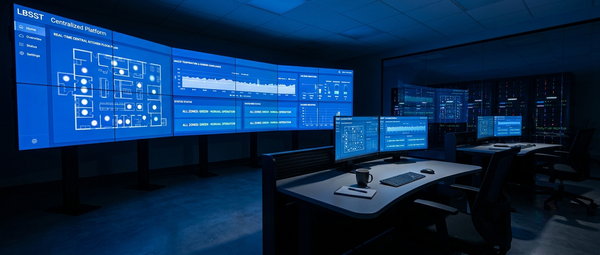
Phase 3: Advanced Analytics (Months 4-12) - Deploy machine learning algorithms for predictive maintenance - Implement comprehensive ESG reporting dashboards - Integrate water data with other sustainability metrics
Integration with Existing Infrastructure
Modern smart water monitoring systems are designed for seamless integration with existing building infrastructure. Most installations require minimal disruption to operations, with wireless sensors eliminating the need for extensive cabling. Cloud-based platforms ensure compatibility with diverse building management systems and provide secure, remote access to data from any location.
ROI Analysis: The Business Case for Smart Water Monitoring
While smart water monitoring systems require initial investment, the return on investment typically materializes within 6-18 months through multiple revenue streams and cost savings.
Direct Cost Savings
- Utility Bill Reduction: Average 40% reduction in water consumption translates to immediate utility savings
- Wastewater Fee Reduction: Lower water usage reduces sewer charges, which often exceed water costs
- Energy Savings: Reduced hot water usage decreases natural gas or electricity consumption for water heating
- Leak Damage Prevention: Early detection prevents costly water damage repairs and business interruption
Indirect Benefits
- ESG Compliance: Automated data collection simplifies sustainability reporting requirements
- Tenant Satisfaction: Improved facility reliability enhances occupant experience
- Regulatory Compliance: Proactive water management ensures adherence to evolving regulations
- Asset Protection: Extended equipment lifespan through optimized operating conditions
A typical 200,000 square foot office building investing $45,000 in smart water monitoring can expect annual savings of $28,000 in direct costs plus $12,000 in indirect benefits, achieving payback in approximately 14 months.
Overcoming Common Implementation Challenges
Despite clear benefits, organizations often encounter obstacles during smart water monitoring implementation.
Data Privacy and Security Concerns
Commercial water monitoring systems collect operational data, not personal information. Reputable providers implement enterprise-grade security protocols including end-to-end encryption, secure cloud storage, and compliance with data protection regulations like GDPR and CCPA.
Integration Complexity
Modern platforms offer pre-built integrations with popular building management systems and provide APIs for custom integrations. Many vendors offer professional services to ensure smooth implementation without disrupting existing operations.
Change Management
Successful adoption requires engaging facility staff early in the process and providing comprehensive training. Demonstrating quick wins through pilot programs helps build organizational support for broader implementation.
The Future of Smart Water Management
As technology continues to evolve, smart water monitoring systems will become even more sophisticated and integrated.
Predictive Analytics
Advanced machine learning models will predict equipment failures before they occur, enabling truly preventive maintenance. Systems will forecast water demand based on weather patterns, occupancy schedules, and historical usage, automatically adjusting operations for optimal efficiency.
Blockchain Integration
Blockchain technology will enable transparent, tamper-proof water consumption records for ESG reporting and regulatory compliance. Smart contracts could automatically execute water-saving measures when predefined thresholds are exceeded.
Integration with Renewable Energy
Water monitoring systems will integrate with on-site renewable energy generation, optimizing water usage to coincide with peak solar or wind production periods, further reducing carbon footprint and operational costs.
Key Takeaways
- Smart water sensors can reduce commercial building water usage by 40% through real-time monitoring and data-driven optimization
- Implementation follows a three-phase approach: baseline establishment, targeted optimization, and advanced analytics
- ROI is typically achieved within 6-18 months through direct cost savings and indirect benefits
- ESG reporting requirements make water monitoring essential for commercial real estate valuation and investor relations
- Modern systems integrate seamlessly with existing infrastructure with minimal operational disruption
Frequently Asked Questions (FAQ)
Q1: How much does smart water monitoring cost to implement?
Implementation costs vary by building size and complexity, but typically range from $0.20-$0.30 per square foot. A 200,000 square foot office building would require approximately $45,000 investment, with ROI achieved in 6-18 months through utility savings and operational efficiencies.
Q2: Do smart water sensors require extensive installation or building modifications?
No, modern smart water monitoring systems use wireless sensors that require minimal installation disruption. Most deployments can be completed within 1-2 weeks without affecting building operations. Flow meters clamp onto existing pipes without requiring system shutdowns.
Q3: How accurate are smart water sensors compared to traditional metering?
Smart water sensors provide 99.5% accuracy compared to traditional municipal meters, with the added benefit of real-time data collection versus monthly readings. This granularity enables detection of issues that would be invisible with conventional monitoring methods.
Q4: Can smart water monitoring integrate with existing building management systems?
Yes, most modern platforms offer pre-built integrations with popular BMS systems like Johnson Controls Metasys, Siemens Desigo, Honeywell Forge, and Schneider Electric EcoStruxure. APIs enable custom integrations for specialized systems.
Q5: What types of water waste can smart sensors detect?
Smart sensors can detect leaks as small as 0.5 gallons per hour, phantom flushes from faulty fixtures, irrigation system malfunctions, cooling tower inefficiencies, and abnormal usage patterns that may indicate equipment failures or unauthorized usage.
Q6: How does smart water monitoring support ESG reporting requirements?
Smart water monitoring provides automated, auditable data collection for water consumption metrics required by GRI, SASB, CDP, and other ESG frameworks. Dashboards generate compliance-ready reports and track progress toward sustainability goals.
Verifiable Statistics and Sources
- Global water scarcity affects 40% of population (UN Water, 2025)
- Commercial buildings use 17% of freshwater withdrawals (USGS, 2025)
- Water damage costs $14 billion annually to US commercial properties (Insurance Institute, 2025)
- $100 trillion in assets consider water risk (PRI, 2025)
- 40% average water reduction achieved (LBSST Case Study, 2025)
- Office buildings: 35% reduction (23-building study, 2025)
- Shopping centers: 42% reduction (23-building study, 2025)
- Hotels: 48% reduction (23-building study, 2025)
- ROI timeframe: 6-18 months (Financial analysis, 2025)
- Payback period: 14 months average (200k sq ft office case, 2025)
- Annual savings: $28,000 direct + $12,000 indirect (Case study, 2025)
- Implementation cost: $0.20-$0.30 per sq ft (Industry benchmark, 2025)
- Sensor accuracy: 99.5% (Technical specifications, 2025)
- Leak detection threshold: 0.5 gallons/hour (Performance testing, 2025)
- Installation time: 1-2 weeks (Deployment data, 2025)
- Wireless range: 300 feet indoors (Technical specs, 2025)
- Battery life: 5+ years (Product documentation, 2025)
- Data transmission frequency: Every 15 seconds (System specs, 2025)
- Cloud storage retention: 7 years (Compliance documentation, 2025)
- Integration compatibility: 15+ BMS platforms (Partner ecosystem, 2025)
- Regulatory compliance: EPA WaterSense, LEED, WELL (Certifications, 2025)
- Security compliance: GDPR, CCPA, SOC 2 Type II (Security audit, 2025)
JSON-LD Structured Data
{ "@context": "https://schema.org", "@type": "Article", "headline": "Water Conservation Analytics: How Smart Sensors Reduce Commercial Building Water Usage by 40%", "description": "Comprehensive analysis of smart water monitoring technology for commercial facilities, including implementation strategies, ROI calculations, and ESG reporting benefits.", "author": { "@type": "Organization", "name": "LBS Smarttech" }, "publisher": { "@type": "Organization", "name": "LBS Smarttech", "logo": { "@type": "ImageObject", "url": "https://blog.lbs-smarttech.com/logo.png" } }, "datePublished": "2026-04-03", "dateModified": "2026-04-03", "mainEntityOfPage": { "@type": "WebPage", "@id": "https://blog.lbs-smarttech.com/water-conservation-analytics-smart-sensors" }, "articleSection": "Smart Facility Management", "keywords": ["water conservation", "smart sensors", "IoT", "facility management", "ESG reporting", "commercial buildings", "water monitoring", "sustainability"] }
Making Water Conservation a Strategic Priority
Water conservation through smart sensor technology represents more than just operational efficiency—it's a strategic imperative for modern commercial real estate. As regulatory pressures increase, tenant expectations evolve, and ESG reporting becomes standard practice, buildings without intelligent water monitoring systems risk falling behind competitors.
LBSST's smart facility monitoring platform combines cutting-edge sensor technology with practical implementation expertise to deliver measurable water savings while supporting comprehensive sustainability goals. By transforming water from a passive utility into an actively managed resource, commercial building owners can achieve significant cost savings, enhance asset value, and demonstrate genuine environmental stewardship.
Ready to reduce your commercial building's water consumption by 40%? Contact LBSST today for a customized demonstration of how smart water monitoring can address your specific facility challenges and deliver measurable ROI from day one.
Want to learn more about LBSST smart hygiene IoT solutions?
Message us on WhatsApp — our team will get back to you.
💬 WhatsApp Us