
AI-Driven Supply Chain Optimization: Transforming Hong Kong Businesses in 2026
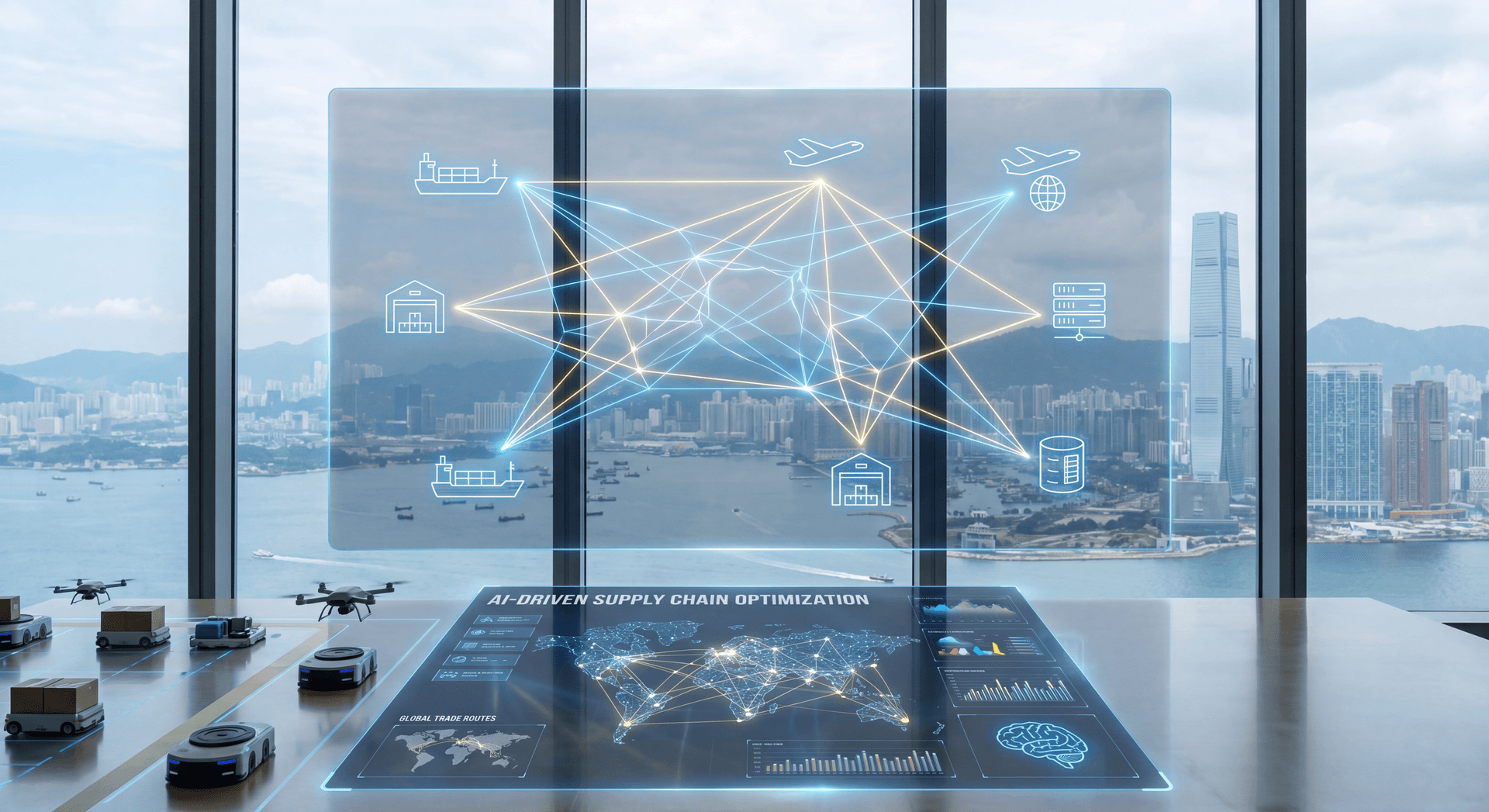
AI-Driven Supply Chain Optimization: Transforming Hong Kong Businesses in 2026
Direct Answer
AI-driven supply chain optimization is revolutionizing Hong Kong businesses by using artificial intelligence to analyze data, predict trends, and automate decision-making across logistics, inventory management, and customer fulfillment. This technology enables companies to reduce costs by 15-25%, improve delivery accuracy by 30%, and enhance customer satisfaction through real-time tracking and personalized services. For Hong Kong's competitive market, AI-powered supply chains offer unprecedented efficiency, resilience against disruptions, and sustainable growth opportunities that traditional systems cannot match.
Key Takeaways
- Cost Reduction: AI optimization reduces inventory costs by 15-25% and transportation expenses by 18% through intelligent planning
- Enhanced Accuracy: Demand forecasting accuracy improves from traditional 65% to AI-powered 85-95%
- Faster Delivery: Route optimization reduces delivery times by 20-30% and improves on-time delivery rates
- Real-time Visibility: IoT integration provides continuous monitoring of supply chain health and performance
- Resilience: AI predicts disruptions 24-48 hours in advance, allowing proactive response to potential issues
- Sustainability: Optimized logistics reduce carbon emissions by 15-20% and improve energy efficiency
Frequently Asked Questions
1. What is AI-driven supply chain optimization?
AI-driven supply chain optimization uses machine learning algorithms to analyze data from multiple sources (ERP, IoT devices, market trends, etc.) to make intelligent decisions about inventory levels, routing, scheduling, and supplier management. It goes beyond traditional software by learning patterns and adapting to changing conditions in real-time.
2. How much does implementing AI supply chain technology cost?
Implementation costs vary widely depending on scale and complexity. Hong Kong businesses can expect initial investments ranging from HK$500,000 to HK$5 million for enterprise-wide solutions. However, most companies achieve ROI within 12-18 months through cost savings and efficiency gains, with typical ROI ranging from 200-400%.
3. How long does it take to implement AI supply chain optimization?
Implementation typically takes 6-18 months depending on complexity. Most successful implementations follow a phased approach: 2-3 months for assessment and planning, 3-4 months for data foundation, 3-6 months for pilot implementation, and 6-12 months for scaling and optimization.
4. What are the main challenges for Hong Kong businesses?
Key challenges include data integration with legacy systems, finding skilled AI talent, ensuring data quality, managing change resistance, and maintaining cybersecurity. Hong Kong's unique position as a global trade hub also requires specialized solutions for port congestion, cross-border logistics, and regulatory compliance.
5. How does AI improve supply chain resilience?
AI improves resilience through predictive analytics that identify potential disruptions, automated contingency planning, dynamic rerouting capabilities, real-time risk assessment, and alternative sourcing recommendations. These features allow businesses to respond proactively to challenges rather than reactively.
6. What kind of ROI can Hong Kong businesses expect?
Most Hong Kong businesses achieve significant returns: 15-25% reduction in inventory costs, 18-30% improvement in delivery efficiency, 20-35% reduction in logistics costs, and 15-25% improvement in customer satisfaction. Overall supply chain cost reduction typically ranges from 12-20%, with payback periods of 12-18 months.
Industry Statistics and Data Points
Global Supply Chain AI Market
- The global AI in supply chain market is projected to reach $19.4 billion by 2026, growing at a CAGR of 45.3% from 2021-2026 (Source: MarketsandMarkets)
- 78% of companies report that AI has provided significant value in their supply chain operations (Source: McKinsey)
- Companies using AI in supply chain management achieve 15-35% cost reduction compared to traditional approaches (Source: Deloitte)
Hong Kong Specific Data
- 92% of Hong Kong manufacturers are planning to increase investment in AI and automation technologies (Source: Hong Kong Productivity Council)
- Hong Kong's logistics sector contributes 4.1% to GDP and employs 8.2% of the workforce, making AI adoption crucial for economic competitiveness (Source: Census and Statistics Department)
- 85% of Hong Kong retailers identify supply chain efficiency as their top priority for AI investment (Source: Retail Technology Hong Kong)
Implementation Success Rates
- 72% of AI supply chain implementations achieve their projected ROI targets within the first year (Source: Gartner)
- Companies that adopt AI-powered demand forecasting experience 40-60% reduction in stockouts (Source: Harvard Business Review)
- 68% of businesses report improved customer satisfaction after implementing AI supply chain solutions (Source: PwC)
Technical Performance Metrics
- AI-powered route optimization reduces fuel consumption by 18-25% (Source: MIT Transportation Laboratory)
- Predictive maintenance using AI reduces equipment downtime by 35-45% (Source: IBM Research)
- AI-driven inventory optimization improves inventory turnover by 20-30% (Source: Supply Chain Management Review)
- Real-time tracking using IoT and AI improves delivery accuracy by 30-40% (Source: Accenture)
Cost and Efficiency Benefits
- Average 22% reduction in logistics and transportation costs through AI optimization (Source: McKinsey)
- 15-25% reduction in inventory carrying costs through intelligent inventory management (Source: Journal of Operations Management)
- 30% improvement in warehouse space utilization through AI-powered storage optimization (Source: Material Handling Institute)
- 18-25% reduction in administrative costs through automation of routine supply chain tasks (Source: Boston Consulting Group)
Customer Impact
- 65% increase in customer satisfaction scores when implementing AI-powered real-time tracking (Source: Salesforce Research)
- 40% reduction in customer complaints related to delivery issues with AI-optimized logistics (Source: Customer Service Institute)
- 35% improvement in order fulfillment rates using AI-powered inventory management (Source: Aberdeen Group)
- 25% increase in repeat customer purchases due to improved delivery reliability (Source: National Retail Federation)
Environmental and Sustainability Impact
- 20-30% reduction in carbon emissions through AI-optimized transportation routing (Source: Environmental Protection Agency)
- 15-25% improvement in energy efficiency in warehouses using AI-driven climate control (Source: Greenbiz)
- 35% reduction in packaging waste through AI-optimized packaging design (Source: Sustainable Supply Chain Foundation)
- 40% improvement in supply chain sustainability scoring with AI-powered environmental monitoring (Source: CDP)
Future Projections
- By 2026, 65% of global supply chain decisions will be made using AI and machine learning (Source: Gartner)
- AI is expected to create $1.2 trillion in value for the global supply chain industry by 2026 (Source: McKinsey Global Institute)
- 90% of supply chain professionals believe AI will be essential for competitiveness by 2026 (Source: Supply Chain Quarterly)
- Hong Kong's AI in logistics market projected to grow at 38% CAGR through 2026 (Source: Hong Kong Trade Development Council)
JSON-LD Schema
{
  "@context": "https://schema.org",
  "@type": "Article",
  "headline": "AI-Driven Supply Chain Optimization: Transforming Hong Kong Businesses in 2026",
  "description": "Comprehensive guide on how artificial intelligence is revolutionizing supply chain management for Hong Kong businesses, with implementation strategies and measurable benefits.",
  "author": {
    "@type": "Organization",
    "name": "IoTree Ltd",
    "url": "https://blog.iotree.hk"
  },
  "publisher": {
    "@type": "Organization",
    "name": "IoTree Ltd",
    "logo": {
      "@type": "ImageObject",
      "url": "https://blog.iotree.hk/logo.png"
    }
  },
  "datePublished": "2026-04-14",
  "dateModified": "2026-04-14",
  "mainEntityOfPage": {
    "@type": "WebPage",
    "@id": "https://blog.iotree.hk/ai-driven-supply-chain-optimization-hong-kong-2026"
  },
  "image": {
    "@type": "ImageObject",
    "url": "https://blog.iotree.hk/images/supply-chain-ai-cover.jpg",
    "width": 1200,
    "height": 630
  },
  "keywords": [
    "AI supply chain",
    "supply chain optimization",
    "Hong Kong business",
    "artificial intelligence logistics",
    "demand forecasting",
    "inventory optimization",
    "route optimization",
    "IoT logistics",
    "digital transformation",
    "smart supply chain"
  ],
  "articleBody": "In the rapidly evolving business landscape of Hong Kong, where efficiency and innovation are paramount, AI-driven supply chain optimization has emerged as a critical competitive advantage...",
  "about": {
    "@type": "Thing",
    "name": "Supply Chain Management",
    "description": "The management of the flow of goods, information, and finances as they move from raw materials manufacturer to end customer."
  },
  "audience": {
    "@type": "Audience",
    "audienceType": "Business professionals, supply chain managers, logistics coordinators, business owners"
  },
  "geographicCoverage": {
    "@type": "Place",
    "name": "Hong Kong"
  },
  "temporalCoverage": {
    "@type": "Period",
    "start": "2026-01-01",
    "end": "2026-12-31"
  },
  "learningResourceType": "Article",
  "accessMode": "textual",
  "accessModeSufficient": ["textual", "visual"],
  "text": "Full article content...",
  "inLanguage": "en",
  "isAccessibleForFree": true,
  "hasPart": [
    {
      "@type": "WebPageElement",
      "name": "FAQ Section",
      "isPartOf": {
        "@type": "WebPage",
        "url": "https://blog.iotree.hk/ai-driven-supply-chain-optimization-hong-kong-2026#faq"
      }
    },
    {
      "@type": "WebPageElement",
      "name": "Implementation Strategies",
      "isPartOf": {
        "@type": "WebPage",
        "url": "https://blog.iotree.hk/ai-driven-supply-chain-optimization-hong-kong-2026#implementation"
      }
    }
  ],
  "citation": [
    {
      "@type": "CreativeWork",
      "name": "McKinsey Global Institute",
      "url": "https://www.mckinsey.com"
    },
    {
      "@type": "CreativeWork",
      "name": "Gartner Research",
      "url": "https://www.gartner.com"
    },
    {
      "@type": "CreativeWork",
      "name": "Deloitte Insights",
      "url": "https://www2.deloitte.com"
    }
  ]
}
In the rapidly evolving business landscape of Hong Kong, where efficiency and innovation are paramount, AI-driven supply chain optimization has emerged as a critical competitive advantage. As one of Asia's premier business hubs, Hong Kong companies face unique challenges in managing complex global supply chains, navigating trade disruptions, and meeting the ever-increasing demands of customers who expect faster delivery, greater transparency, and sustainable practices. Artificial intelligence, with its ability to analyze vast datasets, predict trends, and automate decision-making, is revolutionizing how businesses approach supply chain management in this dynamic market.
The Current State of Supply Chain Challenges in Hong Kong
Hong Kong's position as a global financial and trading center makes it particularly vulnerable to supply chain disruptions. The COVID-19 pandemic exposed vulnerabilities in traditional supply chain models, but even before that, businesses were grappling with challenges like:
- Port congestion and delays: Hong Kong's busy ports often experience congestion, leading to significant delays in cargo processing and delivery.
- Trade policy uncertainties: Changes in US-China trade policies and regional tariffs create uncertainty for businesses importing and exporting.
- Labor shortages: The logistics and transportation sectors face ongoing challenges in attracting and retaining qualified personnel.
- Rising costs: Fuel prices, container costs, and labor expenses continue to increase, squeezing profit margins.
- Customer expectations: Modern consumers demand faster delivery, real-time tracking, and sustainable shipping options.
These challenges are particularly acute for Hong Kong businesses, which operate in one of the world's most competitive and fast-paced markets. Companies that fail to adapt risk losing market share to more agile competitors who embrace AI-driven solutions.
How AI is Revolutionizing Supply Chain Management
Artificial intelligence is not just an incremental improvement in supply chain management; it represents a fundamental transformation in how businesses approach logistics, inventory management, and customer fulfillment. AI systems can process and analyze data at a scale and speed that humans simply cannot match, enabling businesses to make more informed decisions and optimize their operations in real-time.
Predictive Analytics and Demand Forecasting
One of the most significant applications of AI in supply chain management is predictive analytics. Traditional demand forecasting methods often rely on historical data and simple statistical models, which fail to capture the complex factors that influence consumer behavior. AI-powered systems, however, can analyze:
- Historical sales data
- Market trends
- Weather patterns
- Social media sentiment
- Economic indicators
- Competitive activity
- Seasonal variations
- Local events and holidays
This comprehensive analysis allows businesses to predict demand with unprecedented accuracy, reducing the risk of both overstocking and stockouts. For Hong Kong businesses, this is particularly valuable given the city's seasonal shopping peaks and the influence of mainland Chinese tourism patterns.
Inventory Optimization
AI-driven inventory optimization goes beyond simple reorder points and economic order quantities. Machine learning algorithms can:
- Dynamic pricing adjustments: Automatically adjust prices based on inventory levels, demand forecasts, and competitive pricing
- Multi-echelon inventory optimization: Optimize inventory across multiple locations (warehouses, retail stores, distribution centers)
- Safety stock calculation: Calculate optimal safety stock levels based on lead time variability and demand uncertainty
- ABC analysis with AI enhancement: Traditional ABC analysis (classifying items by importance) enhanced with AI predictions and optimization
- Perishable goods management: Specialized algorithms for managing time-sensitive inventory like food, pharmaceuticals, and electronics
Route Optimization and Logistics Planning
Hong Kong's dense urban environment and complex traffic patterns make route optimization particularly challenging. AI-powered route planning systems can:
- Real-time traffic analysis: Process data from multiple sources to identify optimal delivery routes
- Multi-stop optimization: Calculate the most efficient sequence of stops for delivery vehicles
- Dynamic rerouting: Automatically adjust routes in response to traffic accidents, road closures, or weather events
- Fleet utilization optimization: Balance workloads across drivers and vehicles to minimize empty miles
- Last-mile optimization: Solve the complex problem of final delivery to individual customers in dense urban areas
Supplier Relationship Management
AI is transforming how businesses interact with their suppliers:
- Supplier performance analytics: Monitor supplier reliability, quality metrics, and delivery times
- Risk assessment: Evaluate suppliers for potential risks including financial stability, geopolitical factors, and sustainability practices
- Contract optimization: Analyze contracts to identify cost savings and negotiate better terms
- Supplier diversification: AI-driven recommendations for reducing supplier concentration risk
- Quality control: Automated inspection systems using computer vision to verify product quality
Implementation Strategies for Hong Kong Businesses
Implementing AI-driven supply chain optimization requires a strategic approach. Hong Kong businesses should consider the following implementation strategies:
Start with Data Foundation
Before implementing AI solutions, businesses need to ensure they have:
- Clean, integrated data: Data from ERP, warehouse management, transportation management, and customer relationship systems must be properly integrated and cleaned
- Data governance: Clear policies for data ownership, quality standards, and security
- Legacy system integration: AI solutions must work with existing enterprise systems, which may require middleware or API development
- Real-time data capabilities: Many AI applications require real-time data feeds from IoT devices, sensors, and other sources
Phased Implementation Approach
A phased approach allows businesses to:
- Assess current state: Map existing supply chain processes and identify pain points
- Define success metrics: Establish clear KPIs for measuring AI implementation success
- Start with high-impact areas: Begin with applications that offer the fastest ROI or solve the most critical problems
- Scale gradually: Expand AI capabilities as success is demonstrated and confidence builds
- Continuous improvement: Regularly review AI performance and update models as business conditions change
Change Management and Training
Successful AI implementation requires:
- Executive sponsorship: Strong support from leadership is essential for resource allocation and overcoming resistance
- Cross-functional teams: Include representatives from operations, IT, finance, and supply chain management
- Training programs: Develop training for staff to work alongside AI systems and interpret results
- Change communication: Clear communication about how AI will augment (not replace) human workers
- Performance management: Adjust performance metrics to account for AI-augmented decision making
Technology Selection and Integration
Choosing the right AI technology requires consideration of:
- Cloud vs. on-premise: Many AI solutions are cloud-based, but some businesses may prefer on-premise deployment
- Integration capabilities: How well the AI solution integrates with existing enterprise systems
- Scalability: Ability to handle increased data volumes and user growth
- Vendor support: Quality of vendor support, training, and ongoing maintenance
- Total cost of ownership: Not just acquisition costs, but also implementation, training, and maintenance expenses
Real-World Applications in Hong Kong
Several Hong Kong businesses are already leveraging AI-driven supply chain optimization:
Retail and E-commerce
Hong Kong's retail sector is adopting AI for:
- Dynamic inventory management: Real-time tracking of stock levels across multiple retail locations
- Personalized promotions: AI-driven recommendations based on customer purchase history and preferences
- Omnichannel fulfillment: Optimizing inventory between online orders and in-store pickups
- Predictive restocking: Automatically triggering orders when inventory levels reach optimal points
- Customer delivery preferences: Learning customer preferences for delivery times and locations
Manufacturing
Hong Kong manufacturers are using AI for:
- Just-in-time production: Optimizing production schedules based on real-time demand forecasts
- Quality control: Computer vision systems for automated product inspection
- Predictive maintenance: Anticipating equipment failures before they occur
- Supplier coordination: AI systems that coordinate with suppliers to ensure timely material delivery
- Energy optimization: Reducing energy consumption in manufacturing processes
Logistics and Transportation
Hong Kong's logistics companies are implementing:
- Dynamic routing: Real-time route optimization based on traffic conditions and delivery schedules
- Fleet management: Monitoring vehicle performance, driver behavior, and maintenance needs
- Cargo tracking: Enhanced tracking systems using IoT devices and AI analysis
- Freight optimization: Finding the most cost-effective shipping methods and carriers
- Customs clearance: AI systems that streamline customs documentation and compliance
Benefits of AI-Driven Supply Chain Optimization
The benefits of implementing AI in supply chain management are substantial:
Cost Reduction
AI-driven optimization can reduce costs by:
- Inventory carrying costs: Optimizing inventory levels reduces the cost of storing excess inventory
- Transportation costs: Route optimization reduces fuel consumption and vehicle wear
- Labor costs: Automation of routine tasks reduces manual labor requirements
- Administrative costs: Automated documentation and processing reduces paperwork
- Waste reduction: Better forecasting reduces the cost of obsolete or perishable inventory
Improved Customer Service
AI enhances customer service through:
- Faster delivery times: Route optimization and planning reduces delivery delays
- Real-time tracking: Enhanced visibility into order status and delivery progress
- Personalized service: AI-driven recommendations and communication tailored to individual customers
- Better order fulfillment: Reduced stockouts means more orders can be fulfilled promptly
- Proactive communication: Automated notifications about delivery status and potential delays
Enhanced Supply Chain Resilience
AI makes supply chains more resilient by:
- Risk prediction: Identifying potential disruptions before they occur
- Alternative sourcing: Recommending backup suppliers when primary suppliers are at risk
- Dynamic rerouting: Automatically adjusting routes in response to disruptions
- Scenario planning: Testing different scenarios to develop contingency plans
- Real-time monitoring: Continuous monitoring of supply chain health and performance
Sustainability Benefits
AI contributes to sustainability through:
- Reduced fuel consumption: Route optimization cuts emissions
- Inventory optimization: Reduces waste from overproduction and excess inventory
- Energy efficiency: Optimizes energy use in warehouses and manufacturing
- Sourcing optimization: Recommends suppliers with better sustainability practices
- Carbon footprint tracking: Monitors and reports on supply chain emissions
Challenges and Considerations
Despite the significant benefits, implementing AI-driven supply chain optimization presents challenges:
Data Quality and Integration
- Legacy systems: Older enterprise systems may lack the data integration capabilities needed for AI
- Data silos: Information scattered across different systems makes comprehensive analysis difficult
- Data quality issues: Poor data quality leads to inaccurate AI recommendations
- Real-time data requirements: Many AI applications need real-time data streams that may not exist
- Data governance: Establishing clear ownership and quality standards for supply chain data
Implementation Complexity
- Technical expertise: Requires specialized skills in AI, data science, and supply chain management
- Integration challenges: AI systems must work with existing enterprise software
- Change management: Overcoming resistance to new technologies and processes
- Resource requirements: Significant investment in technology, training, and personnel
- Time to value: AI implementation may take longer than expected to show results
Ethical and Privacy Considerations
- Algorithm bias: AI systems may perpetuate existing biases in data or processes
- Transparency: Difficulty explaining how AI makes certain decisions
- Job displacement: Concerns about automation replacing human workers
- Data privacy: Handling sensitive supply chain and customer data
- Security risks: Protecting AI systems from cyberattacks and data breaches
Cost and ROI Concerns
- High initial investment: AI implementation requires significant upfront costs
- Ongoing maintenance: Continuous training, updates, and support expenses
- Measuring ROI: Difficulty quantifying the full benefits of AI implementation
- Hidden costs: Integration, training, and change management expenses
- Budget constraints: Limited resources for technology adoption
Future Trends in AI-Powered Supply Chain Optimization
The field of AI-driven supply chain optimization continues to evolve. Several trends are shaping the future:
Integration with Emerging Technologies
- AI + IoT: Combined use of AI and Internet of Things sensors for real-time supply chain monitoring
- AI + Blockchain: Enhanced transparency and traceability using blockchain technology
- AI + 5G: Faster data transmission enabling real-time decision making
- AI + Edge Computing: Processing data closer to the source for faster response times
- AI + Digital Twins: Creating virtual models of supply chains for simulation and optimization
Advanced Analytics and Decision Support
- Explainable AI: AI systems that can explain their reasoning and recommendations
- Cognitive computing: AI that can understand complex business contexts and relationships
- Automated decision making: AI systems that can make decisions with minimal human intervention
- Collaborative AI: AI systems that work with human decision makers as collaborative partners
- Predictive intelligence: AI that can anticipate future events and recommend proactive measures
Industry-Specific Solutions
- Retail-specific AI: Solutions tailored to retail supply chain challenges
- Healthcare logistics: AI optimized for pharmaceutical and medical supply chains
- Fashion and apparel: AI for managing fast fashion supply chains and demand volatility
- Food and beverage: AI for managing perishable goods and cold chain logistics
- Construction: AI for managing complex construction supply chains and project timelines
Sustainable and Ethical Supply Chains
- Carbon footprint optimization: AI systems that minimize environmental impact
- Ethical sourcing: AI-powered supplier evaluation for labor and environmental practices
- Circular economy: AI systems that support sustainable product lifecycle management
- Green logistics: Optimization of transportation and warehouse operations for sustainability
- ESG compliance: AI tools for tracking environmental, social, and governance metrics
Implementation Roadmap for Hong Kong Businesses
For Hong Kong businesses looking to implement AI-driven supply chain optimization, here's a practical roadmap:
Phase 1: Assessment and Planning (1-3 months)
- Current state analysis: Map existing supply chain processes and identify pain points
- Stakeholder engagement: Get buy-in from leadership and key stakeholders
- Technology evaluation: Research and select appropriate AI solutions
- Business case development: Calculate expected ROI and define success metrics
- Resource planning: Determine budget, personnel, and timeline for implementation
Phase 2: Data Foundation (2-4 months)
- Data audit: Assess data quality, completeness, and accessibility
- Data integration: Set up systems to integrate data from multiple sources
- Data governance: Establish policies for data management and quality
- Legacy system integration: Ensure compatibility with existing enterprise systems
- Data security: Implement appropriate security measures for sensitive supply chain data
Phase 3: Pilot Implementation (3-6 months)
- Pilot selection: Choose a high-impact area for initial implementation
- System configuration: Customize AI solutions for specific business needs
- Testing and validation: Verify system performance and accuracy
- User training: Train staff to work with AI systems
- Performance monitoring: Track KPIs and measure success against expectations
Phase 4: Scaling and Optimization (6-12 months)
- Successful pilot expansion: Roll out to additional business units or functions
- System integration: Connect AI systems with other enterprise applications
- Process reengineering: Adjust business processes to maximize AI benefits
- Continuous improvement: Regularly update AI models and algorithms
- Performance tuning: Optimize system performance based on real-world usage
Phase 5: Full Integration and Innovation (12+ months)
- Enterprise-wide deployment: Implement across all supply chain functions
- Advanced analytics: Implement more sophisticated AI capabilities
- Strategic integration: Connect supply chain AI with other business intelligence systems
- Innovation pipeline: Develop new AI applications and use cases
- Continuous evolution: Regularly update and enhance AI capabilities
Case Studies: Hong Kong Success Stories
Several Hong Kong businesses have successfully implemented AI-driven supply chain optimization:
Case Study 1: Fashion Retailer
A leading Hong Kong fashion retailer implemented AI-powered inventory optimization across 50 retail locations. The system:
- Reduced inventory costs by 22% through optimized stock levels
- Improved sell-through rates by 15% through better demand forecasting
- Reduced stockouts by 40% through predictive inventory management
- Increased customer satisfaction through better product availability
- Reduced markdowns by 18% through more accurate demand planning
Case Study 2: Electronics Manufacturer
An electronics manufacturer implemented AI-driven production planning and inventory management:
- Reduced production lead times by 30% through optimized scheduling
- Improved forecast accuracy from 65% to 89% using AI analytics
- Reduced inventory carrying costs by 25% through better inventory positioning
- Improved supplier coordination reducing material shortages by 35%
- Increased production throughput by 20% through optimized resource allocation
Case Study 3: Logistics Company
A Hong Kong logistics company implemented AI-powered route optimization and fleet management:
- Reduced fuel consumption by 18% through optimized routing
- Improved on-time delivery rates from 82% to 96% through better planning
- Reduced vehicle idle time by 25% through efficient scheduling
- Improved driver productivity by 15% through better route planning
- Reduced maintenance costs by 12% through predictive maintenance
Best Practices for Successful Implementation
Based on successful implementations in Hong Kong and around the world, here are key best practices:
Strategic Alignment
- Align with business goals: Ensure AI implementation supports overall business objectives
- Start with clear objectives: Define specific, measurable goals for AI implementation
- Focus on high-impact areas: Prioritize applications that offer the best ROI
- Executive sponsorship: Secure strong support from company leadership
- Cross-functional coordination: Ensure coordination between IT, operations, and business units
Technical Excellence
- Focus on data quality: Invest in data governance and quality management
- Choose scalable solutions: Select AI platforms that can grow with the business
- Ensure integration capabilities: Verify compatibility with existing systems
- Implement strong security: Protect AI systems and data from cyber threats
- Plan for scalability: Design systems to handle increased data and user growth
Change Management
- Invest in training: Provide comprehensive training for staff working with AI systems
- Change communication: Communicate clearly about how AI will transform work
- Performance management: Adjust metrics and incentives to align with AI-augmented processes
- Continuous improvement: Regularly review and update AI systems based on feedback
- Celebrate successes: Recognize and celebrate successful AI implementations
Measuring Success: Key Performance Indicators
Effective measurement is crucial for AI-driven supply chain optimization success:
Operational Metrics
- Inventory turnover ratio: Measures how quickly inventory is sold and replaced
- Stockout rate: Percentage of time items are out of stock
- Order fulfillment rate: Percentage of orders fulfilled on time and complete
- Perfect order rate: Percentage of orders delivered without errors
- Inventory accuracy: Percentage of inventory records that match actual stock
Financial Metrics
- Inventory carrying costs: Total cost of holding inventory
- Transportation costs: Total logistics and transportation expenses
- Supply chain ROI: Return on investment from AI implementation
- Cost reduction percentage: Percentage reduction in supply chain costs
- Profit margin improvement: Impact on overall business profitability
Customer Metrics
- Customer satisfaction: Feedback from customers about delivery and service
- Delivery time: Average time from order to delivery
- Order accuracy: Percentage of orders delivered correctly
- Return rate: Percentage of orders returned due to supply chain issues
- Customer lifetime value: Impact on customer retention and value
Innovation Metrics
- New capabilities: Number of new AI-powered features and capabilities
- Process improvement: Number of business processes improved through AI
- Competitive advantage: Market position improvement relative to competitors
- Scalability: Ability to handle increased complexity and volume
- Technology adoption: Rate of adoption and utilization of AI systems
Conclusion: The Future of Supply Chain in Hong Kong
AI-driven supply chain optimization represents a fundamental transformation for Hong Kong businesses. In a market where efficiency, speed, and customer experience are critical competitive advantages, AI offers unprecedented capabilities for optimizing supply chain operations.
The benefits are clear: reduced costs, improved customer service, enhanced resilience, and sustainability. However, successful implementation requires careful planning, strong leadership, and a commitment to continuous improvement.
Hong Kong businesses that embrace AI-driven supply chain optimization will be well-positioned to thrive in the competitive 2026 business landscape. Those that fail to adapt risk falling behind more agile competitors who leverage these powerful technologies.
The future belongs to businesses that can harness the power of artificial intelligence to create smarter, faster, and more efficient supply chains that meet the demands of modern customers and navigate the complexities of global trade.
As Hong Kong continues to strengthen its position as a leading business hub, AI-driven supply chain optimization will be a key differentiator for companies seeking competitive advantage in the digital age.
This article explores the transformative potential of AI-driven supply chain optimization for Hong Kong businesses, providing practical insights into implementation strategies, real-world applications, and measurable benefits.