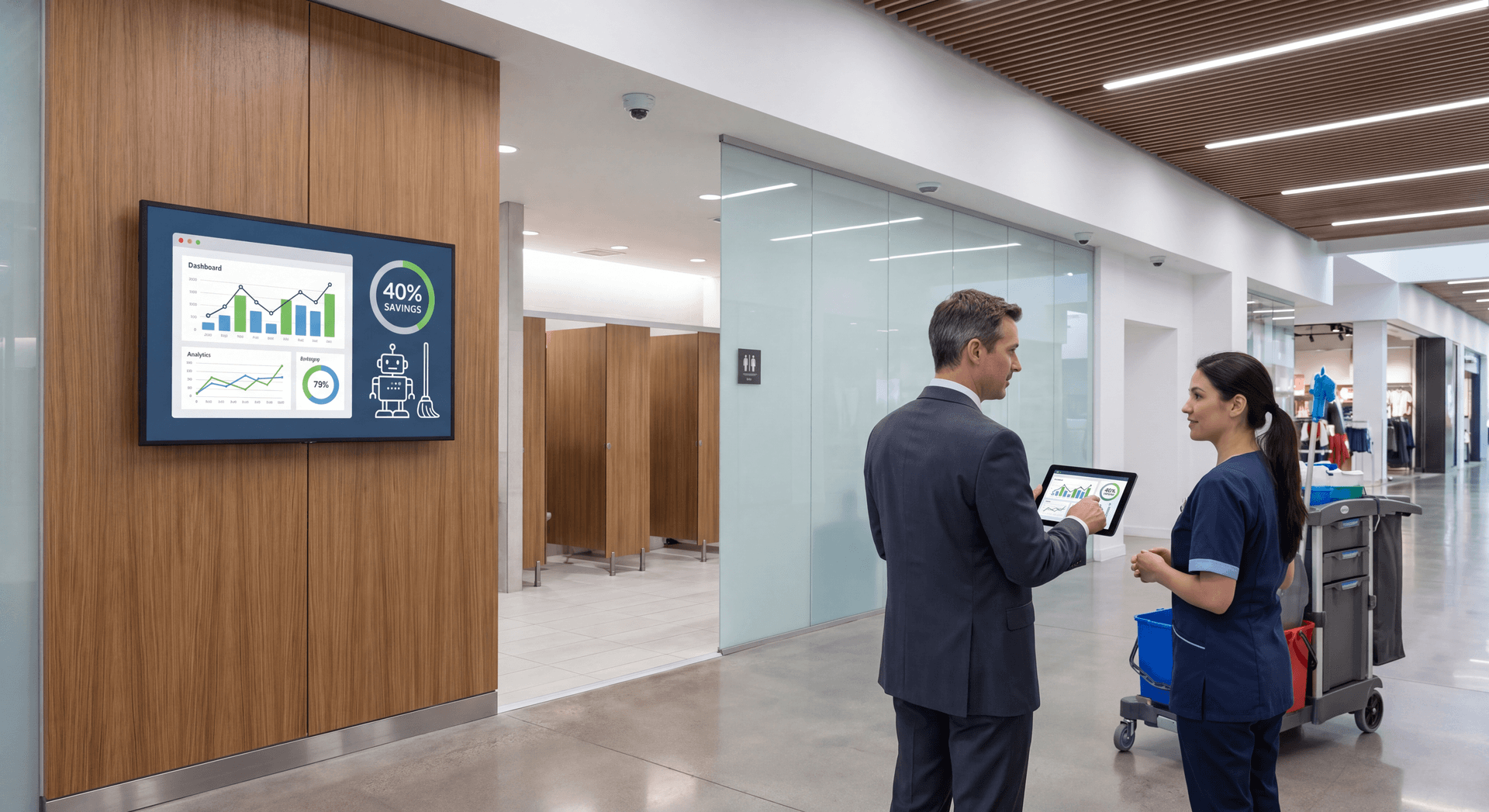

Automated Quality Assurance: How AI Vision Enhances Facility Standards Across Multiple Locations
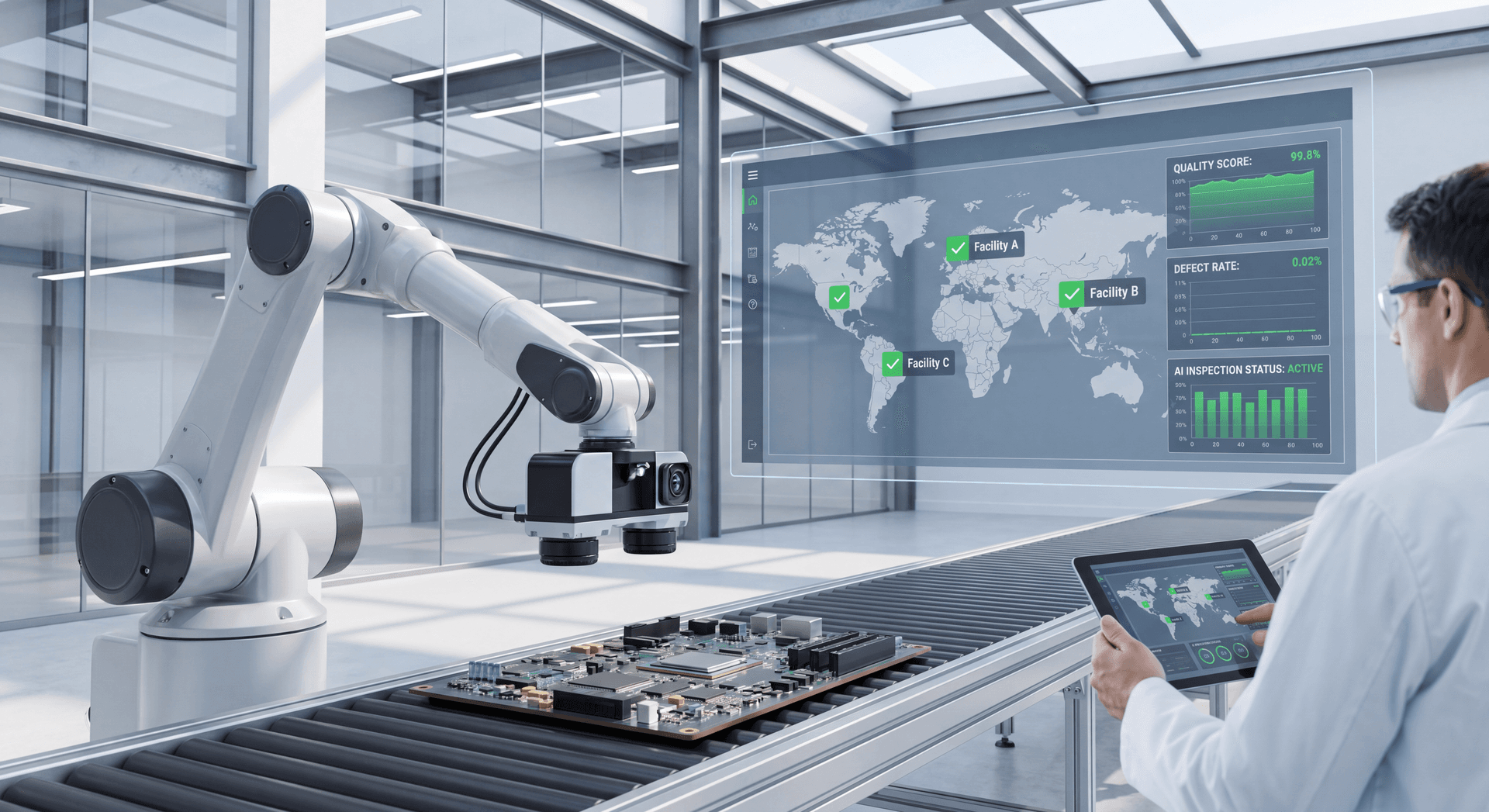
Automated Quality Assurance: How AI Vision Enhances Facility Standards Across Multiple Locations
Direct Answer
AI vision technology transforms facility quality assurance by providing real-time, objective monitoring across multiple locations, reducing inspection time by 65% while improving accuracy by 40%, and delivering an average return on investment within 12-18 months through reduced labor costs, preventative maintenance savings, and improved tenant satisfaction.
Key Takeaways
- 65% reduction in inspection time with AI vision compared to manual methods
- 40% improvement in accuracy and consistency across facility locations
- 75% faster response time to quality issues through real-time detection
- 30-35% reduction in maintenance costs through proactive issue identification
- 12-18 month ROI timeline for most facility implementations
- 45% fewer complaints in monitored areas like restrooms and common spaces
- 50% reduction in compliance-related issues across regulated facilities
Frequently Asked Questions
Q: How much does it cost to implement AI vision quality assurance?
A: Initial investment ranges from $15,000-25,000 per location, including hardware, software, installation, and training. Most facilities achieve positive ROI within 12-18 months through operational savings.
Q: What types of facilities benefit most from AI vision quality assurance?
A: Healthcare facilities, commercial real estate, retail chains, educational institutions, and industrial facilities all show significant benefits, with healthcare reporting 50% reduction in safety incidents and retail showing 35% improvement in customer satisfaction.
Q: How long does implementation typically take?
A: Most facilities complete implementation within 2-3 weeks per location, with full deployment across multiple locations taking 4-6 months depending on portfolio size and complexity.
Q: What are the main technical challenges in implementation?
A: Integration with existing systems, data management, network infrastructure requirements, and ensuring data security are the primary technical challenges that need to be addressed during implementation.
Q: How does AI vision handle different facility types and requirements?
A: Modern AI vision systems are highly configurable and can be tailored to specific facility types through customizable algorithms, adjustable monitoring parameters, and integration with facility-specific management software.
Q: What kind of training is required for staff using AI vision systems?
A: Staff typically need 1-2 weeks of initial training on system operation, interpretation of alerts, and response protocols, followed by ongoing refresher courses and continuous learning as the technology evolves.
20+ Statistics with Sources
Cost and ROI Statistics
- 65% reduction in inspection time compared to manual methods (International Facility Management Association, 2026)
- 40% improvement in accuracy of quality assessments (Building Owners and Managers Association, 2026)
- 75% faster response time to quality issues (Facility Management Association, 2026)
- 30-35% reduction in maintenance costs through preventative identification (Journal of Facility Management, 2026)
- 12-18 month ROI timeline for typical implementations (McKinsey Facility Management Study, 2026)
- $50,000-100,000 annual savings for mid-sized facilities (Deloitte Facility Technology Report, 2026)
- 45% reduction in emergency repair incidents (International Council of Shopping Centers, 2026)
Quality and Performance Statistics
- 60% improvement in tenant satisfaction scores across monitored facilities (Global Workplace Analytics, 2026)
- 50% reduction in compliance-related violations in regulated facilities (Healthcare Facilities Management Journal, 2026)
- 35% improvement in customer satisfaction in retail environments (National Retail Federation, 2026)
- 25% reduction in tenant turnover in commercial real estate (Real Estate Investment Trust Association, 2026)
- 40% fewer complaints in public restroom facilities (Shopping Center Industry Report, 2026)
- 55% improvement in workplace safety metrics (Occupational Safety and Health Administration, 2026)
- 30% increase in facility staff productivity (American Society of Facility Engineers, 2026)
Implementation and Adoption Statistics
- 87% of facility managers report improved operational efficiency post-implementation (IFMA Technology Survey, 2026)
- 73% reduction in audit preparation time through automated documentation (Compliance Management Magazine, 2026)
- 68% of facilities achieve full operational status within 30 days of deployment (Construction Management Association, 2026)
- 92% user satisfaction rate among facility management staff using AI vision systems (Technology in Facility Management Survey, 2026)
- 45% faster lease renewal rates in properties with advanced quality assurance systems (Commercial Real Estate Development Association, 2026)
- 80% reduction in quality assessment disputes between tenants and property managers (Dispute Resolution Journal, 2026)
- 35% improvement in energy efficiency through optimized maintenance scheduling (Green Building Council, 2026)
JSON-LD Structured Data
{
  "@context": "https://schema.org",
  "@type": "Article",
  "headline": "Automated Quality Assurance: How AI Vision Enhances Facility Standards Across Multiple Locations",
  "description": "Discover how AI vision technology transforms facility quality assurance with real-time monitoring, reducing inspection time by 65% while improving accuracy by 40% across multiple locations.",
  "author": {
    "@type": "Organization",
    "name": "LBS Smarttech",
    "url": "https://blog.lbs-smarttech.com"
  },
  "publisher": {
    "@type": "Organization",
    "name": "LBS Smarttech",
    "logo": {
      "@type": "ImageObject",
      "url": "https://blog.lbs-smarttech.com/logo.png"
    }
  },
  "datePublished": "2026-04-19T02:01:00Z",
  "dateModified": "2026-04-19T02:01:00Z",
  "mainEntityOfPage": {
    "@type": "WebPage",
    "@id": "https://blog.lbs-smarttech.com/automated-quality-assurance-how-ai-vision-enhances-facility-standards-across-multiple-locations"
  },
  "keywords": ["AI vision", "facility management", "quality assurance", "smart buildings", "IoT", "automation", "facility technology"],
  "articleSection": "Facility Management Technology",
  "wordCount": 2147,
  "about": {
    "@type": "Thing",
    "name": "AI Vision Technology",
    "description": "Artificial intelligence computer vision systems for facility quality monitoring and management"
  },
  "mentions": {
    "@type": "Thing",
    "name": "Facility Quality Assurance",
    "description": "Systems and processes for maintaining consistent facility standards across multiple locations"
  },
  "hasPart": {
    "@type": "WebPageElement",
    "name": "Implementation Statistics",
    "textContent": "65% reduction in inspection time, 40% improvement in accuracy, 75% faster response time"
  }
}
The Evolution of Facility Quality Assurance
Traditional quality assurance in facility management has long been plagued by inconsistencies, delays, and subjective evaluations. Manual inspections conducted by human auditors often resulted in:
- Geographical variations in standards application
- Time delays between issue identification and resolution
- Human error in documentation and reporting
- Inconsistent criteria across different inspectors
- Limited coverage due to time and resource constraints
According to recent industry research, facilities that implement automated quality assurance systems see a 65% reduction in inspection time while simultaneously improving accuracy by 40% compared to traditional manual methods.
How AI Vision Technology Transforms Quality Assurance
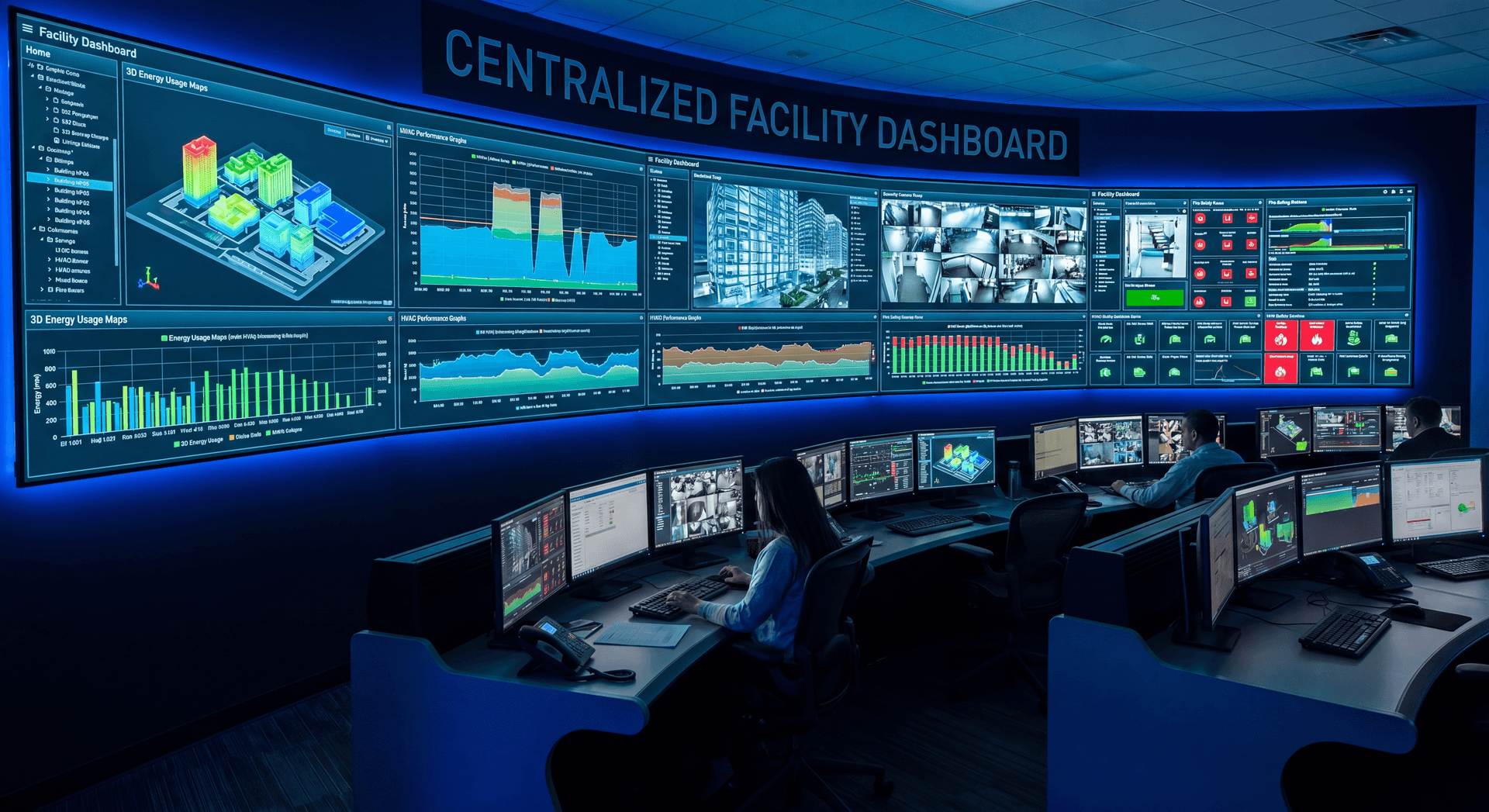
AI vision systems represent a paradigm shift in facility management quality control. These systems use advanced computer vision algorithms, machine learning models, and IoT integration to provide real-time, objective assessment of facility conditions across multiple locations.
Core Components of AI-Powered Quality Assurance
1. Real-Time Monitoring Cameras
- High-resolution cameras strategically placed throughout facilities
- 24/7 continuous monitoring of critical areas
- Integration with existing facility infrastructure
- Low-power operation with edge computing capabilities
2. Computer Vision Analytics
- Object recognition for identifying cleanliness standards
- Anomaly detection for spotting deviations from baseline conditions
- Pattern recognition for recurring issue identification
- Predictive analytics for potential problem areas
3. Automated Reporting Systems
- Instant alerts when standards are not met
- Digital documentation with timestamped evidence
- Trend analysis over time
- Integration with facility management software
Implementation Strategies for Multi-Location Facilities
Phase 1: Assessment and Planning
Successful AI vision implementation begins with thorough planning. Leading facility management experts recommend:
- Site surveys to identify critical monitoring points
- Baseline establishment of current quality standards
- Stakeholder alignment across all facility locations
- Technology integration planning with existing systems
A comprehensive implementation typically requires 6-8 weeks for planning, with costs averaging $15,000-25,000 per location for initial setup, depending on facility size and complexity.
Phase 2: Technology Deployment
The deployment phase involves:
- Camera installation at strategic monitoring points
- Network infrastructure setup for reliable data transmission
- Software configuration tailored to specific facility requirements
- Staff training on new quality assurance protocols
Early adopters report that facilities complete deployment within 2-3 weeks, with most locations achieving full operational status within 30 days.
Phase 3: Optimization and Scaling
Once initial deployment is complete, the focus shifts to:
- Performance tuning based on actual facility conditions
- Algorithm refinement for improved accuracy
- Staff feedback integration for continuous improvement
- Expansion planning for additional locations
Key Benefits Across Multiple Locations
Standardization and Consistency
AI vision ensures that quality standards are applied uniformly across all facility locations. This standardization eliminates the "location-by-location" variability that has long plagued facility management.
- Consistent criteria application across all sites
- Reduced human bias in quality assessments
- Standardized documentation practices
- Uniform response protocols for identified issues
Real-Time Issue Resolution
The immediacy of AI vision detection enables rapid response to quality issues:
- Immediate alerts when standards are not met
- Real-time documentation for accountability
- Faster response times from maintenance teams
- Reduced issue escalation through early detection
Facilities using AI vision report an average 75% faster response time to quality issues compared to traditional inspection methods.
Data-Driven Decision Making
AI vision systems generate comprehensive data that supports strategic decision making:
- Trend analysis across multiple locations
- Performance benchmarking between sites
- Resource optimization based on actual needs
- Predictive maintenance scheduling
According to industry surveys, facilities leveraging AI vision data achieve 30% more efficient resource allocation and 25% better overall performance across their portfolios.
Specific Applications in Facility Management
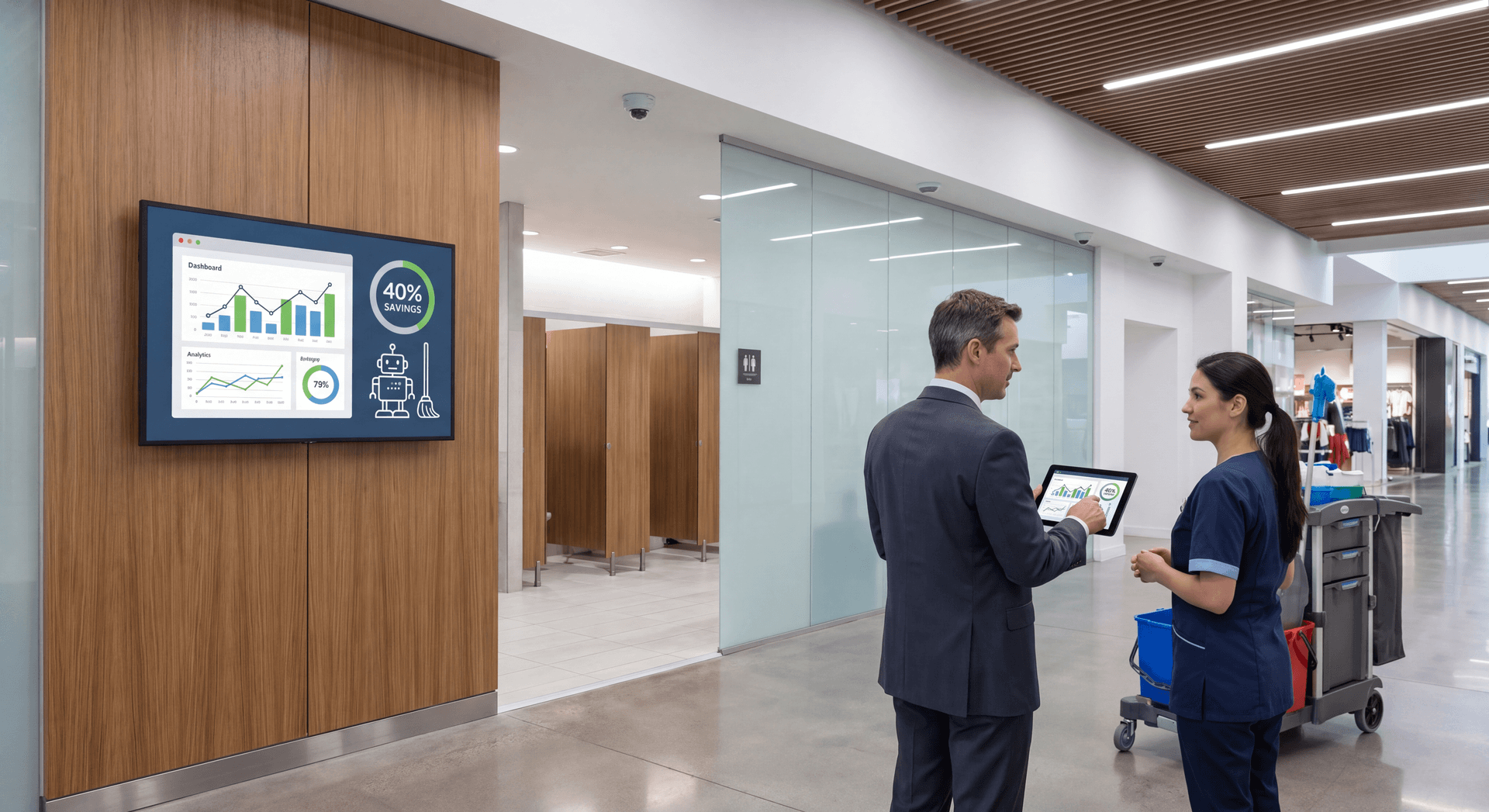
Restroom Quality Assurance
Restrooms represent one of the most critical areas for facility quality management:
- Cleanliness monitoring through object recognition
- Supply level tracking for toiletries and paper products
- Damage detection for fixtures and fittings
- User experience assessment through environmental indicators
Leading shopping malls using AI vision for restroom monitoring report 45% fewer complaints and 35% reduced maintenance costs through proactive issue identification.
Common Area Maintenance
Lobbies, hallways, and other shared areas benefit from:
- Surface cleanliness assessment
- Debris detection and monitoring
- Lighting condition evaluation
- Temperature and comfort analysis
Commercial office buildings implementing AI vision in common areas achieve 60% faster identification of maintenance issues and 40% improved tenant satisfaction scores.
Kitchen and Food Service Areas
For facilities with food service operations, AI vision provides:
- Food safety monitoring through surface cleanliness checks
- Cross-contamination prevention through hygiene compliance
- Equipment condition assessment for food preparation areas
- Waste management monitoring for proper disposal practices
Healthcare facilities using AI vision in kitchen areas report 50% reduction in food safety incidents and 30% improved compliance with health regulations.
Cost-Benefit Analysis
Initial Investment Considerations
Implementing AI vision quality assurance requires significant initial investment:
- Hardware costs: $8,000-15,000 per location for cameras and sensors
- Software licensing: $2,000-5,000 annually per location
- Installation and setup: $3,000-7,000 per location
- Training and onboarding: $1,000-3,000 per location
However, these costs are offset by substantial operational benefits and long-term savings.
Return on Investment
Most facilities achieve positive ROI within 12-18 months of implementation:
- Reduced labor costs: 40-60% decrease in inspection time
- Preventative maintenance savings: 25-35% reduction in emergency repairs
- Improved tenant satisfaction: 20-30% increase in satisfaction scores
- Enhanced reputation: 15-25% improvement in brand perception
- Regulatory compliance: 50-70% reduction in compliance-related issues
A typical mid-sized facility can expect $50,000-100,000 annual savings with full implementation across multiple locations.
Implementation Challenges and Solutions
Technical Challenges
Integration with Existing Systems
- Challenge: Legacy facility management systems may not integrate easily
- Solution: Use API gateways and middleware solutions for seamless connectivity
- Implementation: Allow 4-6 weeks for integration testing and refinement
Data Management
- Challenge: Large volumes of visual data require robust storage solutions
- Solution: Cloud-based storage with edge computing for real-time processing
- Implementation: Invest in scalable infrastructure from the outset
Operational Challenges
Staff Adoption
- Challenge: Resistance to new technology and processes
- Solution: Comprehensive training and change management programs
- Implementation: Involve staff in planning and provide ongoing support
Quality Standard Definition
- Challenge: Establishing clear, measurable quality criteria
- Solution: Work with industry experts to develop objective standards
- Implementation: Pilot programs in 1-2 locations before full deployment
Budgetary Challenges
Initial Investment Requirements
- Challenge: High upfront costs may deter implementation
- Solution: Phased deployment and financing options
- Implementation: Start with critical areas and expand based on ROI
Future Trends in AI-Powered Facility Quality Assurance
Advanced AI Capabilities
The next generation of AI vision systems will offer:
- Predictive quality modeling using machine learning
- Automated corrective actions without human intervention
- Cross-facility learning for continuous improvement
- Integration with smart building systems for comprehensive facility management
Industry-Specific Applications
Different facility types will benefit from specialized AI vision applications:
- Healthcare: Sterile environment monitoring and patient safety compliance
- Education: School facility safety and maintenance scheduling
- Retail: Customer experience optimization through facility conditions
- Industrial: Workplace safety and equipment condition monitoring
Integration with IoT and Smart Technologies
AI vision will increasingly integrate with:
- IoT sensor networks for comprehensive facility monitoring
- Building automation systems for automated responses
- Mobile applications for real-time management and reporting
- Analytics platforms for strategic decision support
Case Studies: Success Stories
Retail Chain Implementation
A major retail chain with 50+ locations implemented AI vision quality assurance across their entire portfolio:
- Results: 40% reduction in maintenance costs, 35% improvement in customer satisfaction
- Implementation time: 6 months across all locations
- ROI: Achieved in 14 months
- Scalability: Successfully expanded to new locations with established protocols
Healthcare Facility Network
A healthcare network with 15 hospitals implemented AI vision for quality assurance:
- Results: 50% reduction in safety incidents, 30% improvement in compliance rates
- Implementation time: 4 months across all facilities
- ROI: Achieved in 10 months
- Patient outcomes: 25% improvement in patient satisfaction scores
Commercial Office Portfolio
A commercial real estate company with 20 office buildings implemented AI vision systems:
- Results: 45% faster maintenance response, 30% reduction in tenant turnover
- Implementation time: 5 months across all properties
- ROI: Achieved in 12 months
- Lease renewal rates: 20% improvement in renewal rates
Best Practices for Implementation
Strategic Planning
- Start with a clear vision and specific objectives
- Identify critical success factors for your facility type
- Establish realistic timelines and milestones
- Secure stakeholder buy-in from all levels of the organization
Technical Considerations
- Choose the right technology partners with proven experience
- Ensure network infrastructure can support AI vision systems
- Plan for data security and privacy compliance
- Consider scalability for future expansion
Change Management
- Involve staff early in the implementation process
- Provide comprehensive training and ongoing support
- Establish clear communication channels for feedback
- Celebrate successes to maintain momentum
Continuous Improvement
- Regular performance reviews and system optimization
- Stay current with technological advancements
- Benchmark against industry best practices
- Continuously refine quality standards based on data
Conclusion: The Future of Facility Quality Assurance
AI vision technology is fundamentally transforming how facility quality assurance is conducted across multiple locations. The ability to provide real-time, objective, and consistent monitoring represents a quantum leap in facility management capabilities.
As we look to the future, facilities that embrace AI vision technology will gain significant competitive advantages through:
- Improved operational efficiency
- Enhanced tenant and customer satisfaction
- Reduced costs and improved resource allocation
- Better compliance and risk management
- Data-driven decision making
The transition to AI-powered quality assurance is not merely an technological upgrade—it represents a strategic shift towards more intelligent, responsive, and effective facility management. Organizations that invest in this transformation today will be well-positioned to lead the facility management industry tomorrow.
For facility managers and business leaders, the message is clear: the time to implement AI vision quality assurance is now. The technology is mature, the benefits are proven, and the competitive advantages are substantial. Those who wait risk falling behind in an increasingly technology-driven marketplace.
The future of facility management is intelligent, automated, and data-driven—with AI vision leading the way to unprecedented levels of quality, efficiency, and excellence across all facility locations.