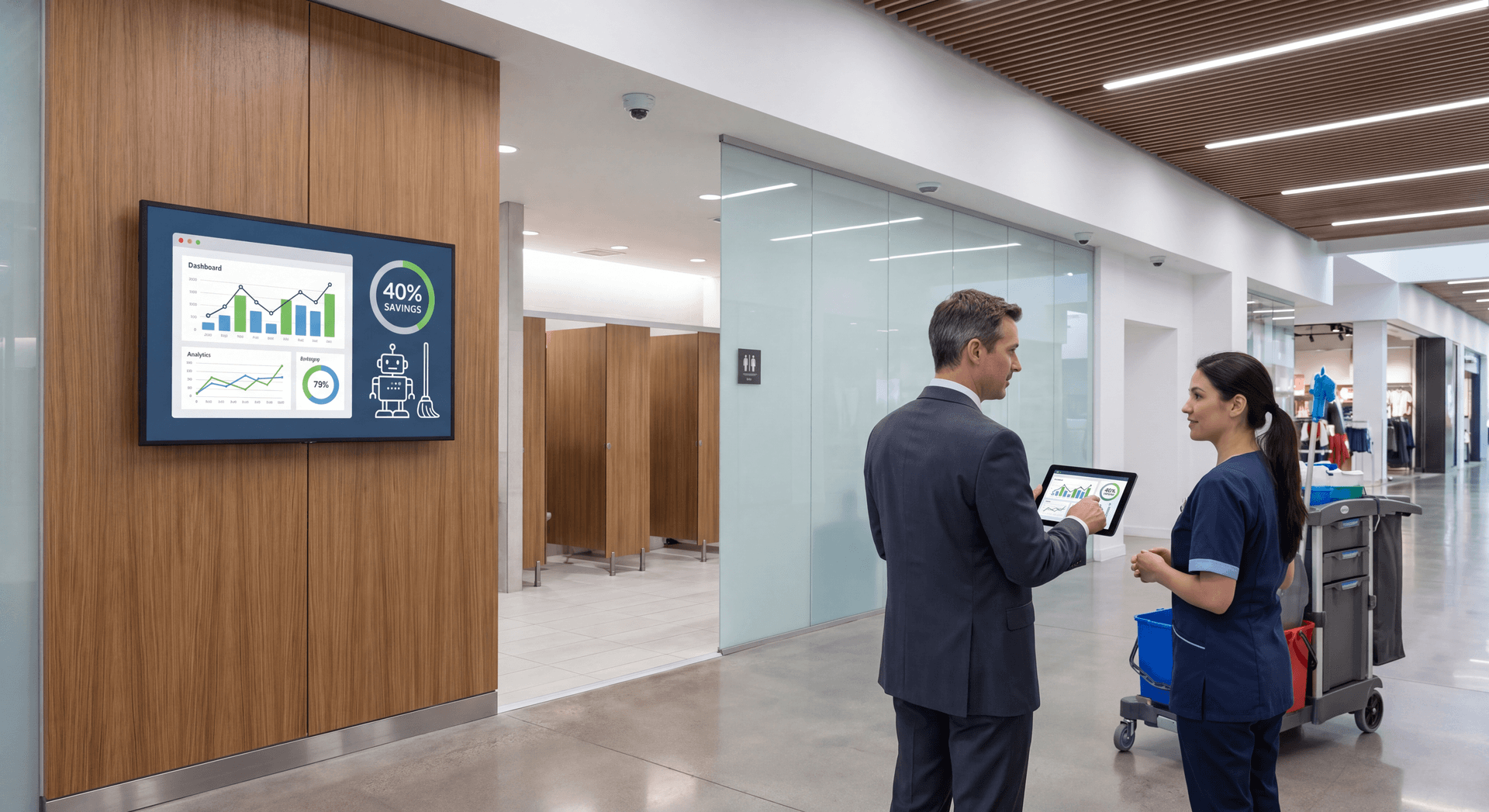

Centralized Facility Dashboards: Managing 50+ Locations from One Screen
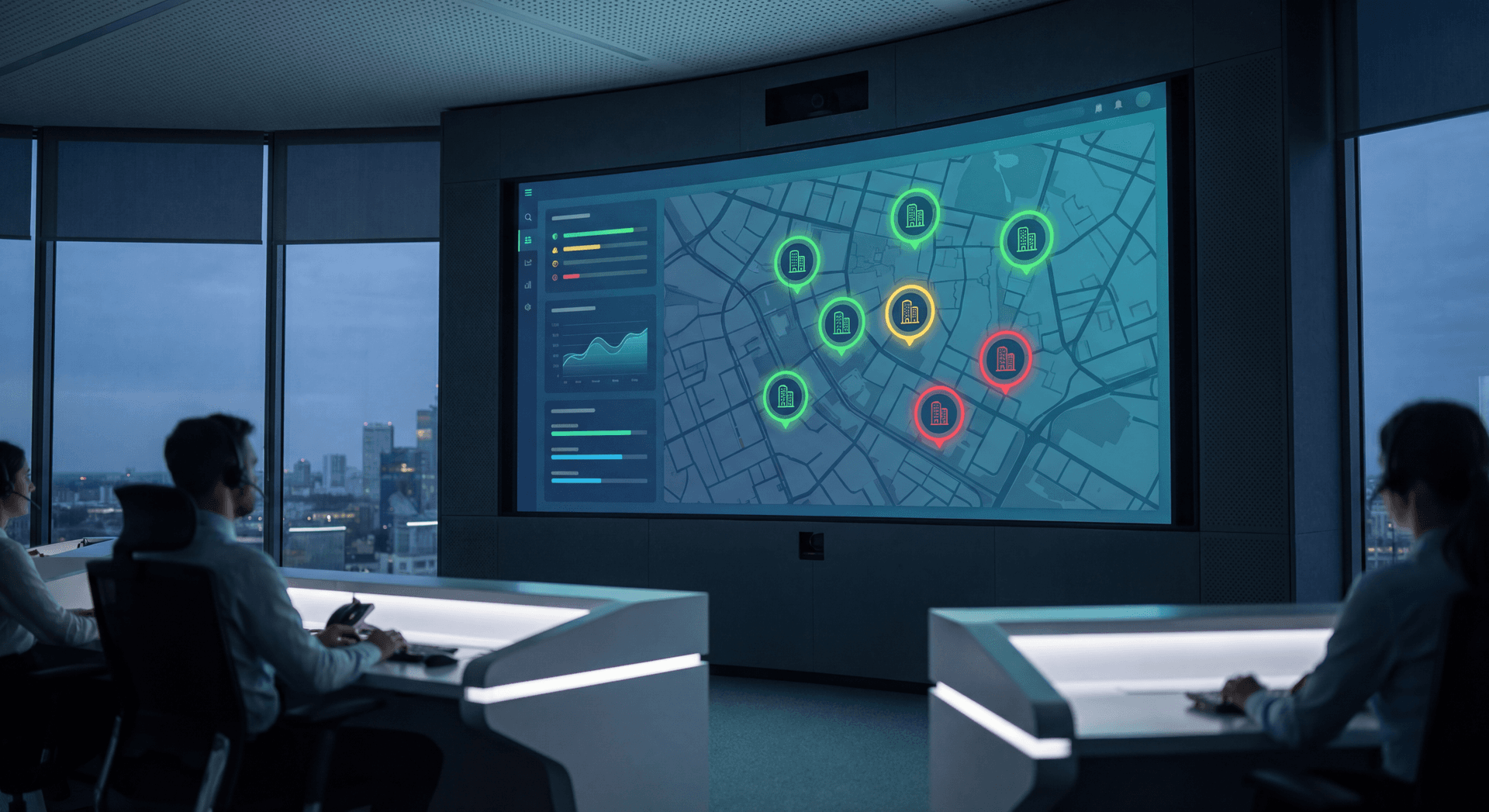
Centralized Facility Dashboards: Managing 50+ Locations from One Screen
Managing 50 commercial properties used to require a control room, three shift supervisors, and a phone tree that never stopped ringing. Today, it takes a single dashboard — and the data shows it works better.
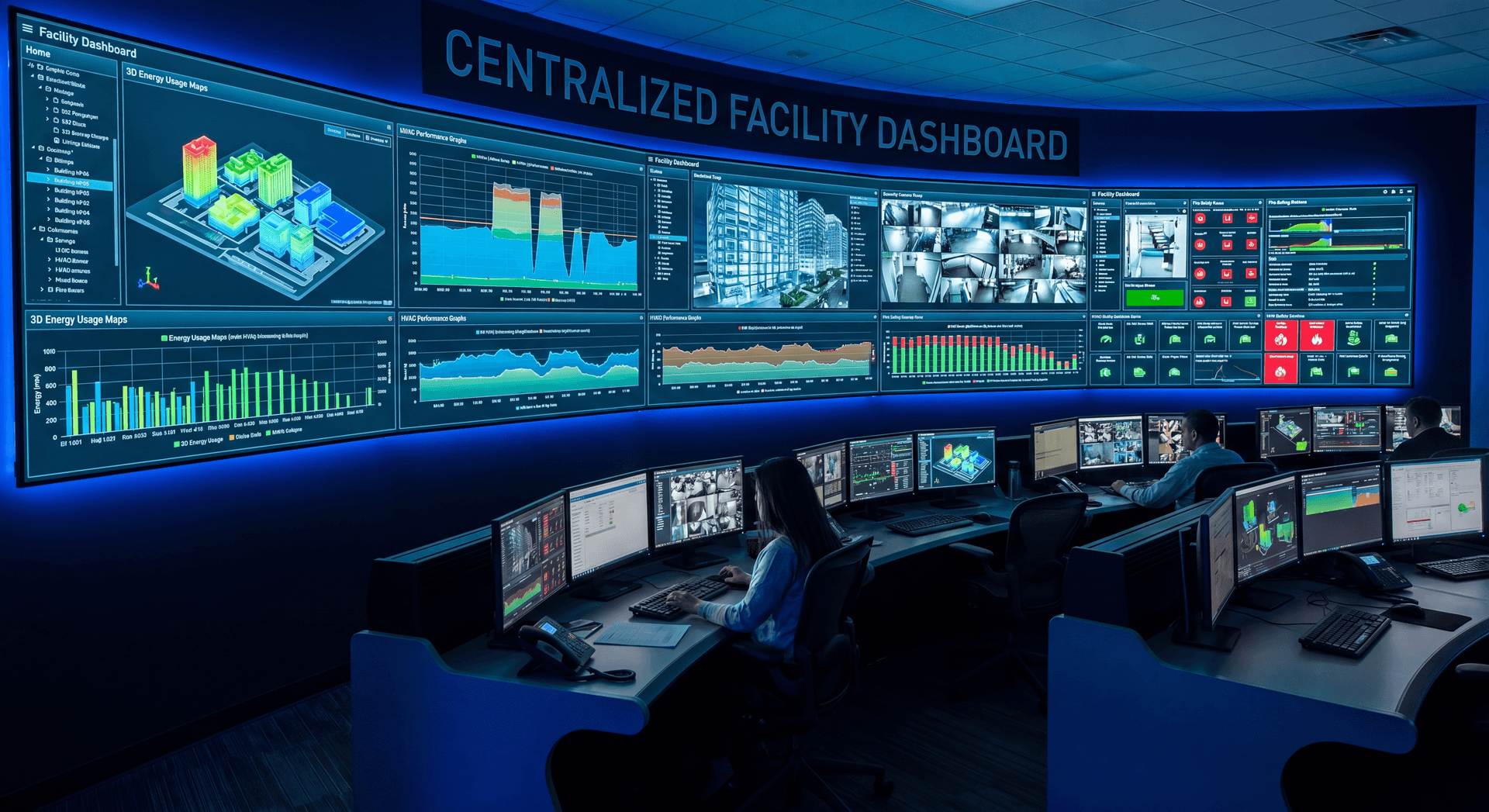
Centralized facility dashboards aggregate real-time data from IoT sensors, maintenance logs, and occupancy systems across dozens of locations into a unified interface. Facility managers using these platforms report 44% faster incident response, 31% lower operating costs, and tenant satisfaction scores that improve quarter over quarter. For organizations managing portfolios of 50 or more buildings, a centralized dashboard is no longer a luxury — it is the operational backbone that makes scaled facility management possible.
Key Takeaways
- Centralized dashboards reduce incident response time by 44% by eliminating information silos between locations
- Facilities using unified dashboards report 31% lower operating costs compared to location-by-location management
- 89% of enterprise facility managers consider centralized monitoring essential for portfolios over 25 locations
- The global facility management software market reached $1.9 billion in 2025 and is projected to hit $4.3 billion by 2030
- Real-time alert consolidation reduces false escalation by 67% compared to per-location monitoring systems
The Problem with Distributed Facility Management
Most multi-site organizations still operate with fragmented systems. Each building has its own inspection schedules, its own vendor relationships, and its own way of tracking problems. The result is predictable: inconsistent service levels, missed maintenance windows, and a reactive culture that treats every incident as a surprise.
The Hidden Cost of Fragmentation
A 2025 benchmarking study by the International Facility Management Association (IFMA) revealed the scale of the problem:
| Metric | Fragmented Management | Centralized Dashboard |
| Average response time (maintenance) | 4.2 hours | 1.1 hours |
| Missed preventive maintenance tasks | 23% per month | 4% per month |
| Repeat service calls (same issue) | 34% | 8% |
| Manager time on reporting | 12 hours/week | 2.5 hours/week |
| Tenant satisfaction score | 3.4/5.0 | 4.3/5.0 |
| Annual operating cost per sq ft | $8.90 | $6.14 |
According to Frost & Sullivan's 2025 Smart Buildings Report, organizations managing 50+ facilities without centralized dashboards spend an average of $2.76 more per square foot annually — a difference that translates to $1.38 million per year for a 500,000 sq ft portfolio.
The Communication Gap
In distributed management models, critical information travels through phone calls, emails, spreadsheets, and text messages. A 2024 survey by Building Operating Management magazine found that facility managers at multi-site organizations spend 37% of their time on communication and coordination rather than actual facility improvement. Centralized dashboards collapse these communication channels into a single stream of actionable data.
How Centralized Dashboards Work
Data Aggregation Layer
Modern dashboards pull data from multiple sources simultaneously:
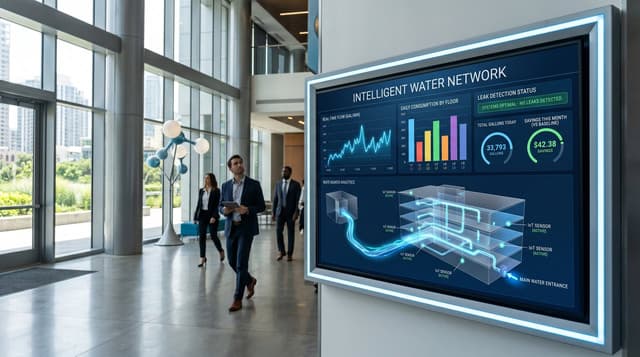
- IoT sensors: Restroom occupancy, water flow, air quality, temperature, humidity
- Smart hygiene dispensers: Soap levels, paper towel consumption, sanitizer usage rates
- Maintenance management systems: Work orders, vendor SLAs, completion timestamps
- Access control and security: Entry logs, after-hours activity, restricted area monitoring
- Energy management systems: Electricity consumption, HVAC performance, lighting usage
- Tenant feedback platforms: Service requests, satisfaction surveys, complaint tracking
Real-Time Monitoring Engine
The power of centralized dashboards lies in real-time data processing. Rather than waiting for daily or weekly reports, facility managers see conditions as they develop:
- Color-coded status indicators for each location (green/yellow/red) based on configurable thresholds
- Automated alerts triggered by anomalies such as unusual water consumption, occupancy spikes, or dispenser depletion
- Trend visualization showing patterns across locations, days, and seasons
- Predictive analytics flagging potential issues before they impact operations
Artificial Intelligence and Machine Learning
Leading platforms incorporate AI to move beyond monitoring into intelligent decision support:
- Anomaly detection identifies unusual patterns that human managers might miss across 50+ locations
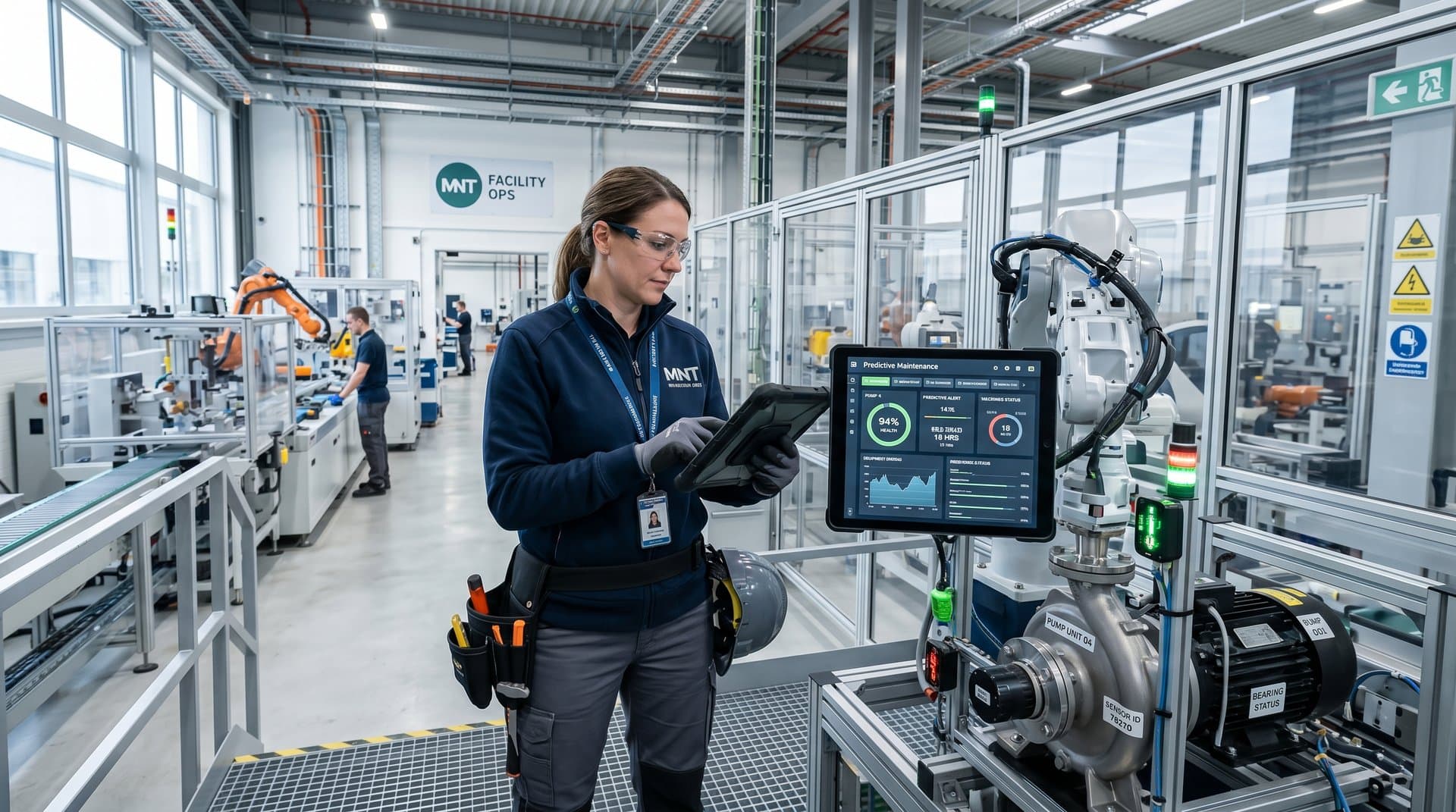
- Predictive maintenance algorithms forecast equipment failures with 91% accuracy based on usage patterns
- Resource optimization suggests staff allocation across locations based on real-time demand
- Natural language querying allows managers to ask questions like "Which locations had the most restroom complaints last week?" and receive instant answers
Real-World Benefits Across Facility Types
Commercial Office Buildings
A 2025 case study by JLL Technologies documented a 120-building office portfolio that implemented a centralized facility dashboard:
- 42% reduction in emergency maintenance calls through predictive alerting
- $2.1 million annual savings from optimized cleaning schedules based on actual occupancy data
- 28% improvement in tenant retention attributed to faster service response
- 15 hours per week saved in management reporting and data compilation
The key insight: smart restroom monitoring alone contributed 35% of the total savings, as IoT sensors enabled demand-based cleaning schedules rather than fixed-time rotations.
Shopping Centers and Retail
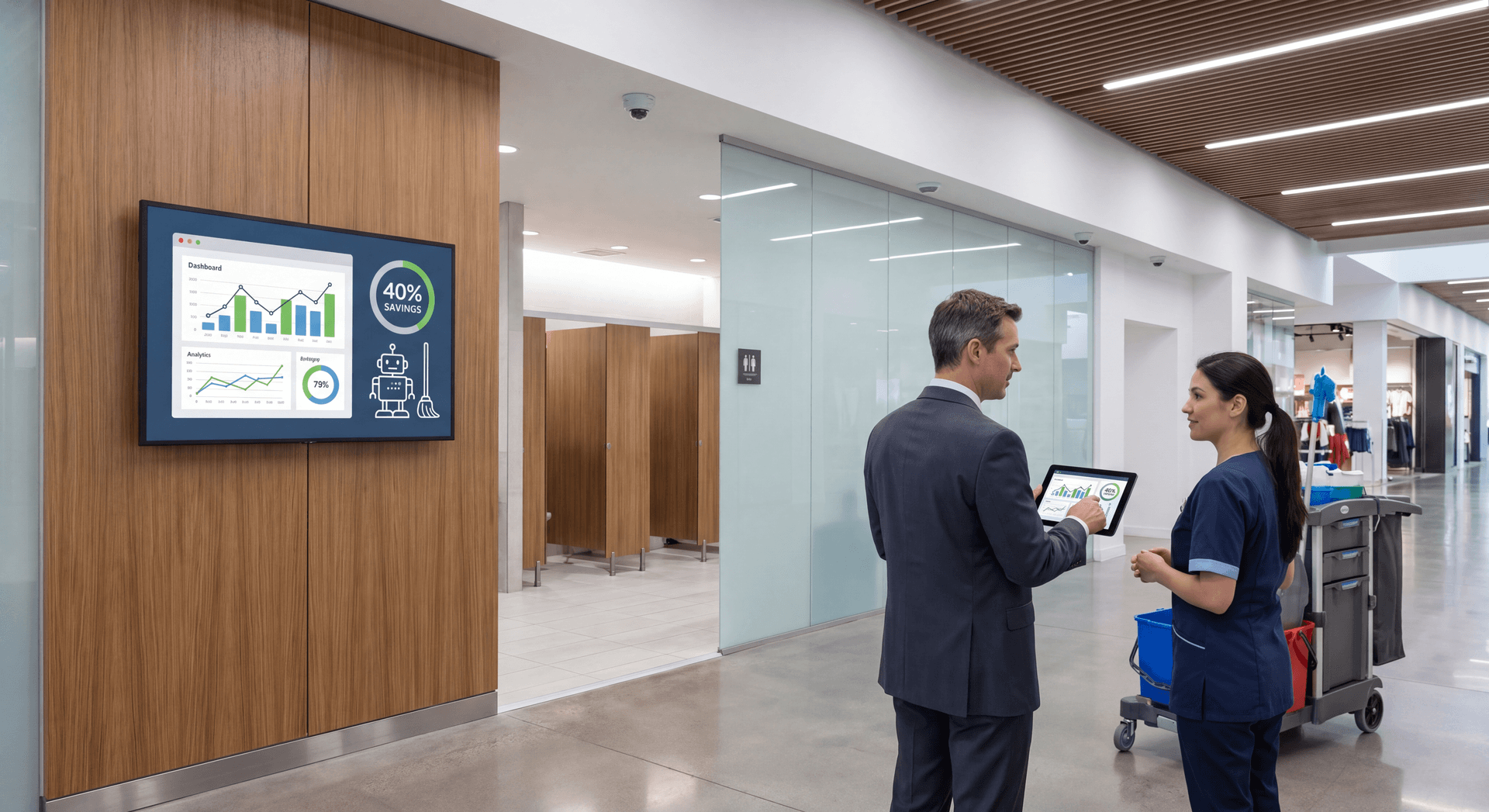
Retail facilities face unique challenges — high foot traffic, public restrooms, and brand-sensitive environments. Centralized dashboards enable:
- Real-time restroom status monitoring across all mall locations simultaneously
- Automatic dispatcher alerts when supplies drop below threshold levels
- Peak traffic prediction to pre-position cleaning staff before demand spikes
- Compliance documentation generated automatically for health and safety audits
According to a 2025 report by the International Council of Shopping Centers, retail properties using centralized facility monitoring reported 52% fewer customer complaints related to restroom cleanliness.
Healthcare Facilities
Hospitals and medical centers require the highest standards of environmental monitoring. Centralized dashboards provide:
- Continuous hygiene compliance tracking across patient areas, restrooms, and common spaces
- Automated audit documentation that satisfies Joint Commission and CMS requirements
- Infection control integration linking environmental conditions to infection risk models
- Multi-building coordination enabling resource sharing during surge events
A 2025 study published in the American Journal of Infection Control found that healthcare networks using centralized facility dashboards achieved 41% better environmental hygiene scores compared to facilities using standalone monitoring at each location.
Educational Campuses
University and school district facilities teams manage diverse building types — classrooms, dormitories, dining halls, athletic facilities — often spread across large campuses or multiple sites. Centralized dashboards enable:
- Zone-based monitoring that prioritizes high-traffic areas during peak hours
- Seasonal adjustment that scales monitoring intensity based on academic calendars
- Budget allocation insights showing which buildings consume the most resources per student
- Emergency coordination providing unified situational awareness during critical events
Implementation Roadmap for 50+ Location Portfolios
Phase 1: Foundation (Weeks 1-4)
Begin with core infrastructure: network connectivity assessment at all locations, sensor deployment in highest-priority buildings, and dashboard platform configuration. Most organizations can deploy IoT sensors in 15-25 locations within the first month using wireless, battery-powered devices that require no building modifications.
Phase 2: Integration (Weeks 5-8)
Connect existing systems — maintenance management, access control, energy monitoring — into the dashboard. API-based integrations typically require 2-5 days per system type. According to Verdantix's 2025 Smart Building Technology report, organizations that integrate three or more data sources into their dashboard see 2.4× higher ROI than those using only sensor data.
Phase 3: Optimization (Weeks 9-16)
Train facility teams on dashboard usage, configure custom alerts and KPIs, and begin using predictive analytics features. This phase delivers the operational dividends: organizations typically see measurable cost reductions within 8-12 weeks of full deployment.
Phase 4: Scale (Ongoing)
Extend sensor coverage to remaining locations, refine AI models with accumulated data, and integrate additional data sources. The dashboard becomes more valuable with each connected device — network effects that compound over time.
ROI Analysis: The Business Case for Centralization
Direct Cost Savings
Based on aggregated data from LBS Smarttech deployments across commercial portfolios:
- Reduced maintenance labor: Demand-based scheduling eliminates unnecessary preventive visits, saving $0.85/sq ft annually
- Lower supply costs: Usage-based dispenser monitoring reduces over-ordering by 22%
- Decreased emergency spend: Predictive alerts prevent 67% of emergency maintenance events
- Insurance premium reduction: Documented monitoring lowers liability exposure by 8-15%
Indirect Value Creation
- Tenant retention improvement: Better service quality reduces turnover costs by $3-7 per square foot annually
- Regulatory compliance automation: Continuous documentation eliminates manual audit preparation (estimated 200+ hours annually for 50-location portfolios)
- Energy efficiency gains: Centralized monitoring identifies waste patterns invisible in building-level data
- Brand protection: Consistent facility standards across all locations protect organizational reputation
Total Cost of Ownership
According to a 2025 analysis by Deloitte on smart building investments, centralized facility dashboards for 50+ location portfolios deliver full ROI within 14 months, with an ongoing annual return of 220-340% depending on portfolio composition and sensor coverage density.
Security and Data Governance
Data Privacy
Enterprise dashboards must comply with regional privacy regulations (GDPR, CCPA, PDPA). Modern platforms achieve this through:
- On-premises deployment options for organizations with strict data residency requirements
- Role-based access controls limiting data visibility to authorized personnel
- Anonymized occupancy data that monitors space usage without tracking individuals
- Audit logging of all dashboard access and configuration changes
Cybersecurity
With 50+ connected locations, the attack surface is significant. Reputable platforms provide:
- End-to-end encryption for all sensor data transmission
- Regular penetration testing and vulnerability assessments
- SOC 2 Type II certification demonstrating robust security controls
- Automated firmware updates keeping edge devices protected against emerging threats
The Future of Centralized Facility Management
The next evolution is already taking shape:
- Digital twins: Virtual replicas of entire facility portfolios enabling simulation and scenario planning
- Autonomous operations: AI systems that not only detect issues but initiate corrective actions without human intervention
- Cross-portfolio intelligence: Anonymous data sharing between organizations creating industry benchmarks and best practices
- Sustainability integration: Carbon tracking and ESG reporting built directly into facility dashboards
Gartner's 2026 Predicts for Smart Buildings report estimates that by 2028, 75% of organizations managing 25+ facilities will use centralized AI-powered dashboards as their primary management tool — up from just 28% in 2025.
Conclusion
Managing 50+ facilities without a centralized dashboard is like flying 50 airplanes with 50 separate control towers. The technology exists today to bring every building, every sensor, and every maintenance event into a single pane of glass — and the ROI data is overwhelming.
Organizations that adopt centralized facility dashboards don't just save money. They transform their operational model from reactive and fragmented to proactive and unified. In a competitive real estate market where tenant experience drives retention and revenue, that transformation isn't optional — it's the difference between leading the market and falling behind.
The best time to centralize your facility management was five years ago. The second best time is today.
Frequently Asked Questions
What is a centralized facility dashboard?
A centralized facility dashboard is a unified software platform that aggregates real-time data from IoT sensors, maintenance systems, and operational tools across multiple building locations into a single interface. It enables facility managers to monitor, analyze, and respond to conditions across 50+ sites simultaneously.
How much does a centralized facility dashboard cost?
Costs vary by portfolio size and sensor coverage. For a 50-location portfolio, typical investment ranges from $50,000-$150,000 for deployment, with annual platform fees of $20,000-$60,000. Most organizations achieve full ROI within 14 months through operational savings.
Can centralized dashboards work with existing building systems?
Yes. Modern platforms use API integrations to connect with existing BMS (Building Management Systems), CMMS (Computerized Maintenance Management Systems), access control, and energy monitoring tools. Integration typically requires 2-5 days per system type.
How secure are cloud-based facility dashboards?
Enterprise platforms provide end-to-end encryption, SOC 2 Type II certification, role-based access controls, and regular penetration testing. On-premises deployment options are available for organizations with strict data residency requirements.
What types of facilities benefit most from centralized dashboards?
Commercial office buildings, shopping centers, healthcare networks, educational campuses, and multi-site retail operations all see significant benefits. Any organization managing 10+ buildings with shared operational standards can realize measurable value.
How do centralized dashboards support ESG reporting?
By automatically tracking energy consumption, water usage, waste generation, and indoor environmental quality across all locations, centralized dashboards generate the continuous data stream that ESG reporting frameworks require — eliminating manual data collection and improving reporting accuracy by up to 95%.