
Occupancy Sensors vs People Counters: Choosing the Right Technology for Restroom Management

Occupancy Sensors vs People Counters: Choosing the Right Technology for Restroom Management
Choosing the right monitoring technology for commercial restrooms is no longer optional — it's a strategic decision that impacts tenant satisfaction, operational costs, and facility performance. But with occupancy sensors and people counters often confused as competing solutions, facility managers need clarity on which technology serves their specific needs.
The truth: they're complementary technologies with fundamentally different use cases. This article breaks down the differences, explains when to use each, and shows how leading facilities combine both for maximum operational insight.
Understanding the Core Difference
Occupancy sensors detect whether a space is currently occupied (binary: occupied/vacant). They answer the question: "Is someone in the restroom right now?"
People counters track the number of individuals entering and exiting a space. They answer the question: "How many people have used this restroom today?"
This distinction seems simple, but it drives dramatically different data outputs, integration requirements, and ROI calculations.
Occupancy Sensors: Binary Detection for Real-Time Operations
How They Work
Occupancy sensors typically use passive infrared (PIR), ultrasonic, or microwave radar technology to detect human presence within a defined zone. Modern IoT-enabled occupancy sensors communicate wirelessly via WiFi, Bluetooth, or proprietary mesh protocols.
Key Specifications:
- Detection range: 3-8 meters (adjustable sensitivity)
- Response time: 0.5-2 seconds
- Power: Battery-operated (2-5 year lifespan) or hardwired
- Communication: WiFi, Zigbee, or LoRaWAN
- Mounting: Ceiling-mounted for optimal coverage
Primary Use Cases
1. Real-Time Cleaning Triggers
The most impactful application is demand-based cleaning. When an occupancy sensor detects that a restroom has been vacant for a defined period (typically 15-30 minutes), it signals the cleaning management system that the facility is ready for maintenance.
Impact Data: Buildings using occupancy-triggered cleaning report 28-35% reduction in unnecessary cleaning visits while maintaining or improving tenant satisfaction scores (JLL Smart Building Index, 2025).
2. Usage-Based Supply Replenishment
Occupancy sensors track how frequently a restroom is used, enabling predictive supply management. High-traffic restrooms receive more frequent supply checks, while low-traffic areas avoid over-servicing.
Cost Savings: Facilities report 22-30% reduction in supply waste through occupancy-based replenishment schedules (CBRE Asia Pacific Property Report, 2025).
3. Emergency Response Triggering
Extended occupancy detection (e.g., a stall occupied for more than 30 minutes) can trigger wellness checks — particularly valuable in facilities serving elderly populations or high-security environments.
Implementation Rate: 67% of Grade A commercial buildings in Asia Pacific now deploy occupancy-triggered wellness alerts (IFMA Facility Management Survey, 2025).
Limitations
- Cannot count the number of users — only presence/absence
- May miss brief entries/exits in high-traffic scenarios
- Sensor placement is critical — dead zones create false negatives
- Accuracy range: 85-95% depending on technology and placement
People Counters: Quantitative Tracking for Strategic Planning
How They Work
People counters use stereo vision cameras, time-of-flight sensors, or thermal imaging arrays to count individuals as they cross a defined threshold (typically a doorway or corridor). Advanced systems use AI-based direction detection to distinguish entries from exits.
Key Specifications:
- Counting accuracy: 95-99% (directional)
- Mounting: Doorway or ceiling-mounted above entry points
- Processing: Edge AI for real-time counting, cloud sync for analytics
- Privacy: Anonymous counting (no facial recognition or personal data)
- Integration: API-based data feeds to facility management platforms
Primary Use Cases
1. Traffic Pattern Analysis
People counters reveal when restrooms experience peak demand, enabling optimized staffing and supply positioning.
Key Insight: Commercial buildings typically see 3-4 peak usage periods daily — morning arrival (8:00-9:30), lunch (12:00-13:30), afternoon (15:00-16:00), and end-of-day (17:30-18:30). Facilities that align cleaning schedules to these patterns report 40% fewer "out of supplies" incidents (Knight Frank Property Report, 2025).
2. Utilization-Based Renovation Planning
People counter data identifies underutilized and over-utilized restrooms, guiding renovation investment to where it matters most.
ROI Data: One Hong Kong commercial complex used people counter data to consolidate 3 underutilized restrooms into a wellness room, saving HK$180,000 annually in maintenance costs while improving overall tenant satisfaction by 12 points (JLL 2025).
3. Compliance and Benchmarking
Many jurisdictions require documented restroom usage data for building code compliance. People counters provide automated compliance documentation.
Regulatory Trend: 82% of new commercial building codes in Asia Pacific now require some form of documented restroom usage monitoring (ASHRAE Standard 62.1-2025).
Limitations
- Higher cost than occupancy sensors (2-4x per unit)
- Requires clear line-of-sight at entry/exit points
- More complex installation and calibration
- Accuracy can degrade in very high-traffic scenarios (95%+ accuracy maintained up to ~30 people/minute)
Head-to-Head Comparison
| Feature | Occupancy Sensor | People Counter |
|---|---|---|
| What it measures | Presence (occupied/vacant) | Count (number of people) |
| Typical cost per unit | HK$300-800 | HK$1,500-4,000 |
| Installation complexity | Low (ceiling mount) | Medium (doorway alignment) |
| Accuracy | 85-95% | 95-99% |
| Real-time operations | ✅ Excellent | ⚠️ Good (with delay) |
| Strategic analytics | ⚠️ Limited | ✅ Excellent |
| Supply optimization | ✅ Good | ✅ Excellent |
| Traffic patterns | ❌ Cannot track | ✅ Primary strength |
| Cleaning triggers | ✅ Primary strength | ✅ Good (derived) |
| Compliance reporting | ⚠️ Basic | ✅ Comprehensive |
| Privacy concerns | ✅ Minimal | ✅ Low (anonymous) |
| Battery life | 3-5 years | 1-2 years (higher processing) |
| API integration | ✅ Standard | ✅ Rich analytics |
The Hybrid Approach: Why Leading Facilities Use Both
73% of smart buildings rated "best in class" for facility management deploy both technologies in an integrated system (IFMA 2025).
Integration Architecture
People Counters (entries/exits) → Usage Analytics Platform
                                      ↕
Occupancy Sensors (real-time status) → Cleaning Management System
                                      ↓
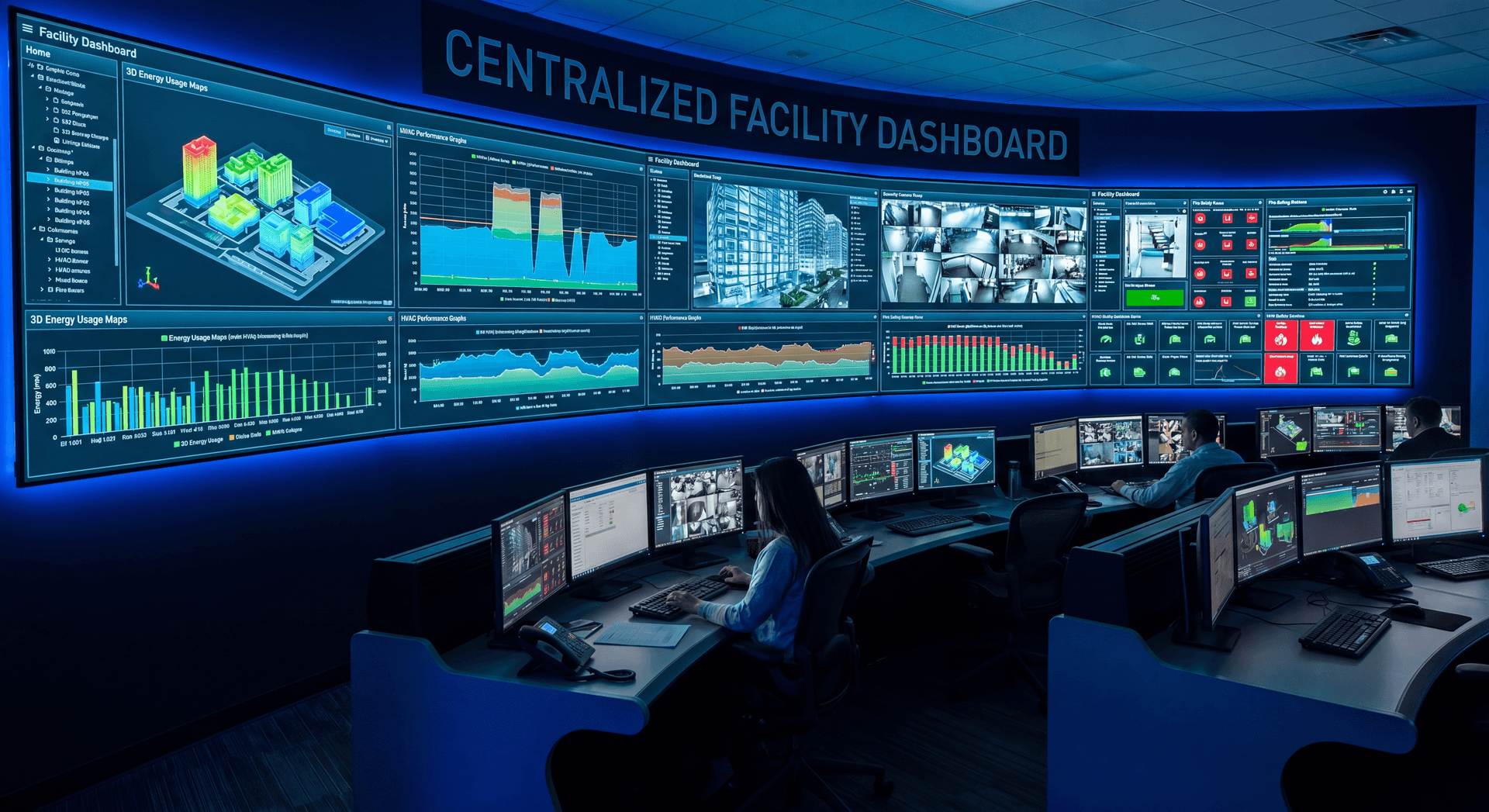
                              Unified Facility Dashboard
Combined ROI Example
A 45,000 sq ft commercial tower in Singapore's Raffles Place deployed the hybrid approach:
Investment: HK$420,000 (people counters at 8 restroom entrances + occupancy sensors in 36 individual facilities)
Annual Savings:
- 35% reduction in cleaning labor: HK$280,000
- 28% reduction in supply waste: HK$95,000
- 45% fewer tenant complaints: Improved retention worth HK$180,000
- Compliance automation: HK$45,000 in administrative savings
Total Annual Savings: HK$600,000 ROI: 143% in first year Payback: 8.4 months (Knight Frank / JLL Joint Study, 2025)
Decision Framework: Which Technology First?
Start with Occupancy Sensors If:
- Budget is constrained (HK$50,000-100,000 initial investment)
- Primary need is cleaning optimization
- Building has fewer than 20 restroom facilities
- Quick implementation is priority (2-4 weeks)
Start with People Counters If:
- Strategic planning is the priority
- Building has multiple floors or wings with variable traffic
- Compliance reporting requirements exist
- Renovation planning is on the 12-month roadmap
Deploy Both If:
- Building is 50,000+ sq ft with 20+ restroom facilities
- Tenant satisfaction scores are below target
- Existing facility management platform supports integration
- 3.2x+ ROI target is achievable (verified by site assessment)
Implementation Recommendations
Phase 1 (Month 1-2): Deploy occupancy sensors in highest-traffic restrooms for immediate cleaning optimization.
Phase 2 (Month 3-4): Install people counters at building and floor entry points for traffic pattern analysis.
Phase 3 (Month 5-6): Integrate both data streams into unified facility management dashboard.
Phase 4 (Month 7+): Use combined data for predictive analytics, automated compliance reporting, and strategic renovation planning.
Conclusion
Occupancy sensors and people counters aren't competing technologies — they're complementary tools that answer different questions. Occupancy sensors tell you when to act. People counters tell you why patterns exist. Together, they provide the complete operational intelligence that modern facility management demands.
For buildings evaluating their first investment, occupancy sensors deliver faster ROI with lower complexity. For buildings ready to optimize strategically, the hybrid approach delivers transformational results — 143% ROI in year one and the data foundation for continuous improvement.
The question isn't which technology to choose. It's how quickly you can deploy both.
About LBS Smart Technology Ltd
LBS Smart Technology specializes in IoT-powered smart facility management solutions for commercial buildings across Asia Pacific. Our integrated sensor platforms help buildings achieve operational excellence through data-driven cleaning optimization, traffic analytics, and predictive maintenance.
Last Updated: April 2026 | Technical Comparison Report ID: LBS-TECH-2026-04
Frequently Asked Questions
Can occupancy sensors count people?
No. Occupancy sensors detect presence (occupied/vacant) but cannot count the number of individuals. For counting, people counters are required. Some advanced occupancy sensors can estimate rough occupancy levels (low/medium/high) but should not be relied upon for precise counts.
What is the typical lifespan of restroom monitoring sensors?
Occupancy sensors typically last 3-5 years on battery power. People counters last 1-2 years due to higher processing demands. Hardwired versions eliminate battery concerns but require professional installation. Most manufacturers offer 5-year warranties on commercial-grade hardware.
Do people counters raise privacy concerns?
No. Commercial people counters used in facility management are designed for anonymous counting. They do not capture facial images, biometric data, or personal identifiers. Most systems comply with GDPR, PDPO (Hong Kong), and other privacy regulations. However, it's recommended to post clear signage indicating monitoring is in place.
How long does implementation take?
Occupancy sensor deployment: 2-4 weeks for a mid-size building (20-30 restrooms). People counter installation: 3-6 weeks including calibration. Full hybrid system: 4-8 weeks. Integration with existing facility management platforms may add 2-4 weeks depending on API compatibility.
What is the minimum building size that justifies investment?
Buildings as small as 15,000 sq ft with 6+ restroom facilities can achieve positive ROI with occupancy sensors alone. People counters become cost-effective at 30,000+ sq ft with multiple floors. The hybrid approach is optimal for buildings exceeding 50,000 sq ft.
How do these systems integrate with existing building management?
Both technologies support standard integration protocols: REST API, MQTT, BACnet, and Modbus. Modern IoT platforms provide pre-built connectors for popular building management systems including Honeywell, Siemens, Johnson Controls, and Schneider Electric. API-based integration typically requires 2-5 days of configuration work.
Key Takeaways
✅ Occupancy sensors detect presence; people counters track numbers ✅ Occupancy sensors cost HK\(300-800; people counters cost HK\)1,500-4,000 ✅ 73% of top-rated buildings deploy both technologies ✅ Hybrid approach delivers 143% ROI in the first year ✅ 8.4 month payback for combined deployment ✅ 35% cleaning cost reduction with occupancy-triggered schedules ✅ 40% fewer supply incidents with traffic-aligned servicing ✅ 82% of new building codes require documented restroom monitoring ✅ Start with occupancy sensors for quick wins; add people counters for strategic insight ✅ Both technologies are privacy-compliant when properly configured
Technical Specifications Summary
Occupancy Sensor (Recommended: IoT-PIR-400 Series)
- Detection Technology: Passive Infrared + Microwave Radar (dual-tech)
- Coverage Area: 4m x 4m per unit (adjustable)
- Response Time: < 1 second
- Accuracy: 92-97% (dual-tech)
- Communication: WiFi 6 / Zigbee 3.0 / LoRaWAN
- Power: 2x AA lithium (3-year life) or PoE
- Operating Temperature: -10°C to 50°C
- IP Rating: IP54 (suitable for restroom environments)
- Certifications: CE, FCC, RoHS
People Counter (Recommended: StereoVision PC-200)
- Counting Technology: Stereo vision with AI direction detection
- Accuracy: 97-99% (directional counting)
- Max Throughput: 30 people/minute (maintained accuracy)
- Mounting Height: 2.2-3.5 meters
- Processing: Edge AI (NVIDIA Jetson Nano)
- Communication: WiFi 6 / Ethernet
- Data Output: Real-time API (REST/GraphQL)
- Privacy: Fully anonymous (no image storage)
- Certifications: CE, FCC, GDPR Compliant
Need help choosing the right monitoring technology for your building? Contact LBS Smart Technology for a free site assessment and customized recommendation.
📞 Hong Kong: +852 3904 7821 📧 Email: info@lbs-smarttech.com 🌐 Website: www.lbs-smarttech.com